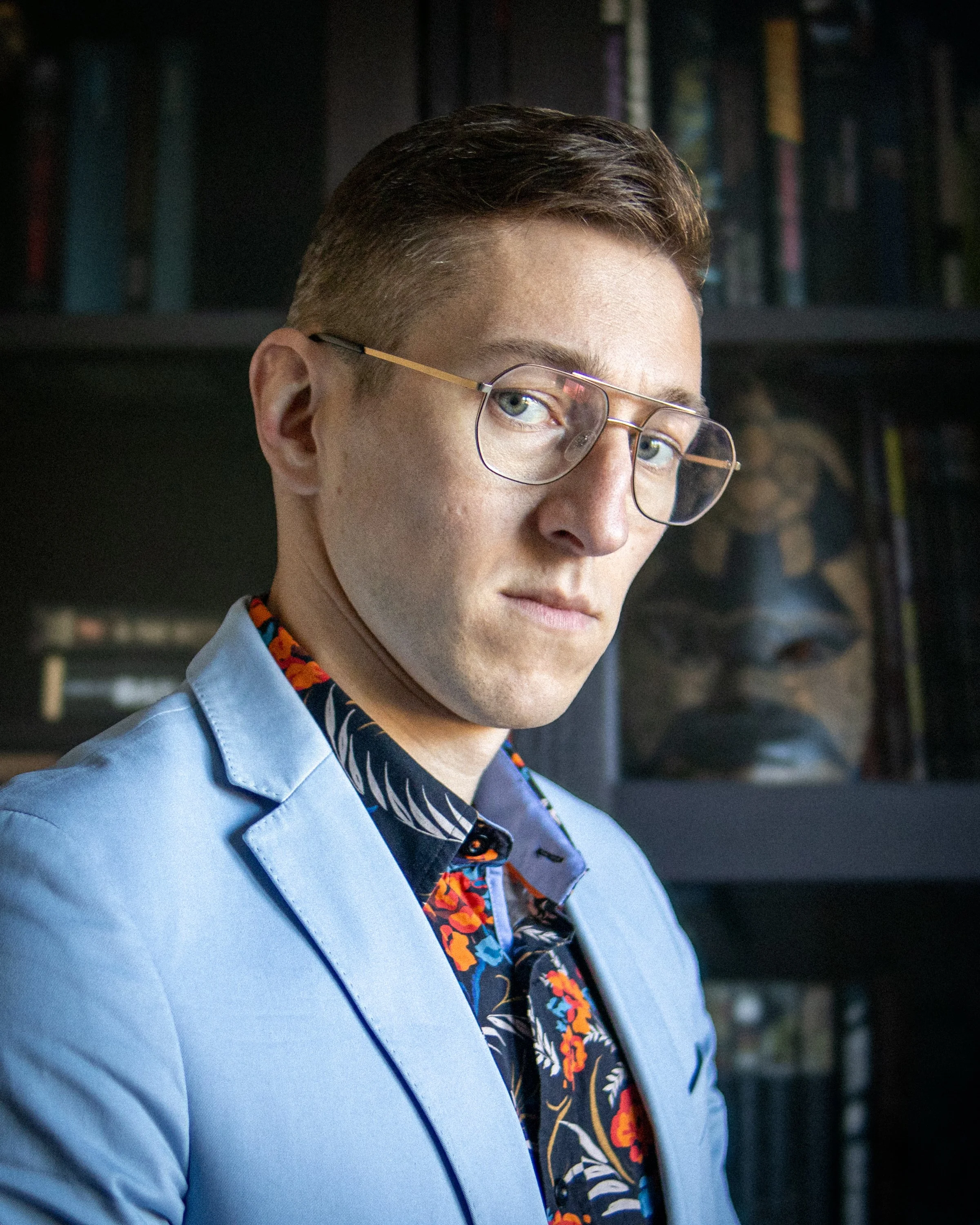
Josh Holton is a Scotland-based writer and ex-MMA fighter whose work placed in Streetcake’s Experimental Writing Prize 2021, Spread the Word’s Life Writing Prize 2020 and was runner up in the Writers’ and Artists’ Working Class Writers’ Prize 2020. His debut novel Fledgling (Conduit Books, 2026) has been described as ‘powerfully original’ by the Financial Times and an ‘auspicious and impressive debut’ by the Irish Times. Author Jarred McGinnis said it is ‘Compassionate and alive with wonder’ and we agree. Cunning Folk editor Elizabeth Kim spoke with Josh via email about the occult and folkloric threads in his work, nature, and masculinity.
Elizabeth Kim: When people ask that dreaded question, what's your book about, what do you say?
Josh Holton: Fledgling is the story of a nature reserve warden with a violent past, and his sensitive son who is trying to impress him. The book tackles themes of masculinity and grief by interweaving facts and folklore about British wildlife to explore the animal side of humanity and the humanity in animals.
It contains MMA fighting, tarot, birdwatching, humiliating social mistakes, gnostic visions, and circumcised penises, to name just a few elements. It hopefully has something for everyone.
EK: Fledgling draws a lot on your own experience. Why did you decide to write it as a novel instead of a memoir?
JH: I didn't want to be limited by telling only the truth. I grew up on a nature reserve like the protagonist, Stuart, but many of the events and characters only happened in my head. One of the book's themes is how a person's life story can become warped, exaggerated or forgotten, so I thought it was appropriate to muddy the waters a little, though it's certainly a fictional work.
I think the best fiction is usually built upon the author's experiences. I don't think any memoir can really be seen as 'true', as they are viewed entirely through the lens of the author who will emphasise some things and omit others. What I've created is fictional, even though it has grown from seeds of truth in my own experiences.
EK: You show a great wealth of knowledge about birds and their folklore. How did you come to learn this?
JH: My dad was the warden of the nature reserve I grew up on. We used to go out on very long walks together without talking much. When you're silent and attentive you see, hear, and experience so much more than if you're chatting. He pointed out birds, animals and plants, but he didn't tell me what they were called until I'd watched them for a bit. He said that too many people were bothered about the names attached to wildlife, and ticking them off a list, rather than actually paying attention. I learned a lot through watching and listening, but I didn't really know the names or taxonomies or biomechanics of what I'd seen. When it came to writing Fledgling, I needed to do some book research so that I had names with which to label the birds I wanted to talk about. In terms of the folklore, much of it is what I picked up from living in a rural area with a deep history that can be followed back to before the Romans. There are people there who still value old customs.
EK: References to tarot are scattered throughout Fledgling – do you read the tarot yourself? if so, how did you come to learn it?
JH: Yes, I do read the tarot. I started by reading a handful of books, watching videos, and practicing most days. I learned using exclusively The Hermetic Tarot of the Order of the Golden Dawn, but now I use different decks for different types of questions. One of these is my mum's Thoth deck which she got in the seventies. She stopped using it because something happened that freaked her out, but she's never told me what. The deck was in a shiny gold leaf box, and I thought it was the coolest thing in the house, though I didn't interact with it as a child. I just admired it from afar.
EK: Your publisher, Conduit Books, inspired much debate last year upon announcing they'd be focussing on working class male voices initially. Why do you think this is needed?
JH: It's important that literary fiction is open for absolutely everyone to share diverse experiences. The words 'male' and 'masculinity' have become almost taboo because of the awful behaviour and ideas that the manosphere discourse has attached to them. In Fledgling, I wanted to explore masculinity with tenderness and an open heart, and Conduit Books are the perfect press to champion that.
They've been incredibly supportive and communicative throughout, allowing me to present my creative vision the way I want and also putting huge amounts of effort into designing and promoting the book.
EK: Stuart and his father are torn between a vision of masculinity rooted in violence, and one based on care, nurture and curiosity. Where do you think the idea that it's masculine to be violent comes from?
JH: I don't know where it comes from historically. For myself, growing up in a rural working class area, strength, pain-tolerance, and emotional endurance were valued very highly, and boys who didn't demonstrate these were ostracised or bullied. In modern western society, with mechanised working and easy access to food, there aren't that many productive ways to show that you have these highly valued traits, and boys use violence to try and display them from an early age. I trained MMA fighting for a decade because I wanted to look like I had these traits. It didn't work because I lost most of my fights as I didn't like hitting people. I'm a big softy who would much rather sit under a tree writing a poem than fight someone in a cage, but it took me a long time to realise how to be myself rather than worry about what I thought might be expected of me as a man.
EK: And how might men find and embrace alternative, less destructive visions of masculinity?
JH: By dedicating time, as individuals, to think what it is they really want from their life and separating that out from what they think is expected of them. At the same time, it's important that we don't judge or ridicule each other for daring to be different from what is expected, even if it doesn't appeal to our own preferences.
Also, I think more value needs to be placed on communication, rather than aspiring to be 'the strong silent type'. There is good work being done to try and lower the terrifyingly high male suicide rate by getting men to express their difficulties, but I think mens' expression needs to start before the breaking point. It's very hard to talk about difficult emotions, so I think parents need to get their children talking about emotions in general from an early age. This can be as simple and as low-stakes as discussing how a film or piece of music makes them feel. Men shouldn't just wait to talk about feelings when they're struggling.
EK: In the witch trial era, men were accused of witchcraft too, but most alleged witches were women, and witch finding documents tend to emphasise the bestial nature of the witch. It seems to me that for Stuart, leaning into the irrational, into magic, is part of the work of wrestling against the more destructive vision of masculinity. Was this your intention?
JH: Yes. Leaning into the magical is what allowed me, personally, to escape the limitations I was imposing on myself by trying to follow the rigid constraints of traditional masculinity. It is through creativity and irrationality that we can imagine new ways to be, and there is a lot of practical advice on how to do this across hundreds of years of occult literature. I wanted to reflect this in my novel.
Rationality and materialism are useful, and have got us a long way, but we must always remember that we do not know and understand everything. Stuart goes through the process of accepting this, and it helps him reorient himself to the obstacles he faces.
When we lose someone we love, I think it's natural that we find faith and mysticism more relevant and appealing. Witchcraft and the occult also contain tools and stories for accepting and trying to understand the inevitability of destruction and loss rather than wrestling against it.
In the book, we see a nature reserve warden crafting his own microcosm where he attracts some creatures and culls others, drains woodland and floods fields, and shapes his son in his own image. I wanted to draw parallels between this custodial father figure and the Gnostic Demiurge, though I wanted to do it subtly as many readers have no interest in occult iconography.
The son's coming of age requires him to create his own physical and spiritual habitat in which he can be what he is supposed to be.
EK: I loved that you didn't shy away from veganism, and that you have these moments where you break away from the human story to ask the reader to consider other life, to respect pigeons, for example. We've spoken about this and you said that you, like Stuart, are vegan. Can you tell me when you went vegan and why? Also, why was it important to include this thread in the book?
JH: The nature reserve I grew up on was also a working farm, so I'm very aware of what's happening behind-the-scenes, even on idyllic farms. I've witnessed the distress of animals when they're separated from their mums so that humans can have their milk instead. I've even helped round up male baby cows to be slaughtered because only the females are profitable for milking. My brother, who had the same upbringing, went vegan before me. It made me really angry that he was saying our whole way of life was immoral, but eventually I couldn't continue ignoring the violence and pain I was causing by consuming animal products, and I became vegan. I think that was about 12 years ago.
Stuart's veganism is a small but very important part of the book. I was writing about the wonder and wisdom of wildlife and how it can reflect our own humanity, so I had to acknowledge the destruction we've wrought.
Also, so much of why people think it's ok to kill, hurt and upset certain animals is based on the language we use about them. In a book you can subvert this, for instance by calling calves and juvenile birds 'babies', or by acknowledging the feelings of animal test subjects amongst the emotionless scientific language of academic papers. Fledgling is a book about love within families, both human and animal. When you've acknowledged that cows, sheep and pigs contain this love, you realise how awful it is to do violence to them.
EK: Which books did you keep close while writing Fledgling?
JH: My dad's bird identification guides were close to hand throughout the writing process of Fledgling, and they still are now, particularly The RSPB Handbook of British Birds by Peter Holden and Tim Cleeves, and The Birds of the Western Palearctic by David Snow and Christopher Perrins. They were the only physical items I inherited from him when he died-- oh, and a tie with birds on it. When I read his books, it feels like he is with me discussing the birds we've seen.
EK: One we always ask, given our themes. Do you have any rituals you do before starting to write?
JH: Yes, but I don't want to share the details, so forgive me for being a little cryptic. In short, I believe that ideas come from external sources, so I always prepare myself to receive them. I also put effort into showing continual gratitude after my writing sessions.
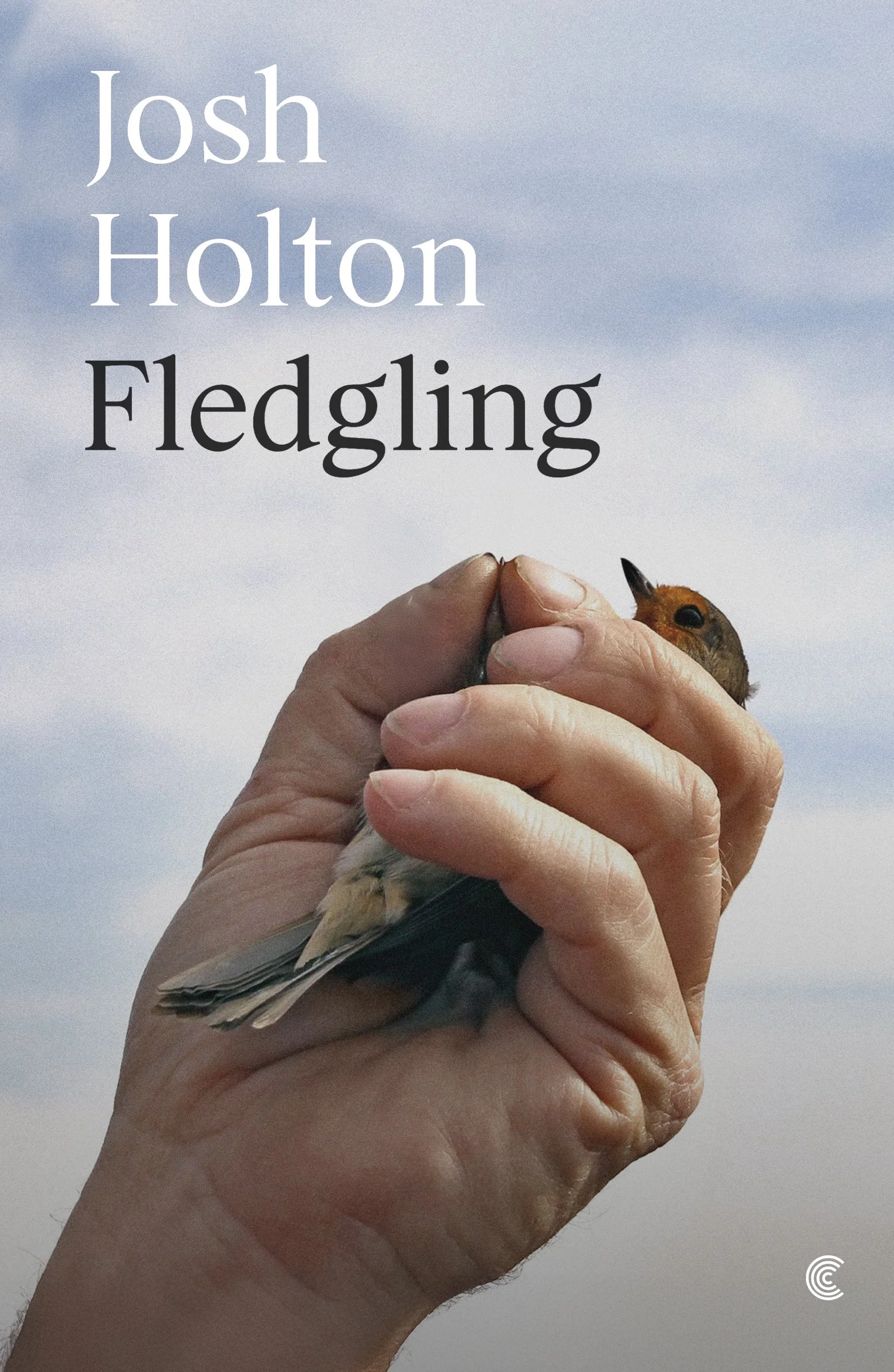
Fledgling was published by Conduit Books on 17th September, 2026. It is available from all good bookshops.