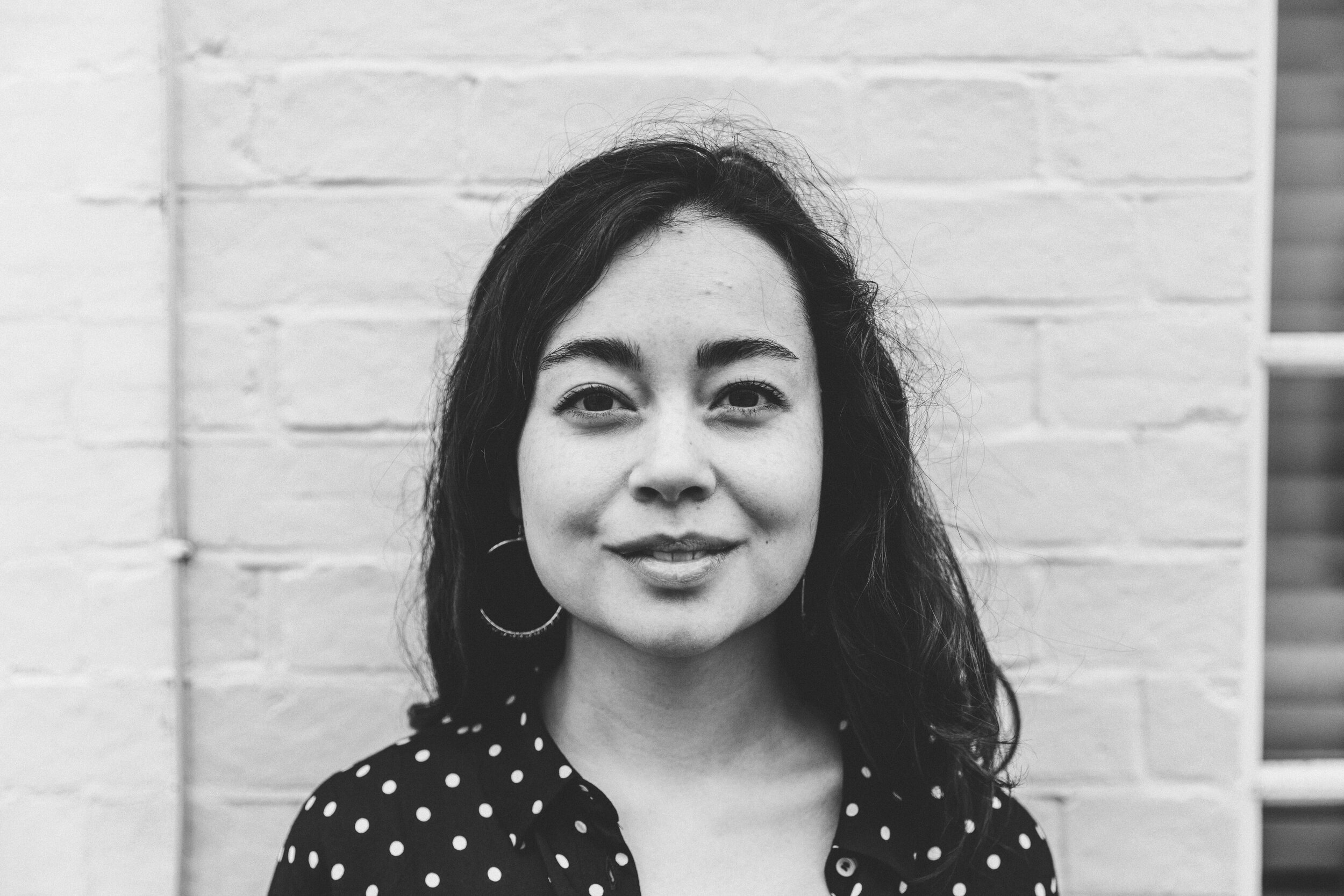
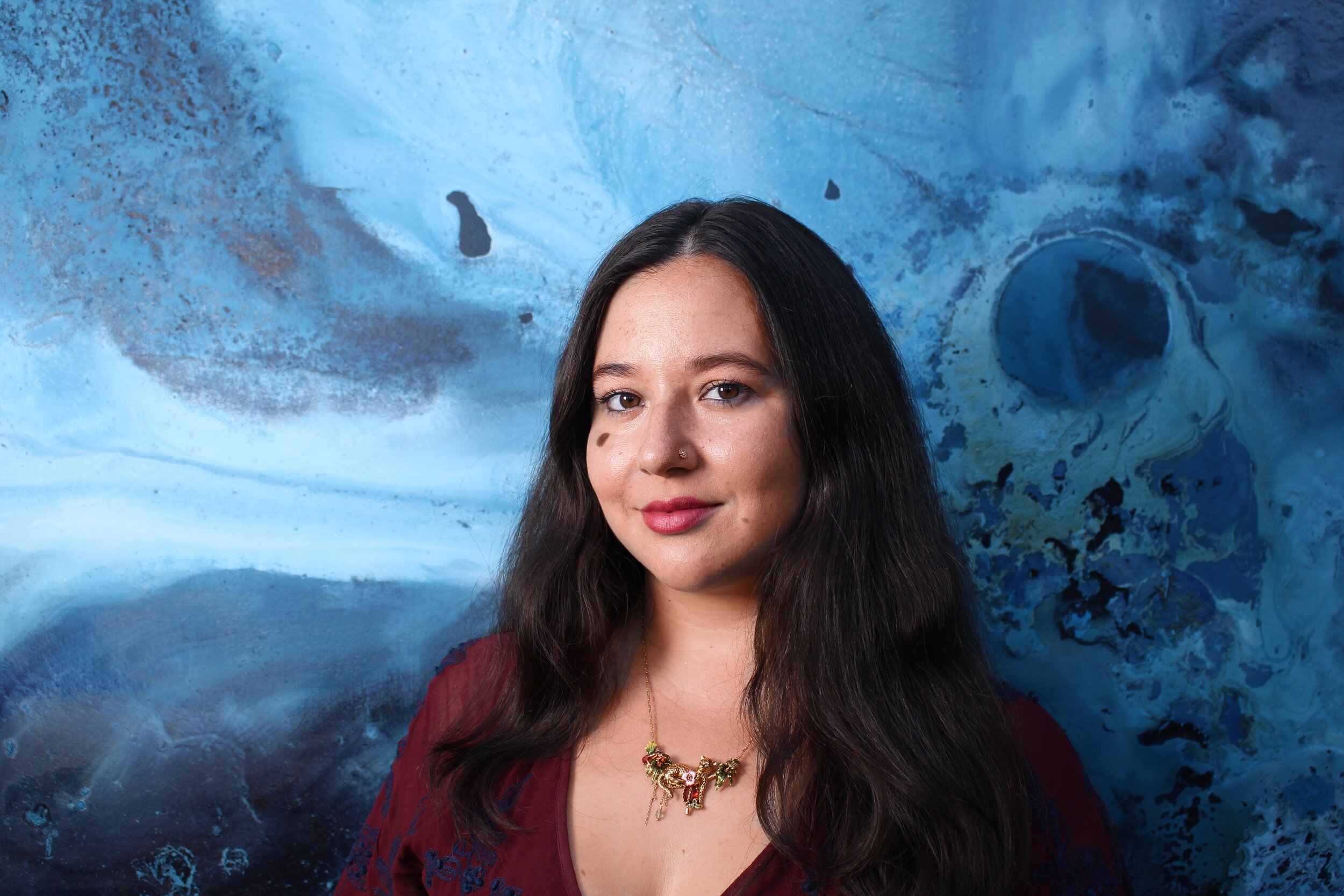
In conversation with Sabrina Scott

Sabrina Scott is a tarot reader and teacher based in Toronto, as well as the author of the award-winning graphic novel Witchbody (Weiser Books). I asked them some quickfire questions about their relationship with the tarot (think of this conversation as a three card draw) and what followed is a fascinating insight into the practice of a contemporary card-reading maverick. You can find Sabrina on Instagram @sabrinamscott. 

Screen Shot 2020-07-15 at 11.14.47.png

Could you tell us which tarot deck do you work with the most often and why?

Every deck has its own energy and its own personality, and so to me it makes some sense that as we move through different phases in our lives we also build and shift our relationships with our tarot decks. There have been times in my life when I've not touched the Rider Waite Smith for months - I've been too fragile coming out of a tough or challenging season, and so during those times I've found The Wild Unknown comforting. Asking which deck I work with most often is like asking what friend I talk with the most, haha! Sometimes it might be one friend, sometimes it might be the other - it just depends what each of us have going on in our lives at that moment, and whether or not our vibes are aligned.

How would you recommend beginners choose their first tarot deck?

Personally, I strongly suggest everyone have an edition of Pamela Colman Smith's illustrated tarot deck, whether that's the Rider Waite Smith edition, the Waite Smith Borderless, or whatever. Her images are absolutely foundational to how tarot is understood today, and it's unavoidable. Becoming proficient in getting to know this deck will open up so many opportunities and pathways to understanding other decks that are inspired by it or based on it (whether loosely or explicitly). A lot of people have fought me on this, found their decks alienating, come back to the RWS, and been like... oh. Her illustrations are just incredibly intelligent and visceral - nothing's extraneous, everything has specific meaning and well-thought-out symbolism - from colour, to gesture, clothing style, composition, everything. As someone trained as a professional illustrator - and who later taught both illustration theory and practice at the university level - Pamela Colman Smith's illustrations impress me more than any other deck, despite how old they are. She was brilliant and her contribution to tarot is so important.

What is unique about your personal approach to the cards?

I don't believe in memorizing, and I believe in personal relavency and connection to the cards. Now that I've been practicing for 20 years, I do make more space to read tarot books for fun - and I must admit, I've been shocked by how common it is for readers to simply see tarot as a psychological tool and/or as metaphor, or 'just a fun party trick.' A surprising number of professional and well-known readers don't seem to acknowledge the energy and beingness within each deck of cards - tarot cards are often seen as 'inanimate objects.' I couldn't disagree more. The cards are alive - they are beings with whom we communicate and collaborate, and when our relationship with our deck is solid, meaningful, and reciprocal, that's when the real magic can happen when we give and receive readings. I see tarot as a collection of vibrant matter, energetic beings worthy of respect - who will reach out and speak loudly if we develop our skills of listening.

I also have an anti-oppressive lens on how I read and teach tarot, which thankfully is becoming slightly more common. By that, I mean I read with an awareness of race, gender, sexuality, disability, body size, class, and all that fun stuff. I bring this framework to how I interpret the cards. One example of what this means in practice is that I don't see cards depicting figures with larger bodies as being about 'greed.' It's just a larger body. Similarly, I don't see cards depicting disabled bodies as being metaphorical. Disability is disability - I don't read it as a 'metaphor' for some kind of temporary setback. In how I teach tarot, I also refer to the cards quite often in a gender neutral way, or use descriptors more along the lines of masculine and feminine, assertive energy and receptive energy - depending on the cards and the deck in question.

I see card reading as a dialogic, conversational process - between myself, my client, my cards, and the spirits and energies which surround me and my other collaborators during the course of the read. I don't believe in giving passive predictions that put my client in the position of passenger in their own life. To the contrary, I'm all about helping folks see the patterns in which they're entrenched, and see different pathways out of it - different choices create different results and a different life. 

In conversation with Toby Froud

MV5BNjVjODZmYWEtNjZhNC00MTdkLTgyMGYtNDBiODRmMzJkMDdjXkEyXkFqcGdeQXVyNjg2NjQwMDQ@._V1_.jpg

Thra is a living, breathing planet. We first went there in the classic 1983 film from Jim Henson and Brian Froud. Returning to Thra in Netflix’s The Dark Crystal: Age of Resistance (2019), a serialised prequel to the original film, we see it immediately: the plants, the earth, the rocks, the Gelflings, Podlings, and all the other creatures are very much alive and interconnected.

This world brings to mind the Gaia theory, formulated by James Lovelock in the 1970s, which proposes that Planet Earth is a vast, self-regulating organism. It’s not too different from the way indigenous cultures—and those with animistic beliefs—regard the planet and our place in it.

Brian Froud has spoken openly about his belief in an interconnected world—and his belief in fairies, often seen as aspects of the divine in an animistic worldview. Brian says his inspiration for fairies originally came from the landscape, from trees and rocks, things he always saw as alive, and encompassing spirit. In an interview, he said: “People often ask me, how do you see fairies? And I say, you don’t see them through the eyes, you see them through your heart … So there’s such a thing as real fairies? Of course there is. They live in those in-between states, between waking and dreaming. In the twilight between light and dark. They are spiritual beings that human beings have lived with, forever.”

Fascinated by Brian’s worldview—and his role in creating The Dark Crystal and Labyrinth—earlier this year, I spoke with his son Toby Froud, who so kindly agreed to a phone interview. You may remember him as the baby in Labyrinth—he’s also an artist in his own right, having worked as a sculptor on several film sets. In Netflix’s Age of Resistance, he was design supervisor, collaborating with a team of creatives to bring Thra back to life. 

Elizabeth Kim First I have to ask—you were the baby in Labyrinth—is this first film credit a blessing or a curse?

Toby Froud It’s a blessing. I’ve never considered it to be a curse. I’ve always been honoured that people have loved that movie for as long as they have and that it continues to delight and inspire people. I’m honoured to be a part of it, even though I was, you know, a baby. It’s always been a lovely thing to be a part of. And yes, it did me well in life, I think. 

EK So was it always clear to you growing up that you would follow in your parents’ footsteps with the work that you do?

TF Not necessarily, my parents were very supportive of me in whatever I’ve wanted to do, and art just really was the natural thing. Certainly in our house, obviously, and my parents taught me all sorts of things and that was really nice. So, it was a natural progression, but it wasn’t as though they said “you will do art, you will follow in us.” It was absolutely just more of a “whatever you want to do, we will support you,” and it happened to be that I really enjoyed creating things and making things—certainly costumes and puppets, and sculpting things. That was always really my passion and I just continued. But I didn’t come back to the ‘Froudian’ style, I would say, until I was older. I’d left college by then—I went and did a technical arts course at Wimbledon School of Art, and then I went into the industry, but came back to the ‘Froudian’ style on my own. That felt like coming home to me, so that was nice. 

EK So coming to The Dark Crystal: Age of Resistance. How much creative influence did you have as design supervisor?

TF I helped guide the look and feel of the creatures and characters. I was always there helping and working alongside the rest of the team. It was the amazing team that put the things together and I was there to make sure it felt right and to make sure that the essence of my father’s designs were were kept true. I did that in LA, and I did a lot of figuring out if the translation of the drawings and designs into physical form when it came to costumes and layers of different things—the sort of fabrics and textures, and the little sculptural elements that would be applied to them. So we made sure that it felt cohesive and the teams worked. That was great and went along that way until we got to London. Then my father was there as well, and we did that together. We worked together to paint the puppets and costumes, or make sure they had enough things on them or that everything had a cohesion in the right way. You know, a good sense about them depending on Gelflings or Skeksis or other creatures of Thra. I went on set a lot to make sure that things looked right for the scenes we were shooting. So, I was all over the place and very much a part of making sure the puppets were feeling right in the process to what you saw on screen. 

EK And was that setup with you and your father working together quite a new thing? Or something you’d done as a child?

TF We’d always worked together, in different formats and different ways on a lot of smaller projects. As I’ve gotten older my parents and I have all worked together on little projects but this was the biggest undertaking we’ve ever done together and in a true working environment with a whole team around us. That was the amazing part, that we had a collective of truly talented artists, and we were able to say: “how about this?” and “what do you think about this?” and actually work and play with them and figure things out. That was really exciting. But my father and I work well together, and my mother too. You know—we’ve always worked well as a family. That was a real blessing for us, because we are able to work creatively and also get along as a family. 

EK I know that for the original film Jim Henson wanted to build the world and the aesthetic before he wanted to create the story. I’m assuming your dad’s work was the place where it all began. Did you have any kind of input to the narrative of the story?

TF  Yes, for the original, Brian and Jim and the whole team spent several years developing the world, researching and figuring out how it was going to look and feel, and then the story emerged from that, and Jim got the idea. But there were all sorts of things that were being created at that point that survived, and now we have a lore. We have a bible of Thra in a way, of what the landscape feels like and some of the history involved. 

This time around the script came to us. Jeff Addiss and Will Matthews, the two main writers, came on board and wrote the arc for the series. Then they had a whole team of writers working on episodes with them. So, it started there. We then came in, and they would ask us character questions. Logistical questions: if a puppet or creature needed to move a certain way, could we do that. Or, could we design something that helped the story in this way. 

[During] filming we were more involved, making changes along the way. We’d sit and talk to the writers about how we’d achieve something else—changing a Gelfling or making things fit.

EK You mentioned the lore of Thra. I saw your dad speaking about how he and Jim discussed philosophy, spirituality, and religion. Which real ideas from myth, philosophy or folklore went into The Dark Crystal?

TF  There are certainly elements of Nordic or Celtic symbolism, of geometrical symbols and ciphers in the design patterns of Thra. They originally looked at different places, but Brian drew from Dartmoor, Devon. You know, the rocks and the landscape around him there, that has been a real source of inspiration. And that’s what Jim found too. Jim really loved that countryside, and that look and the feel was what he wanted.

But for this series, my father didn’t ever look at reference. He just drew from his mind, and that was really fascinating. He’s got a good knowledge of different places and cultures, but it really is its own planet. Louis Laterrier, the director of Age of Resistance came and visited my parents down in Devon, and they took him down to the little river that’s a couple miles from the house, and because it is very beautiful and it has that feel—we say “this is the feeling of Thra. This is what it should feel like,” and Louis loved that. He said, “this is what I want it to feel like,” and so it is drawing from that actual real landscape. This is true for other artists who live around there as well. Certainly, because Brian and Alan Lee did the Fairies book together whilst living in Devon, and Alan still lives there, close to my parents. They all draw from that same landscape. 

EK Yes, it is a very magical landscape. I’ve also heard your father talking about how, for him, the entities he draws are kind of real. Could you expand on that a bit, this idea that fairies are real?

TF Yeah, certainly there’s a feeling that fairies are real. To us, they are, and I think they are to a lot of people. When creating, it’s about not getting in the way of what’s trying to come through. Being open to seeing the world and the things around you, beyond what you’d usually think of when you think of the countryside—it’s as simple as that. Not being afraid to go where that leads you when it comes to it. Living in that landscape or walking in hills and nature.

We truly do believe in the things that we create and that’s why we’ve never once put something that’s truly evil out into the world—that’s not the point. You always want something, when you’re creating a character, or creating an idea, that has meaning, that has something else to it. It needs a rounded quality no matter what it is. It can be dark but it shouldn’t just be outright scary. But it’s true with everything that we work on, and that stood with my father very much so through the years. 

EK But the Skeksis are terrifying—what’s their redeeming quality?

TF [laughs] They are, yes, they are, and they’re meant to be. They really are true villains, but they are certainly rounded characters and they are in themselves flawed. They can be funny, they can be something else, but they choose this idea of power and certainly are half of the whole that they should be.  

EK Right, so the Mystics and the Skeksis are two halves of one whole. Is that inspired by Taoist idea of Ying and Yang?

TF Oh yeah, absolutely! It is all about the idea of balance and what that physical form may look like. It’s something really interesting because, as we all know, we can be unbalanced in one way or the other most of the time, and it’s hard to find that [balance]. The Skeksis and the Mystics have their journeys, they have done so much apart It’s not until they come back together at the end, in the movie, that they find themselves as a whole, and have the full realisation of what they have gone through or put others through. But yes, it’s truly about finding that balance and also for us depicting and showing that in the physical or creative ways that you see in the Dark Crystal

EK On the topic of balance, or lack of it, many people have praised The Age Of Resistance for its strong message about the climate crisis. I don’t think that’s necessarily unique to the series—this idea of a world out of balance was in the film, too. Would you say that a belief in fairies, or in this case Podlings and Gelflings, might help us see the world in which we are living as something alive rather than something dead to be claimed and exploited? 

TF I think so. Yes, certainly the series and the movie contain a lot of those themes. Thra is a living planet, all the creatures and the physical ground, trees, and plants themselves are all connected and that’s what, as humans here in our world, we’ve very much lost. And we’re trying to find  it again. 

It is about that. A larger portion of us are waking up to the idea that “no, we actually have to protect the planet, and help the planet, and really work together because we are all connected. We can’t live without the planet’s resources or without helping the planet be at its best. Or, we are basically the Skeksis and we are going to destroy it.” That’s what it comes down to. 

What you can do and what you can show with fantasy and with puppets is very powerful. We can show, in physical forms, a lot of ideas that are hard to convey with human actors. With creatures, and with fantasy characters and puppets, you’ll sit and go through that experience and hopefully you come away with this feeling and understanding, like “we should change this” or "I can apply this to my life, I can be as strong as a Gelfling. I can stand up, I can be Hup. I can fight for what’s right, I can go on those journeys and have the confidence to actually tackle life in the same way they’re doing in their world and it’s very important to do that.”

EK That’s so true. I think sometimes when you walk through a forest, you forget that it’s alive, but when you watch The Dark Crystal everything is alive and everything is animated. 

TF Absolutely. 

EK So what can an actor not do that puppets can?

TF I don’t know. Certainly actors can do so much. But I think it’s harder if you’re just doing something with a human. If a bad guy were to drain a human, that would be a really hard thing to show.

EK Yes. It’s terrifying. 

TF A Gelfling is hard enough. You react, you have this visceral moment, like “Oh my god, they destroyed the creature/the Gelfling” and you relate to that, so it’s close enough. But you’re able to show something like that without having the gore, without having the gratuitous nature of certain elements. That’s helpful because it means you’ve got the horror of it, but you’re able to carry on and tell a story, and you can tell it to a much wider audience. 

With puppets and fantasy characters, you reach more people and younger people too, and that’s the interesting thing. We and Netflix always say that The Dark Crystal lives up to its name, and we’re not scared to show this darkness to kids. Whichever hero you relate to on that quest, you can follow them and go on that journey. You can be scared of what’s to come and experience it and learn that you can survive and work through this. You know afterwards that, yes, you have the power and strength to do it yourself. 

EKE: I’ve always liked that about The Dark Crystal. A lot of children’s television and cinema from the past couple of decades has become quite sanitised. Tell me—can we expect a second series? Because I’d really like to know what happens to Deet, and who Jen and Kira are related to. 

TF There are so many questions! It’s hard. Certainly the writers know certain aspects and where it is going. We have an arc, we know what’s to come. Whether we get to show it or not, who knows. That’s up to the viewers—it’s up to you guys and it’s up to Netflix! 

[The Age of Resistance] was an amazing group effort. The team of creators that was brought together were amazing. The people involved were fans, but they were also amazing artists in their own right, just working to this one goal of creating the best possible puppet show that we could. I think we did that and I’m very proud of everyone involved. 

If everyone keeps watching it, then maybe we get a season 2. If people love it enough and people watch it enough, then we will get a second series. We want to tell that story, we feel it’s deserving of it. If you’ve watched it once, turn it on and go to work and leave it running just so it’s watched again. 

EK One last question, please. Is Thra real?

TF The magic of Dark Crystal is that it’s its own planet because there are no humans there and that’s made apparent. There are Gelflings, but they aren’t humans—they’re human-like. People have always been excited about the idea of visiting another world. Well, here’s ours. Here’s Thra—it can be a lovely place and it can also be a very dark and very dangerous place. Thra is real. Maybe if we could travel further in space maybe we would come across Thra and experience it, and that’s the beauty of it. ◉
In conversation with Monique Roffey

Monique Roffey is an award-winning Trinidadian born British writer of essays, a memoir and seven novels most recently The Mermaid of Black Conch. Her novels have been shortlisted for the Costa, Encore and Orange Awards and Archipelago won the OCM BOCAS Award for Caribbean Literature.

Set in 1976 in St Constance, a tiny Caribbean village The Mermaid of Black Conch is the story of a fisherman who sings in his boat and attracts a sea-dweller he doesn’t expect: Aycayia, a young woman cursed by jealous wives to live as a mermaid, swimming in the Caribbean Sea for centuries. But her fascination with David’s song is her undoing, and she is caught by American tourists. It is a powerful magical realist story about a woman who has endured years of loneliness finally finding love. The Mermaid of Black Conch is out on April 2nd, 2020 and available from Peepal Tree Press. Last week, Monique kindly responded to my questions via email.

unnamed (4).jpg

Molly Aitken The Mermaid of Black Conch is partly based on a folk legend. I’m curious, what was your journey to writing this novel? How did the idea come to you? 

Monique Roffey I dreamt of her first, and then I was staying in northern Tobago back in 2013, during their annual fishing competition. I saw a large marlin strung up on the jetty and it just went from there. I found myself writing this story years later, in 2016. At first I wondered if I could write the whole book from the POV of a mermaid…but a close friend persuaded me not to and that was a wise decision. The mermaid’s voice does survive in the book, in a kind of free verse….but in the end I decided I wanted the story told via various point of views: a kind of matriarch’s all knowing Caribbean female voice, journal entries, in hindsight, of the fisherman and lover David and of course Aycayia herself. It’s really a love story, or two love stories. I loved writing this book. It all came together quite easily, a kind of perfect storm. Excuse the pun. The book ends with a hurricane!

MA Dreams have a magical quality in the novel, acting at times almost like portents for the characters. You also dreamt about your mermaid before you began writing. Do stories often present themselves to you in dreams or is this one unique? 

MR Yes, many or most of my creative projects start with dreams. They are very important to me; it’s the unconscious trying to reach me and say something. I trust my dreams implicitly. My dreams are saying “look at me”, “follow me”.

MA That’s beautiful. Music is also a magical force in the story. David sings in his pirogue and instead of bringing the fish he attracts Aycayia. It is a form of communication and connection when language fails. Music also seems to usher in transformation, both physical and spiritual? 

MR Music is numinous. Music connects us to the divine aspect of ourselves. Music brings goosebumps, an involuntary reaction to the divine. Humans have been drumming and making music since we lived in caves and were hunter gatherers living in small tribes. The mermaid and the fisherman connect in this way, of course they would, a preverbal, heart connection, a spiritual connection. Most mermaids are known for their ‘sweet voice’. Aycayia hasn’t heard music for millenia, and she is irresistibly drawn to it.

MA Aycayia is a woman from another time, she comes from an indigenous community long wiped out by white settlers. What research were you able to do about this community, their beliefs and stories?

MR Oh, lots of reading went into this. But the most important book I found was A Short Account of the Destruction of the Indies, by a priest called Bartolome De Las Casas, who left behind a journal and an eyewitness account of the atrocities of the Spanish when they arrived in the Greater Antilles. They more or less wiped out six million indigenous peaceful and civilised people in fifty years. It’s a very sobering account, an important record. He was horrified at the crimes perpetrated by his own people. This book gave me everything I needed. 

MA In The Mermaid of Black Conch you employ magical realism and contrast it with the realities of the modern setting. In many ways the arrival of Aycayia seems like a return to a simpler time when people were more in tune with nature. There were the birds and the plants, the trees all around, the warm earth; all of it flooded back, her world of living gods. When David, ‘a modern man’ and the mermaid fall in love, it feels like a hopeful wish for rekindling humanities reconnection to nature. Could you speak to this?

MR Yes, that was a central question and concern for the narrative, and I’m afraid the answer is negative. Aycaya has a small band of friends and supporters, but it isn’t enough and the curse proves eternal. Sorry, this book is a tragedy in some ways. However, in her brief time in St Constance, Aycayia also gets to beat the curse too, in that she finds love and makes the rite of passage from girl to woman. She surrenders to erotic love and in this she gains the secrets of loving, kindness and compromise like in the Cupid and Psyche myth. She changes David for sure and shows him how life was, when we were shamanic creatures, very in tune with nature.  I believe we still have a shamanism in our DNA. Everyone can still sense the coming of rain. We don’t need to listen to a weather report. We just know. We all love trees. It’s all still there, this ancient love and affinity for nature. Nature is a cure all. 

MA There is an incredible magical power given to the female characters throughout the book. One way this feminine strength is illustrated is through curses. Aycayia is also a woman who has shamanic instincts. What does female power mean to you in this story?

MR Oh, well, The Feminine is very much forward and centre in the book. Yes, women utter curses, then and now, and guess what, they work. Be careful of what you say. Miss Rain, the woman who teaches the mermaid to speak, and Ayciayia herself are both complex and mysterious. They are both very self contained, too. Priscilla, a local woman who becomes suspicious of Aycayia, is an archetype of a bad witch. Her malevolent energy and intent is as strong as any good witch’s. Her intentions backfire, thankfully, because she asks a rather incompetant man for help, Porthos John. But, left to her own devices, Priscilla is dangerous and Miss Rain knows this. As a woman, I feel a moral duty to give my female characters agency and more, magic and wisdom and power. It’s kind of top of my list of things to do as a writer. 

MA Historically, and today, we have hyper-sexualised the image of the mermaid. However, you turn this on its head with your portrayal of Aycayia. She is a sexual being but her sexuality comes from herself, in her own way rather than the abusive gaze of the American tourists. It feels like this was really consciously portrayed throughout the novel. 

MR Yes, Aycayia embodies the archetype of Virgin. She isn't a Whore (though there’s nothing wrong with whores in my books). She is an Innocent and she is also a freak and a beauty; she is herself. Long dreads and covered in tattoos. I wrote rather long sex scenes that earned their place in the story as they are scenes of a rite of passge. She was cursed to stay a virgin and in those scenes she finds her way into the secrets of erotic love. She is sensual and yet I didn’t want her to be an object of lust. Again, this is her story and she owns it. David is given a chance to step up and into his manhood too. 

MA Where can we read more/learn more about Caribbean folklore?

MR The Caribbean is a polyglot society but, overall, its folklore is mostly of African descent. I would send readers to look into Orisha (for Gods and Goddesses and spiritual deities) and of course with regards to cultural storytelling, the Trickster Anansi is an eponymous folkloric character. We have our own equivalents of vampires and strange magical folk devils. Look up Le Diabless and soucouyants, Duennnes and Papa Bois and Mama D’lo. The Caribbean is rich in lore and we see a lot of this made manifest during carnival too. In Trinidad and Guyana, there are Indian influences too. Each island is its own place. The European influences are also in the mix. 

In conversation With Molly Aitken

Molly Aitken was born in Scotland in 1991 but raised in Ireland. One of her short stories was included in the Irish Imbas 2017 Short Story Collection and she was shortlisted for Writing Magazine’s fairy tale retelling prize 2016. Her magical debut novel, The Island Child, is steeped in Irish folklore and centres on motherhood, womanhood and identity. In a review for The Telegraph, Ella Cory-Wright described Aitken’s prose as ‘exquisite’ and said ‘Aitken is an exciting new voice in Irish literature.’ 

Image © Christy Ku

Image © Christy Ku

Elizabeth Kim What inspired you to write The Island Child?

Molly Aitken For me fiction inspires fiction. Many years ago I read two fictions in the same week that synchronously came together as the idea for The Island Child. One was a scene in The Odyssey where Odysseus is shipwrecked in a storm and washes up on a tiny island where he’s found by a princess. The scene was so vivid to me I even dreamt about it. A few days later I read Riders To The Sea by the Irish playwright John Millington Synge about a family of women on one of the Aran Islands waiting to hear news of whether the last surviving son and brother had drowned. The two began to meld and I wondered how that story of a stranger washing up on an island would work if the island was Irish and the setting was a little more contemporary. However, I didn’t put pen to paper for years. Something about the story didn’t feel right for me to write...until I realised it wasn’t about the strange man but the woman who lived on the island and wanted to escape it. And that’s how Oona was born. 


EK Why did you decide to set this on an imaginary island off the coast of Ireland, not somewhere we can find on a map?

MA The island, Inis, in The Island Child is based on many islands around Ireland that I was familiar with from childhood, especially Cape Clear and the Aran Islands. As a child and teenager holidaying on the islands, I felt like anything was possible there. My belief in the fairies was heightened perhaps because islands are so isolated, you are so close to nature, so at its mercy. I wanted Inis to have that magical aura that childhood brings, an essence of the otherworldly, so it felt important that it wasn’t a real place. The island throughout the story is rooted in memory, and Oona, the narrator, bends the place to fit her memories and emotions. It is in many ways a place outside of time for Oona so it felt important that although it’s based on real islands and the way those islanders lived, Inis is its own place. That also allowed me to make up my own myths and stories about it.

EK In your novel, we see fairy folklore and pre-Christian ideas blended with Christianity. What research did you do? 

MA There was no specific research I did initially into the peculiar Irish phenomenon of blending Christianity with folk belief. Although I think in many Catholic cultures the dregs of pre-Christian ideas still live alongside present practices. Italy springs to mind. I grew up in this environment so I never really thought to question it. My parents weren’t religious, but I went to Christian schools (it’s hard to avoid them in Ireland) and also heard the stories of the little folk from adults all around me. For a long time I believed they were all related. The gods in Greek myths populated heaven alongside the Catholic God while the land was inhabited by the little people. There’s a wonderful belief held by some people in Ireland which I included in The Island Child that the fairies are actually fallen angels, not quite bad enough for Hell but who still cause a deal of mischief on earth. I love this explanation because it perfectly marries Christianity to folklore and that’s the power of stories. When early readers of The Island Child mentioned how odd this blend of folk Christianity was I began to research it. Most of what we know about it has been passed down orally and only in the last fifty years or so have the stories been collected into books. 

EK And having grown up in the Republic of Ireland, in your experience, does this resemble the way Christianity is practised in rural Ireland today?

MA Growing up in Ireland I heard stories about the fairies from people who went to church every Sunday. As a child I visited a holy well dedicated to St Bridget where there was a tree covered in flapping rags and odd trinkets. In pre-Christian times, these wells were for a goddess or nature spirit. People are perfectly aware of this flips. The more rural in Ireland you get, the more stories and personal sightings of the little folk or even the odd banshee. At pubs in rural Ireland I heard many a ghost story and personal folk tale. I believe that being so close to nature encourages these sightings. I never heard anything about the little people in Dublin. 


EK Your story veers away from the more romantic notions of little folk and revisits the terror associated with encountering them in classic fairytales. You don’t shy away from describing the more hostile aspects of living so close to nature — the things that terrified people in ancient times — the scene where the whale is cut up comes to mind. Can a magical world view and re-enchantment ever come without the terror of coming face-to-face with Pan in the wilderness?

MA Although not set in ancient times, The Island Child is about people who live in communion and friction with nature. They rely on it completely to survive but it is highly volatile and dangerous. The sea takes lives and so does the rocky land. When people live so closely to nature, it does become more threatening. In this way, the fairies who are tied to the islanders’ understanding of nature also have to be threatening. The first time Oona leaves her house on her own, she’s conflicted with joy at her freedom but also fear about what lurks in the fields and water surrounding her. As a child she has been filled up with these stories of the dangers of the land and sea in order to protect her, but this means the world beyond her mother’s cottage seems dangerous. There are fairies lurking everywhere ready to steal her away. The scene of the whale is a good example. The people of the island have a story about how they live on the back of a whale. She is their mother and protects them. When the whale washes up, it quite literally sustains them, but it’s horrific to Oona and some of the other characters. They struggle to combine the beauty of the myth with their harsh reality. 

EK Myths often centre on men—did you, in your research, find stories centred on female experience?

MA I’ve always been much more interested in myths about women, and women’s experience, than the swords and clatter of male narratives because they feel more familiar to me. I can relate. When that scene in The Odyssey of the hero washing up on an island came to me as a good novel idea, one of the reasons I didn’t want to write it was because the story was too familiar and therefore boring. When I realised I could tell it from the woman’s perspective and in that way reclaim it, the narrative and voice came alive. I think now is a really important time for myths about women. For so long, the ancient western stories that are remembered and honoured are about men but finally the tide is shifting and people, including myself, are becoming much more interested in re-enlivening the voices that have been silenced for so long. Amazing examples are Madeline Miller’s Circe and Natalie Haynes A Thousand Ships not to mention contemporary retellings Kamilla Shamsie’s Homefire.

The novel I’m currently writing, The Butterfly Factory is a loose retelling of the myth of Psyche. This is a very unknown story from antiquity where the woman is very powerful. It’s almost a feminine story of Hercules. When I mention this myth people are either unfamiliar with it or only know Psyche from art where she is hyper sexualised. I hope to change this a little with my writing.

EK Do you think of Oona as a character channelling the witch archetype? Which witchy Irish figures inspired her? 

MA This is such an interesting question. At the beginning of The Island Child when Oona is still young she becomes fascinated by a wild, outsider woman named Aislinn. She’s an unmarried woman who lives alone with her child and grows herbs and strange plants in her garden. She also offers healing to people who ask for it. These aspects of her make the islanders suspicious of her. She is the character who people suspect of being a witch in The Island Child, but that’s not how she sees herself. She sees herself as an independent woman who is self-sufficient and content without a husband. This is what Oona wants for her own life too. The freedom of what this small community views as a witch. 

EK Oona is haunted by the island that shaped her; the lines between her and that setting blur. Can we ever escape where we came from?

MA This is a complicated question without one simple answer. In The Island Child Oona is haunted by her past because she refuses to acknowledge it. Once she left the island Inis for Canada, she never speaks about where she comes from or who she is because of her home. Her past is particularly traumatic. The main message of The Island Child and what I hope readers will take away from it is that stories and telling our stories can be healing. Only once Oona begins to acknowledge her past does she then transform it into something she can examine without fear. I don’t think she will ever escape it but she can become less fearful. She can face it. Speaking the words and telling the story of her past through the novel almost breaks the spell she has allowed her past to cast over her. Words shine light into the dark corners and shows her she can live with them. That’s the power of story.

EK Finally, which other books about the sea and/or Irish mythology would you recommend to readers?

MA While writing The Island Child I read many books including ‘Women and the Sea: A Reading List’ as well as The Country Girls trilogy by Edna O’Brien, The Good People by Hannah Kent and the particularly magical and strange Himself by Jess Kidd. I also recommend the stories of Peig Sayers who was one of the greatest storytellers Ireland has ever had. 

In conversation with Naomi Ishiguro

Naomi Ishiguro is the author of Escape Routes a playfully magical and unsettling collection of short stories out this month. A blend of fairy tale allure deeply rooted in reality, these tales of imagination, traps and ultimately freedom completely captured me while I read them. I was lucky enough to meet up with Naomi at a glitzy coffee shop in London that neither of us were dressed for. Naomi was good enough to let me follow up our conversation with questions about her new and magical collection of stories.

Naomi bw.jpg

Molly Aitken Naomi, what was the first spark of an idea for Escape Routes and what was the first story you wrote?

Naomi Ishiguro ‘The Flat Roof’ was the first story I wrote. I came up with an early draft years ago while living in a tower block in London which had – you guessed it – a flat roof. It wasn’t until quite a long time after that I started thinking of writing a whole collection. I moved to Bath in my early 20s to work at an indie bookshop (Mr B’s Emporium, definitely worth a pilgrimage for those who haven’t been), and having spent my whole life up to that point in London the city’s closeness to the natural world felt utterly magical to me, as did having things on my doorstep that seemed straight out of a fairytale, like the Two Tunnels Greenway, for instance: two disused railway tunnels, running through beautiful hillside, which have been transformed into a cycle and running path, and also into a kind of immersive musical art installation. In finding myself so suddenly in such a different environment to the one I was familiar with, I felt quite like one of the characters in my stories – launched out of the London grind into a place filled with sparks of everyday magic. It was really that whole experience that inspired me to start writing the collection.

MA Some of the stories, like ‘Wizards’ and ‘Shearing Season’, are seen through the eyes of a child. Do you feel children have a different, more magical perspective on the world? 

NI Obviously kids have a completely different perspective on the world. I’m not sure if it’s necessarily more magical though… I just think childhood is such an interesting time to write about, in that it’s when a person’s sense of self is most likely to be in flux, and at its most fragile in some ways, at its most resilient in others, and generally at its most open to the possibility of change. 

I also love the way that because kids are (obviously) constantly encountering things for the first time, they’re actively expecting to see new things in the world every day. Really, if the Escape Routes stories do anything, I’d like them to remind readers of how it felt to have that sense of openness, and also remind people of that resilience in the face of change that does so often come with childhood. I’d love if the stories could take people back to a time in which they were used to being surprised and transformed by the process of encountering new things in the world.

MA Throughout the collection, there was a sense of cities being a trap and the countryside offering freedom, particularly in ‘Heart Problems’ and ‘Accelerate!’. Why do you think this is such a powerful image and message?

NI I can only hope it’s a powerful message. It’s certainly something very close to my heart, as someone who grew up in London, and who was only passingly aware of things like the cycle of the seasons, or of how many different animal, insect, bird and plant species there still are out there in spite of the ecological crisis. Leaving London in my twenties and having a bit of a crash course in the natural world honestly felt like freeing myself from a particularly poisonous worldview. It was as if a new part of my mind had been unlocked, and my whole perspective on the world – and on the way humans exist within it – altered to become something which I hope is much more real, healthier, and better-informed. I do absolutely think that that’s a very real kind of freedom that the countryside can offer – the freedom to see things more clearly, maybe. Hopefully this perspective-shift is something readers will be able to relate to. I do also think it’s just generally so important for us all to keep questioning the priorities and values that are so enshrined in all these extreme urban models of living, and to ask whether those ways of life is can actually bring us any real freedom or happiness at all.

MA Although the natural world offers freedom, it is also volatile and unknown. Could you elaborate on the double standard of freedom in the collection? 

NI There’s a version of the idea of freedom which involves being untethered, and without obligations, commitments or familiarity. More often than not, this kind of ‘freedom’ also necessarily involves being without a support network, and without any of those ties which keep many of us grounded in society and generally looked-after. While writing these stories I was thinking a lot about John Krakauer’s Into the Wild, and the hugely sad story it tells of what happened to Christopher McCandless. It seemed to me like such a horrible irony – that someone could sever all ties and literally walk out of his comfort zones in an effort to find a kind of ‘pure’ freedom, only to end up in a new unforeseen trap. 

In a lot of my stories, the characters’ efforts to free themselves from all earthly ties end in a kind of dissolving of self – in a sublimation of their individual lives and personal identities into the natural world. That’s kind of how I interpret that Into the Wild narrative, too, in that the logical conclusion of that kind of search for freedom seems to be a kind of collapsing of one’s sense of self into something impersonal: something much bigger than any human individual, that can transcend all ties, traumas and emotional obligations. That kind of dissolution of self is, of course, just a hair’s breadth away from death – which could be a type of freedom in itself, but only the most tragic kind. So yes, there’s definitely a double-standard to the way I write about freedom in the collection in that regard. 

But this all makes the stories sound a lot more introspective and miserable than they really are, honestly. Please don’t let my rambling put you off reading!

MA The symbol of birds appears in many of the stories. What attracted you to this image in particular?

NI Obviously birds are just generally very useful universal symbols for freedom and flight. More specifically though the preponderance of birds in this collection is probably down to the fact that ‘The Flat Roof’ was the first of these stories I wrote, and I literally wrote it surrounded by birds, sitting on the flat roof of the block of flats where I lived. I was particularly drawn to the idea that while the birds and I were momentarily sharing the same physical space, the birds would obviously have such a different view of the city from my human perspective. I love the idea that while birds can travel huge distances and see the world on a similar scale to humans, they move through the world without any human sense of ownership or trespass, or of borders, states, or immigration rules. 

I also love Old English poetry – the really old stuff from before the Norman Conquest – and birds often show up in those poems as images of a soul freed from the earthly shackles of material existence – something which obviously relates to that Into the Wild idea of freedom again, and that ascetic negating of self. I often use birds as an externalisation of a character’s yearning for that kind of release. I like how framing that yearning in the context of earthly yet distant things, like birds, can make it seem all at once almost tangible, and yet still impossibly unattainable.

I also love the image of a murmuration of starlings as an analogue for a short story collection, in that a murmuration involves a number of individual, separate parts working together to form an almost ghostly image of a wider, greater whole. 

MA Most of the stories are firmly rooted in the real world with just a hint of magic. This combining offers characters a moment of transformation. What do you think this type of fiction can offer readers in today’s often confusing world?

NI Probably not a massive amount! I mean, we certainly need a lot more than a set of short stories to help navigate the world right now… But yes, if anyone reads the stories and is reminded of a time in their lives when they believed change was possible, and believed in the possibility of transformative miracles both personal and political, then I’ll be delighted. For me, magic in books works best when it puts us back in touch with a sense of wonder. Wonder in general is so underrated. It sounds impossibly cheesy but I really do believe it expands our capacity for empathy, and helps us dream of better worlds. 

MA The collection is woven together by three linked fairy tales about a rotten kingdom. What about this story did you feel tied all the others together?

NI I just liked the idea of weaving all the stories together into a fairy tale framework, as hopefully the effect is to cast all the other more real-world stories as fairy tales or fables too. I also liked the idea of those three more overt fairy tales acting as a kind of Gothic mirror to the other more ‘normal’ stories, with the images of birds in the ‘normal’ stories reincarnating as rats in the mad gothic ones. 

Those three fairytales also have the overall narrative shape of a ‘coming of age’/ ‘assuming responsibility for a bewildering and broken world’, and I wanted that thread running through the whole book, as all the stories are really in some way about young people figuring these things out in various ways. 

MA I hear you’re working on a novel. Can you tell us anything about it?

NI Yes! It’s coming out with Tinder Press in the late spring of 2021, and I’m very excited about it indeed. I don’t want to say too much, but it’s much more social realist than Escape Routes, and it’s basically about two friends from very different worlds who meet by chance on a common as young teenagers. The novel then follows them into adulthood, and looks at the difficulty of maintaining friendships across the vast social divides that exist in Britain today.

MA And finally, you used to be a bibliotherapist at Mr B’s Emporium. Can you offer our readers any uplifting and magical recommendations? 

NI What a wonderful question! It’s more sci-fi than magical, but I loved The Long Way to a Small Angry Planet by Becky Chambers – it’s like space anthropology, and it’s really so nice to see someone speculating about what it might be like to actually live alongside alien species as opposed to just writing about going to war with them. Generally, it’s a lovely, warm, emotionally-intelligent novel that will restore your faith in humanity via outer-space adventures.

Tenth of December by George Saunders is also always a fantastically wacky collection to come back to whenever you’re in need of a boost – especially the title story. It’s a great story to read in these turbulent political times, and a reminder that even when everything seems personally bleak, humans are still wonderfully capable of being better, and of dragging themselves out of the apathy of personal despair to come to the rescue of those who need them. For anyone who hasn’t read George Saunders yet, he mixes bizarre, surreal and often almost magical-realist elements of storytelling with characters who feel very human indeed, and who I promise you’ll fall for instantly. His books can find the hopeless optimist in anyone.

I’d also recommend ‘October Tale’ – a short story by Neil Gaiman, from his collection Trigger Warning. It’s a lovely subtle fairy tale about a genie and a woman who illustrates children’s books. It’s a perfect bedtime story for adults, and one that I’m sure will send anyone to sleep feeling utterly warm and fuzzy at the sheer wondrous magic of perfect storytelling. 

In conversation with Kiran Millwood Hargrave

Kiran Millwood Hargrave (c) Tom de Freston (1).jpg

Kiran Millwood Hargrave is the author of The Mercies, an award-winning poet, playwright and writer of bestselling children’s fiction. In her first book for adults Millwood Hargrave, takes a horrifying real-life witch trial as her inspiration. The Mercies is set in the sixteen-hundreds on the Norwegian island of Vardø. When the men of the tiny community are drowned in a storm that seems to come out of nowhere, the women band together to make a new life without them. Touching on folk magic and belief, it’s a beautifully told portrayal of women in extreme circumstances. Kiran kindly agreed to an email interview ahead of the release of The Mercies

The Mercies HB (1).jpg

Molly Aitken When did you first discover the story of the women of Vardø and what was it that inspired you to write it?

Kiran Millwood Hargrave A couple of years ago, I read an article about Louise Bourgeois’ final major installation. She’s one of my favourite artists, and The Damned, The Possessed and the Loved is an extraordinary piece of work: a metal chair perpetually aflame, surrounded by tarnished mirrors. Of course, I wanted to see it and looked up where it was. The answer was equal parts surprising, frustrating, and intriguing. It was on a tiny, remote, Arctic Circle island off the coast of Norway, named Vardø. What’s more, it was part of a memorial to ninety-one men and women who were burned on that spot for witchcraft in the 1620s. I had heard of Salem, of the Pendle witch trials and Trier, but never ones in Norway. The intrigue deepened when I learned that some of the women were accused of conjuring a storm that killed most of the island’s men three years prior to the first trial. I’m always drawn to bold images, and could see a structure emerging, beginning with the storm and ending with the trials. Further research threw up so little information, I knew I’d found a gap I wanted to write into.

MA The Mercies follows two women: an outsider from Bergen, Ursa and a Vardø woman, Maren. Was it important to you to have these different perspectives on the story?

KMH Not originally, but I always learn so much during the drafting of a story. The first draft was entirely from Maren’s perspective. She’s lived all her life in Vardø, and witnesses the storm that kills her brother, father, and lover. I loved being in her head but she’s so mired in this world, so caught by it, I was longing to let the story breathe. I wanted to allow it, and Maren, to lighten a little. This is where Ursa comes in, and being married to a witch hunter, she also allows the reader access to the other side of the story: the perpetrators of the violence. As I threw them together, a whole new story began to blossom. I always feel like the first moment when we switch to Ursa’s perspective is like opening curtains to let in a little light. Their names reflect this: Maren, for the sea, and Ursa, for the stars.

MA What was the Christian position on folk magic and folk belief in Norway at this time?

KMH Very, very grave. Folk magic was rife in Norway, but increasingly the old ways were given up in favour of Christian iconography and superstitions. At the time The Mercies is set, folk beliefs were seen to be the realm of the indigenous population, the Sámi people, and so of the devil. The prejudice and racism they faced had deadly consequences, and the only men killed in the Vardø witch trials were Sámi. 

MA How significant was the weather and the character’s belief in its influence over them? 

KMH Weather ruled everything, because the weather ruled the seas. The sea was this tiny island’s only resource, and fish was their main food, trade, livelihood. Wind weaving was one of the Sámi customs that went largely unquestioned, because sailors were so reliant on good weather. Certain Sámi men, known as noaidi, were said to have control over the tides and wind. The men burned at Vardø were noaidis.

To an extent, the weather still rules everything. The population shrinks vastly in winter. I’ve visited Vardø once in June, at the time of the midnight sun, and once in January, when the sun never rose past the horizon. The extremes are extraordinary to anyone from a temperate climate, or even just one that has days and nights with the sun rising and setting each day, all year round. My visit in winter was the most startling – the cold was absolute, the light never rising beyond a deep purple-blue. This was the season when the women were ducked in 1620, and it brought home the complete cruelty and violence of what happened. They would have had to break the sea ice to duck them. It still makes me shudder.

MA The persecution of the Sámi is a little known history. Did it feel important to shed light on it? And why do you think now is an important time for a tale like this?

KMH Indigenous populations are so often ignored in historical fiction, as well as contemporary, but their presence and influence is undeniable. They existed, and continue to exist, and to tell this story without them would have been to only tell part of the story. We accept exclusionary narratives with a very limited, othering view of them, because that is what we are used to. Even the word ‘Lapp’ is derogatory, because it was forced upon them by the settlers. 

In The Mercies, I wanted to ‘other’ the settled population. The people who stay in this bleak, difficult place, year round, rather than roaming – it is stranger than the way the Sámi live. Maren’s sister-in-law Dinna represents the tension between the white and the indigenous peoples, but she also shows co-existence is possible and desirable. At this time in Vardø there were stark divisions between the two populations, exacerbated by the Church’s disapproval of Sámi ways. The message feels more prescient than ever, with fear-mongering and othering rife in the media and politics. Any society that divides itself into ‘us’ and ‘them’ is a dangerous one, for both sides and most of all for minorities. The first victims of the trials were Sámi – they were seen as easy targets by the Church.


MA Each section of the novel features a beautiful illustration by your husband Tom de Freston. Could you tell us about these images and how you came to use them in the novel?

KMH Tom’s art influences my writing in so many ways, but one thing that really permeated this novel was the tension between the domestic and the sublime, humans and nature, people and power. His art has always explored this, and throughout writing I had on my desk one of the first pieces of his I ever bought, from before we were together. A monoprint on glass, I came to know it very well, and saw so much more in it than I ever had before.

It’s now heading up the ‘Storm’ section, and I think it’s extraordinary in how it floats between tenderness and violence, possessing a weight and lightness that speaks of water or air, of rising and descent. It is absolutely beautiful, and absolutely threatening, and that is the quality I want The Mercies to hold too: multiplicity. I was overjoyed when he agreed to draw two new pieces for the other sections. 

MA Can you speak about the folk magic in the story and perhaps something you discovered that you weren’t able to include in the book?

KMH Belief in the cunning folk and magic was a very practical part of life in Scandinavia before it was set up in opposition to religion. Indeed, religion adopted many folk practises, and set up services in traditional stave churches – look them up, they are incredible! – but still persecuted anyone who would use them outside their strictures. Many wise men and women (later labelled as inciting superstition) would have a ‘Svartbook’, or Black Book, which was said to hold parts of the Old Testament excised by the cunning folk, and in an early draft Kirsten held such a book. I decided to leave it out as it was rare to own a book at this time and in this place, but the research was fascinating. The Black Book contained spells and natural remedies for healing, and was often added to by different generations of the same families.

MA The women in The Mercies use folk magic to soothe their grief and trauma after losing almost all the island’s men. Is this how you define magic in the story: an attempt to heal from pain?

KMH At its heart The Mercies is about trauma, and how we heal, and so yes – many of the rituals and superstitions the women undertake after the storm are ways to cope. Rune stones for safety, fox skins as offerings: the women revert to the old ways because religion isn’t providing the relief they need in order to survive. As I say above, magic is a practical way of life and certainly not a source of evil for them.

MA And finally, what are you reading at the moment? 

KMH Currently I’m on holiday in Hawaii, so my reading is determinedly unrelated to work, i.e. books unlike anything I am writing about. I’m reading the brilliant A Rising Man by Abir Mukherjee, a thriller set in colonial Calcutta, and next have lined up Scapegoat by Daphne Du Maurier. While I wrote The Mercies I repeatedly referred to Alias Grace by Margaret Atwood, and Burial Rites by Hannah Kent. They were the touchstones for The Mercies.

In conversation with Fernanda Melchor

Fernanda Melchor is a Mexican author. She is the recipient of numerous awards, including the Pen Club Prize for Journalistic and Literary Excellence, 2018 and the Anna Seghers-Preis, 2019. Her novel Hurricane Season (Temporada de Huracanes) paints a portrait of a Mexican village divided by superstition, violence and machismo. The witch is dead, and through rumour and hearsay we might learn who killed her. Hurricane Season will be available in the UK from 19 February 2020. It is translated by Sophie Hughes and published by Fitzcarraldo Editions. This interview has been translated from Spanish. 

bp0ab5yrzzqcujlheuz1.jpg

Elizabeth Sulis Kim Can you tell us a little bit about the real event that inspired this book?

Fernanda Melchor A few years ago, in a newspaper from Veracruz, where I was born, I read an article about a body that was found in an irrigation canal. The body, according to the article, belonged to a sorcerer from a nearby town, and the suspects detained by the police had killed him as self-defence against his spells. I was shocked, especially due to the fact that in the 21st Century, neither the journalist, nor the police, nor the witnesses had even the shadow of a doubt that sorcery could be a justifiable motive for murder. And unsurprisingly, this piqued my curiosity and I decided to do research on the whole story. First, I thought I wanted to write a non-fiction novel, a literary reportage about the crime in the manner of In Cold Blood or The Executioner’s Song, but ultimately I thought it would be more interesting to explore this story and its context through fiction.

ESK To the villagers of the imaginary town La Matosa, the various witches and mujeres malas of Mexican folklore, e.g. la Llorona, become conflated. To what extent is this true in Mexico today?

FM Mexico is a huge country; there are several and very different Mexicos within it. In this novel I was interested in writing about the beliefs and practices that exist in a very specific region, the coast of the Gulf of Mexico. There is a spirituality, of a Caribbean nature, with fascinating rituals, that emerged from the blend of European, African, and indigenous religions. I wanted to talked to talk about these practices and beliefs in the novel, but not with an ethnographic or sociological perspective, but by telling a story. I couldn’t say that what happens in Temporada de Huracanes is real. Rather, it plays with the elements of a reality that I know very well.

ESK Why do you think women, in particular, are regarded with so much fear?

FM I think that women have a creative power that men envy. And I don’t only mean their potential for motherhood, but a vital and powerful force that is different from the male counterpart. 

ESK What research did you do?

FM Before I start to write a novel, I tend to read a lot of fiction as a way of analysing structures that I find interesting or suitable for the project. For several years, I’ve been keeping a file where I save data, testimonies, and stories about topics that interest me and that I later use in my novels. I didn’t really do fieldwork; it’s more of an exercise of the imagination.

ESK Why did you tell this story from the perspective of the villagers who are liable to hearsay, gossip and speculation regarding the witch and the witch’s murderer? Why are the witches, mother and daughter, unable to define themselves?

FM On the one hand, I was interested in incorporating the narrative and poetic structures of gossip and rumours in this novel: how an event can spark conversations that are like ripples when an object falls into the water. On the other hand, we don’t know what’s going on in the witch’s mind because we don’t know what’s in the murderer’s mind either. Silence is a very important literary device.

ESK Are herbalists, or those who provide alternative therapy, still valued and feared in modern day Mexico?

FM Of course, there’s a very strong belief in spirituality in Mexican cultures, and this implies the use of services by witches, healers, and shamans. Also, herbal medicine is sometimes the only kind of health service that poor people have access to.

ESK What were the main challenges in translating this book to English?

FM Sophie Hughes is a wonderful translator, and she knows Mexican Spanish very well. We would have to ask her regarding the challenges, but I suppose the main challenge was to make all the insults and curses sound as real as in Spanish.


ESK Finally, which other contemporary Mexican writers should we be reading? 

FM I really recommend Among the Lost, Emiliano Monge’s novel.

In conversation with Yvonne Battle-Felton

Yvonne Battle-Felton 12.JPG

Yvonne Battle-Felton is the author of Women’s Prize for Fiction 2019 longlisted Remembered (Dialogue Books). The novel begins in 1910 and Philadelphia is burning. For Spring, there is nothing worse than sitting up half the night with the ghost of her dead sister and her dying son, finally breaking her silence and reliving a past she would rather not remember. Spring’s story goes all the way back to 1843, when Ella, a free girl, is stolen by a white man to be a slave on his farm in Maryland. Told in a simple and powerful style all her own, Battle-Felton reveals the importance of telling stories about slavery. 

I was lucky enough to meet Yvonne for coffee recently and she kindly agreed to answer even more of my questions over email. 

Tweet1 promo.png

Molly Aitken Remembered is a novel about storytelling and the power of story. It’s a multigenerational tale, but also features different types of storytelling including reporting through radio and newspapers. Most of what I’m about to tell you ain’t in no history book, no newspaper article, no encyclopedia. There’s a whole heap of stories don’t ever get told. Why was it important to you to tell the personal and first hand accounts of slavery and it’s inheritance? 

Yvonne Battle-Felton History does an interesting job of telling stories about slavery without exploring the internal and external lives of the enslaved. Stories seem to centre on a few powerful narratives or slide to the other side of the spectrum and focus on generalised versions where enslaved people are numbers and not names, personalities, needs and pains. I wanted to tell a story that centred on the enslaved and explored their inner lives, a story where they were free to want, hope, question, imagine, think, and have room for anger. There are slave narratives and interviews of emancipated slaves. I wanted to explore the stories an emancipated slave might tell if she were free to tell them her way in her own time. I also needed these stories though. I wanted and needed to read how mothers might have reconnected with their children and how those families healed after the traumas of slavery. 

MA Why did you decide to set the novel in the North of the US? And is the setting important?

YBF I was born in Philadelphia and I lived in Maryland for 20 years before coming to the UK. The setting is important both personally: I wanted to explore both places through fiction and also historically. The North is often overlooked when it comes to slavery. There was slavery in the North as well as in the South. The differences may have been around what year slavery was abolished where. The North is often remembered as a place of freedom and acceptance; that wasn’t everyone’s experience. Growing up, I remember my grandmother telling us about an uncle who used to visit her as a kid. According to her, he used to run away to come visit his family and then, I guess be dragged back. My grandmother was born in 1919. She was born in Alabama and grew up in Pennsylvania so I don’t know where this would have been. Still, I remember thinking she had to have been mistaken since slavery was abolished decades before. But was she mistaken? What if he was legally free but still enslaved? 

MA You’ve just record the audiobook of Remembered. What was it like bringing your voice as a live storyteller to the character of Spring? And what do you feel is the difference between written and spoken story?

YBF It’s funny, I write out loud. It’s how I think. Before I type a scene I have to hear it. I like listening for the tensions and rhythms, the silences. So I’ve heard Remembered many times. I’ve also read it at readings, talks, and events. I’ve read it in front of audiences quite a few times. Recording the audiobook was an entirely different experience. I was reading/performing it for an audience I could not see. I couldn’t see their reactions and they couldn’t see mine so my facial expressions, hand gestures, etc...wouldn’t help set the scene. My voice had to do that. The audiobook is for the US publisher. I was really fortunate that the publisher, Blackstone Publishing, provided an amazing voice acting coach. She helped me to get past myself and reach for Spring’s voice; to give Spring and all of the characters the freedom to tell their own story in their own way.

I was in the studio with an amazing engineer, my lovely, patient youngest was often there in another room, and I was alone in this darkened booth with my words and these characters, and when I was reading this southern voice came out and I was like, who is that? It was Spring. I am hoping when people listen to the audiobook, they feel as if it’s the characters telling their stories, unburdening their souls.

I love written stories and then I also love spoken ones. For me, it depends on what I need at the time. I get to know people through their stories. I can connect with stories on the page and really empathise. On the page, I see what I need or want to see, sometimes that’s what the writer wants me to see and sometimes, it isn’t. Spoken stories have another layer of intimacy. I can connect in the pauses and breaths, in the hushed tones and whispers. Written stories are the ones I tell myself, spoken ones are the ones the teller tells.

MA Ghosts and hauntings play a central role in Remembered. What did they allow you to do with the storytelling?

YBF Ghosts gave me the freedom to explore what might have happened beyond Spring’s knowing. One of the reasons Tempe became a ghost is because early on I knew she wasn’t going to survive. Her story wasn’t finished yet but I knew she wouldn’t be alive to tell it. Ghosts allowed me to explore motherhood and family in ways that I needed to. We are haunted by the past whether some choose to acknowledge it or not. In a way, Tempe haunts the book in a recognisable sense. There are other ghosts though. Slavery also haunts the book. It’s ghost is in the racism that allows Edward to be beaten for a crime before anyone knows whether he committed it or not, it haunts the conversations Spring is forced to have with people who only want to hear her tell them what they already think they know, in the voice of the angry mob turning on the black community and forcing collective responsibility. Ghosts also allowed me to explore mothering and motherhood from beyond the grave. I think it gives me hope.

MA The women in the story use natural medicines and herbs to try to control their fates. Many of the characters also believe in curses. Can you speak about what this added to the story? 

YBF It was important to me that the women exercise some sort of agency in any way they could. If they didn’t have this sort of agency in life, where could they have it? They could imagine and pray but if I couldn’t give them the World, I could give them the earth. It seemed natural that these characters would turn to something that was around them and readily available. Someone would have been counting the crops but who was paying attention to the weeds? If the enslaved were only given scraps, maybe they could claim that and turn it into some sort of empowerment. They could learn about them and use them as needed. The medicines might be used to heal, ward off, hurt, kill; it was up to them to use as they saw fit. 

Not only did it give them agency, but the use of natural medicines and the decision on how to use them, added to their complexity as characters. How might they use this power? Does power always corrupt? It let me explore the questions of how far a mother would go to protect her child directly. In general terms, I feel like people say they would kill for their children and that there’s nothing they wouldn’t do for their kids. That’s great and all, but if the mother is enslaved, she might have to do something we don’t like or understand. 

MA When you’re not writing you teach creative writing at Sheffield Hallam University. What has working with students given your personal writing? 

YBF This question made me smile. When I’m not writing, I’m momming (though I also mom while I write), teaching, creating and delivering literary events, reading, relaxing, trying to learn new programs, planning one thing or another, and plotting next steps.

Working with students reminds me to allow myself freedom when drafting. Drafts are the places where a character can rise from the dead, a grave can spill its secrets, and words can spring to life all without reason or explanation. If it is to come, the logic can come in the second, third, fourth, or how manyth drafts. The first draft is a place for possibilities. 

MA What’s next for your writing?

YBF I’m writing a few things right now. I’m writing another historical fiction. It’s set between 1907-1919. I want to write about the Red Summer in the US. It’s a violent period of racial violence and terrorism. I thought I was going to write about Black Wall Street and the Tulsa Massacre; I thought that was an isolated incident. It turns out, it wasn’t. The hope is by writing about the ugly sides of history, we can avoid reliving them. I’m also writing a children’s adventure because all children deserve to see themselves fighting dragons and saving the world. In between momming, teaching, projects, and other writing, I’m writing a play. I really want to see women like me living, laughing, and loving on the stage and screen. It’s a simple request but it’s just not something I see a lot of. 

MA What books influenced and inspired your writing of Remembered

YBF I’ve been influenced by all the books I’ve read before and inspired by writers like Toni Morrison, Zora Neale Hurston, Maya Angelou, Alice Walker, Gloria Naylor, Tananarive Due, J. California Cooper, Alex Hayley, and more. While researching Remembered, I read and re-read many of these writers and each time I did, their works offered something I needed in terms of space, questions and access.

The paperback edition of Yvonne Battle-Felton’s Remembered is available in the UK from 2 January 2020, published by Dialogue Books.