Photographing The Invisible: In Conversation with Shannon Taggart

SEANCE_SHANNON_TAGGART_0001.jpg

In 1989, Shannon Taggart’s cousin received a message at a Spiritualist service that revealed a strange family secret. Despite growing up an hour away from Lily Dale, New York —the world’s largest Spiritualist community—Shannon knew nothing about Spiritualism, the American-born religion that believes in communication with the spirits of the dead. It was her cousin’s experience that drew her in.

Visiting Lily Dale for the first time in 2001, Shannon planned to spend one summer photographing the community, but found she couldn’t leave.

‘Two revelations struck, holding me there,’ she says. ‘The first was my discovering that Spiritualism was once a seminal force in Western culture, influencing late nineteenth-century art, science, technology, entertainment and social reform—a legacy that was absent from every textbook I had ever studied, including my histories of photography. The second was a sinking feeling that the mediums in Lily Dale knew something about life that I didn’t.’

Shannon spent the next eighteen years researching, photographing and visiting Spiritualist communities across New York, the UK and Europe. Her resulting book Séance weaves together photography and text to offer a comprehensive insight into an often misunderstood subject and explore the affinities between the two ‘mediums’.

‘My aim with this book was to tell the story of Spiritualism, both past and present, with a particular focus on the relationship between Spiritualism and photography,’ Shannon explains. ‘My work isn’t arguing for or against the supernatural—the intention was to tell a story that inspired questions.’

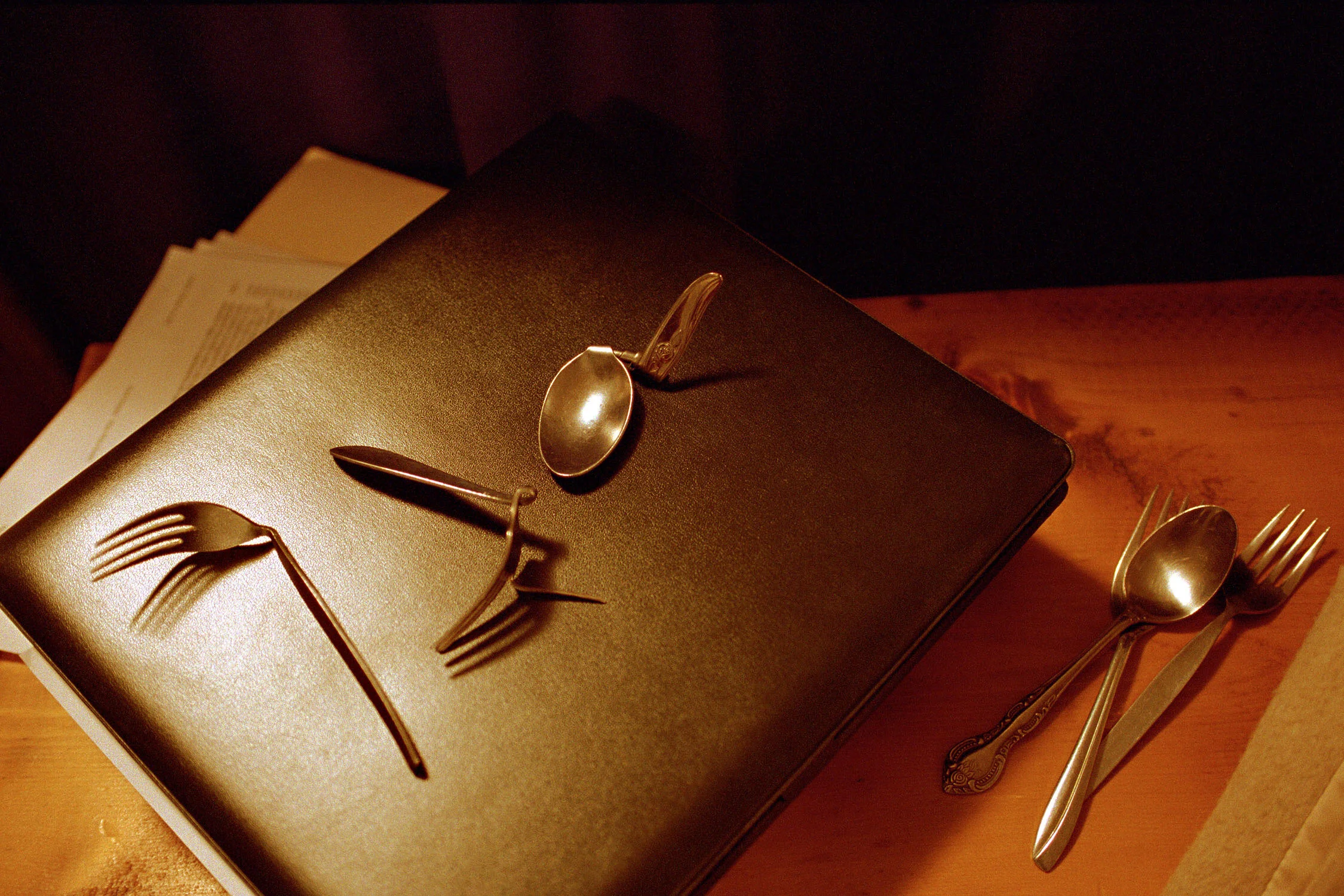
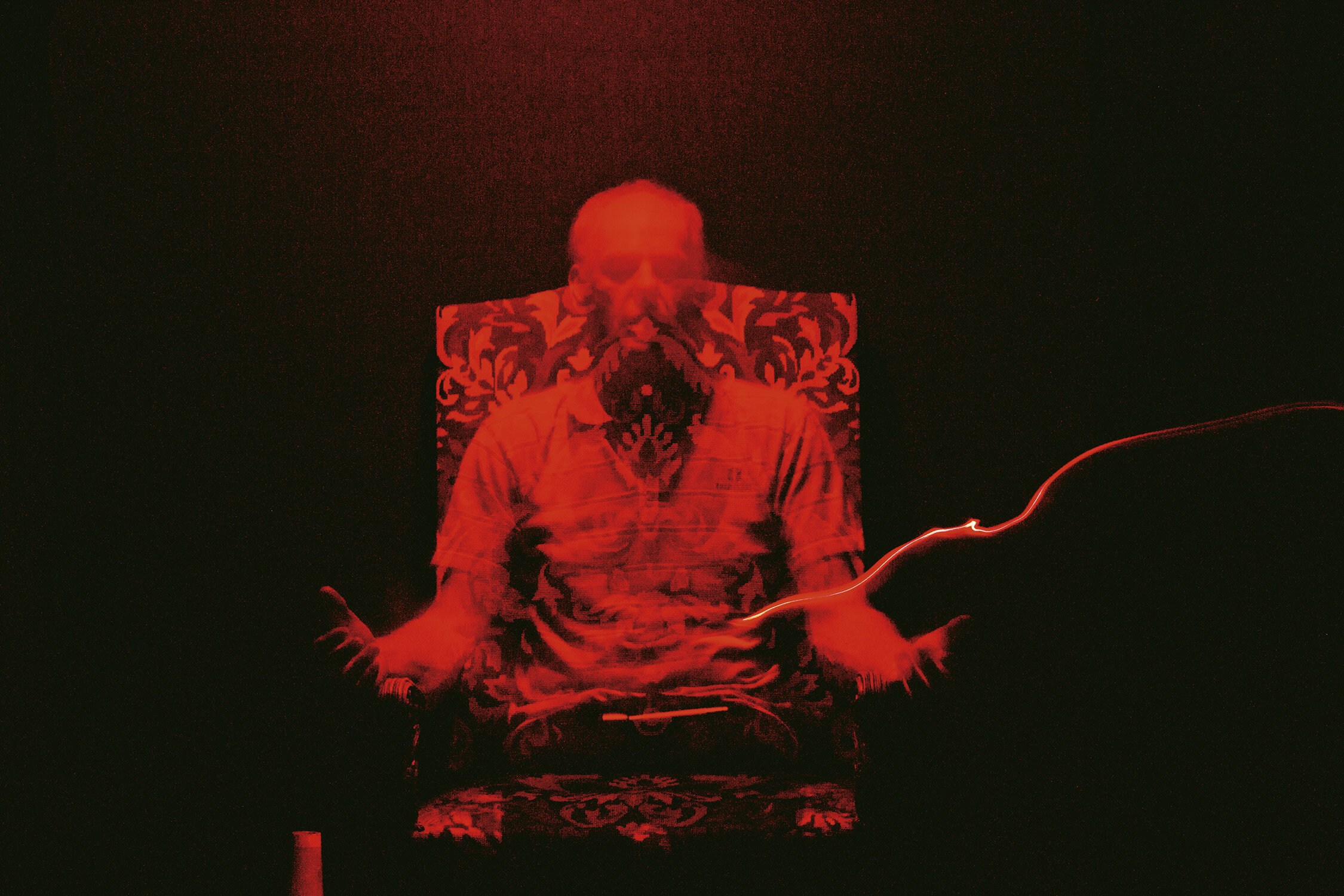
While she initially approached the project from a straightforward documentary perspective, Shannon says she struggled to photograph Spiritualism in a way that was true to the psychological-emotional dimension of Lily Dale. She asked herself, ‘how do you photograph the invisible?’ But after a few happy accidents with her camera, she became more open to spontaneity and experimentation (ie. using long exposures).

Often, she’d find the photographic anomalies ‘synced up with the invisible reality of the experience’ she was documenting. Keeping a non-judgemental approach, Shannon invites us to generate our own interpretations.

In her pictures we encounter the womb-like chambers of séance rooms and portholes into private worlds, which evoke questions about truth and visibility. What is real and what is happening all around us that we cannot see and therefore know?

Shannon writes: ‘Spiritualism’s material world pulsates with unseen energies; disembodied communication flows in from unpredictable sources; flesh bodies and discarnate spirits tangle with one another in darkened rooms. Photographing mediums as they navigated these thresholds sometimes felt like catching sand. The resulting images are attempts to capture something from this borderland.’

SEANCE_SHANNON_TAGGART_0014.jpg
SEANCE_SHANNON_TAGGART_0004.jpg
SEANCE_SHANNON_TAGGART_0013.jpg
SEANCE_SHANNON_TAGGART_0002.jpg
SEANCE_SHANNON_TAGGART_0012.jpg
SEANCE_SHANNON_TAGGART_0008.jpg
SEANCE_SHANNON_TAGGART_0010.jpg

All images © Shannon Taggart

In conversation With Lucie McKnight Hardy

Lucie McKnight Hardy’s debut novel, Water Shall Refuse Them, released this summer, is set during the infamous heatwave of 1976. It follows sixteen-year-old Nif and her family after they move to a rural village on the Welsh border after a family tragedy. It’s a stunning meditation on folk horror, bringing elements of the gothic together with a coming-of-age narrative. Published by Dead Ink Press, it’s become their fastest selling fiction title. I caught up with Lucie to discuss her inspirations.

Screen Shot 2019-07-14 at 12.10.23.png


Terri-Jane Dow What was your inspiration for Water Shall Refuse Them?


Lucie McKnight Hardy When I was two, my parents moved from London to a tiny village in rural West Wales. I grew up in the house next door to the chapel, and even though we weren’t chapel-goers, I was always aware of how important the chapel was to the dynamics of the village; it was a real core part of village life. A few years ago, the minister attached to the chapel published his autobiography, in which he claimed to not only have witnessed exorcisms being conducted in the area surrounding our village, but that witchcraft was actively being practised in the villages around where I grew up. This struck me as a fascinating premise for a novel: we tend to think of witchcraft as something that belongs to the distant past, but what if it was happening today?

TJD Why did you decide to set the novel in rural Wales?

LMH One of the reasons for setting Water Shall Refuse Them in Wales was because I wanted to take Nif and her family out of the comfortable surroundings of home and put them in an alien landscape. I thought there needed to be a catalyst for change in their lives: they have already lost a sister and a daughter, and it seemed logical to me that they would want to change their environment. This rural village in Wales struck me as the perfect destination for them: remote enough from the urban habitat with which they were accustomed for that unfamiliarity to contribute to the feeling of unease I wanted to establish. 

TJD How important is the setting?

LMH I also wanted to sustain a sense of ambiguity: nothing in Water Shall Refuse Them is black and white, but rather shades of grey. I wanted to reflect this in the location of the village – it is on the border of Wales and England, a hinterland. It’s a liminal place—neither one thing or the other—and this in a way is also a reflection of Nif; she’s caught in the middle between childhood and adulthood.

TJD I found Nif and her mother’s responses to no longer being part of a churchgoing family really interesting — Nif makes up her own rituals while her mother leans into Janet’s paganism/witchery. Could you tell me a bit about the occult influences on the book?

LMH I was conscious when I was writing Water Shall Refuse Them that I didn’t want to repeat the usual tropes of witchcraft. The Creed—Nif’s own form of witchcraft—is her own invention. She isn’t versed in the practise of back magic, so I deliberately didn’t spend a great deal of time researching it. I was more interested in the witchhunts of the sixteenth and seventeenth centuries and the heatwave of 1976. One good piece of writing advice I received was to constantly interrogate your characters’ motivations: what makes them tick and act as they do. I wanted to know more about this pseudo-religion that Nif has created with its relics and incantation, so I asked her. I ‘interviewed’ her, and transcribed what she ‘told’ me and this informed my understanding of the Creed better than borrowing ideas from established texts on witchcraft. Sounds bizarre, but it seems to have worked!

In presenting Janet’s own practises, I deliberately held back from naming the herbs and plants she uses in her ‘potions’. This wasn’t just laziness on my part—again, I wanted her set of beliefs to inform a collection of home-made actions, rather than something that conforms to historical practice. Is she a practising witch or is she someone who is using her own version of homeopathy to help Linda manage her grief? I’ve left it deliberately ambiguous.

TJD Water Shall Refuse Them is published with Dead Ink, and has become their fastest selling title — what has your experience of working with a small publisher been like?

LMH I’d had my eye on a number of independent publishers (particularly those in the Northern Fiction Alliance) while I was writing Water Shall Refuse Them as part of my MA in creative writing at Manchester Metropolitan University. After I submitted the novel as my dissertation, I started looking in earnest at finding a publisher. I was particularly keen on Dead Ink – they struck me as bold and innovative and prepared to take risks. As soon as they opened for submissions I sent them a sample of my book and was delighted when they requested the full manuscript. Soon afterwards, they made an offer of publication. That makes it sound like it was easy: it wasn’t. I’d had a few rejections from agents before I submitted to Dead Ink, so it wasn’t all plain sailing.

I have no experience of working with a large publisher, but I imagine there are several layers of hierarchy to be navigated, whereas with a small press, the author is much closer to the production process. For example, I was consulted on the cover design which, I’m told, is often presented as a fait accompli with larger publishers. On the whole, working with Dead Ink has been a lot of fun.

TJD You also have a story in this year’s Best British Short Stories collection, and a chapbook out with Nightjar Press — what was the biggest challenge for you in writing a novel versus writing shorter fiction?

LMH I think the hardest part for me of writing a novel compared with a short story is holding everything in your head for the time it takes to write the thing! I was constantly having to re-read to make sure that there weren’t any continuity errors or glaring omissions. With a short story, it’s possible to read the whole thing in ten or twenty minutes, and so it is very much a self-contained entity. After I finished Water Shall Refuse Them, I started writing short stories as an antidote to the long slog. I don’t mean that short stories are easier to write—if anything, the writing experience is a lot more intense—but the pay-off comes quicker. When you finish the first draft of a short story and know that it’s something you can work with and refine, it’s a fantastic feeling.

TJD What’s next for your writing?

LMH I’m still writing short stories and would love to be able to put together a collection. I am also in the early stages of a new novel, which I just need to crack on with, really. I’m also tempted to return to a novella that stalled last year, but which I’m very fond of, so would really like to finish. Decisions, decisions!

TJD And finally, what are you reading at the moment?


LMH I’m currently reading Broken Ghost by Niall Griffiths, which is astoundingly good and tells the story of three people whose lives are changed when they witness a vision on a Welsh hill. He establishes the different voices beautifully. I’ve just finished Susanna Moore’s In the Cut which is a very violent and disturbing novel, but one that I enjoyed immensely.

In conversation With Lisa Sterle, Creator Of The Modern Witch Tarot

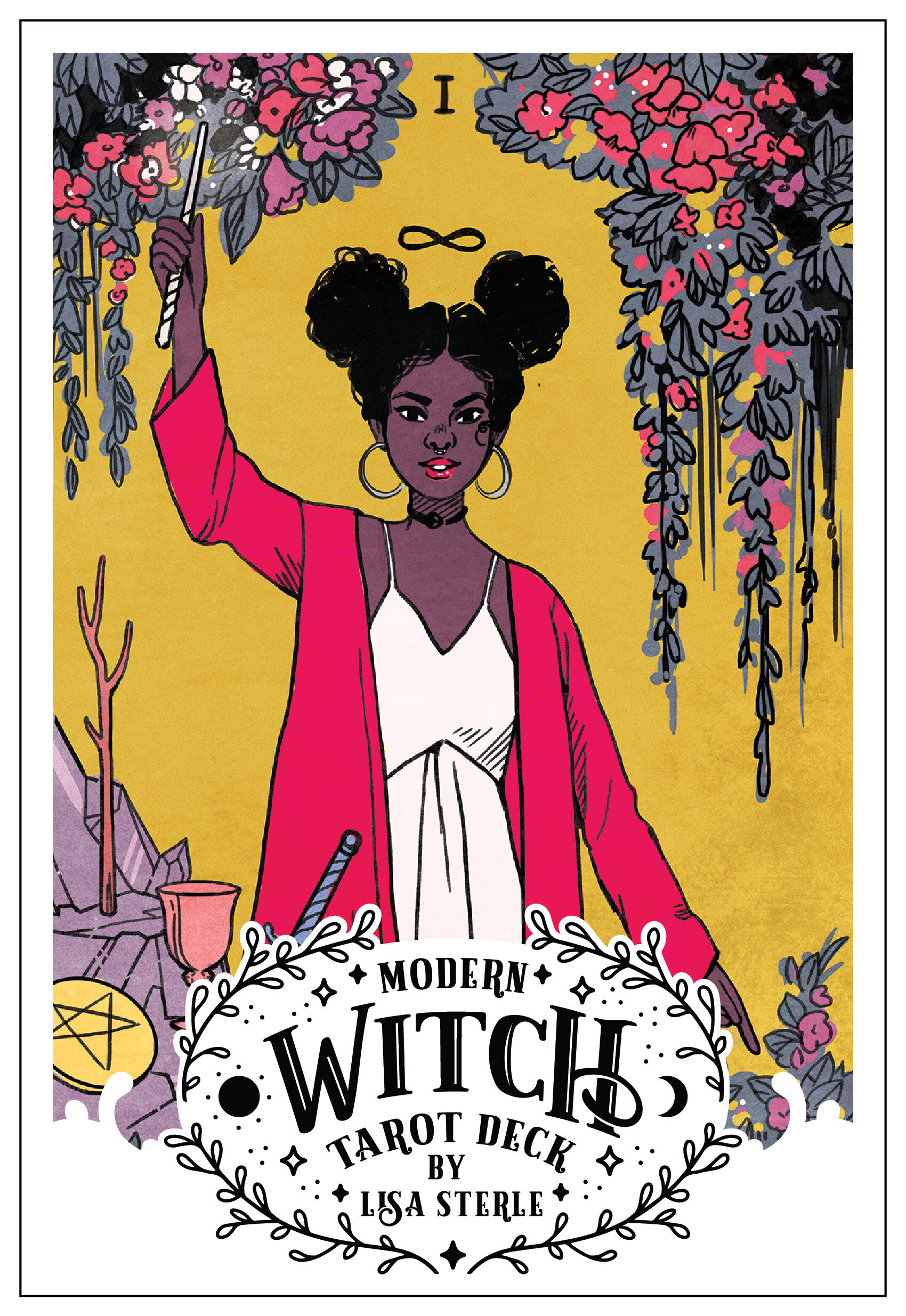
Lisa Sterle is the creator of the Modern Witch Tarot, a new inclusive tarot deck inspired by modern witches. Charlotte Richardson Andrews (The Culture Witch) had a chat with Lisa about her tarot journey and her new inclusive deck.

978912634033.jpg


Cunning Folk Congratulations on creating such a beautiful deck. Is it safe to assume you identity as a modern witch? And if so, could you speak a bit about your practice?

Lisa Sterle Thank you, and yes I’d consider myself a modern witch. As far as my practice goes, I actually mainly only practise tarot at the moment. It was the first thing that got me into witchcraft.

CF How did you first discover the tarot?

LS I think I first ran across tarot in high school, and I’m thinking it was probably through some witchy movie or YA book that I discovered it. I didn’t get my own deck and start reading myself until college; I had a few friends that regularly practiced tarot and looking through their decks was instantly fascinating and inspiring. I totally felt it calling to me right away. My first deck was the Thoth deck.

CF You say in the instruction guide to the Modern Witch Deck (MWD) that you began making this deck during a time of professional and personal (creative) gloom. Could you elaborate?

LS Yes, it’s a bit strange of an origin story. I was working a dead-end graphic design job that was draining away my passion for art and my faith in humanity. I was 100% burnt out and felt totally unappreciated and uninspired; I felt like my art hadn’t really gone anywhere new for a while. I didn’t know what to do. So the Ten of Swords was really calling to me during this really bleak period of my life. And like sort of this divine spark, I had my idea for the first card of the deck. The fact that I was able to transform a really bleak and negative period of my life into something positive is one of the things I really love about this deck and it speaks to my general mission with art.

CF Would you say the MWD helped you to course correct?

LS For sure. This deck was one of the projects that allowed me to go full-time freelance and my art has taken on such a new life creatively ever since. I’m so grateful for it.

10_Swords_tarot.jpg

CF The instructions feature a foreword by (New York fiction writer) Vita Ayala. How did you cross paths?

LS I first worked with Vita on a creator-owned comic back in 2018 called Submerged. They are a supremely talented writer and we really bonded on a lot of shared interests and similar creative inspirations when working on that comic. I really admire Vita; they are driven, super smart and inspiring as a creator. When it came time to figuring out who would be writing the foreword, I knew they were the perfect choice and they did an absolutely beautiful job. I couldn't be happier.

CF Now to the deck itself: did other tarot artists inspire you? If so, who and why?

LS Pamela Coleman Smith’s art was a big influence. There’s something about her bold, graphic style that has always spoken to me, but it really wasn’t until this deck that I really tried to explore it.

CF Alternative tarot decks have been around a while now, but the first one that really spoke to me as a queer millennial was Cristy C. Road’s Next World Tarot. Are you familiar with this deck?

LS I am not, but I’ll definitely be checking it out. I love getting deck recommendations.

CF I’m guessing you drew on pre-existing scholarship when it came to researching tarot symbols and archetypes. What/who were your go-to tarot books and experts?

LS I had a big stack of different books that I’d reference for each card design as a refresher on the different ways to interpret each deck. The books I went to most often though were Seventy Eight Degrees of Wisdom by Rachel Pollack, and Modern Tarot by Michelle Tea.

CF In total, how long did the MWD take to craft?

LS I’d say about four months to design and illustrate all the cards I think.

CF Talk me through the creative process. Did you work in the way that you’d normally create art? Or did you add tarot-adjacent practices into the mix? For example, did you ever experiment with meditating, divination or fugue states in order to divine which directions to go in art-wise?

LS My process didn’t differ too much from my normal way of working. I’d usually focus on a card per day, and spend time with the card itself. Studying the art in the Rider-Waite-Smith and other decks; reading up different interpretations and getting as deep as I could into the symbols and context. The whole while I’d be jotting down ideas and really trying to get to the heart of what I felt was most true about the card. From there it was sketching and layout time, where I’d take what notes I’d jotted down and focused on filtering those meanings through a modern filter. Then came a fun part, where I’d do fashion and style research and figure out the characters and personalities I’d be crafting for the card. All in all, it was actually a super fun and relatively painless process.

CF What medium(s) did you use? Were the images created digitally, by hand, or a mixture of both?

LS This deck was all digital, though I do make an effort to add an organic, traditional looking feel to my digital artwork. I do my sketching in Procreate on an iPad Pro, then I finish the inking/colouring and everything else in Photoshop on my desktop.

CF One of the first things that drew me to the deck when I came across it on Instagram was the palette you’ve used. Can you talk a bit about the hues and tones you chose to work with, and the meaning behind them?

LS Figuring out the colour schemes was one of my favorite parts of working on this deck. I definitely wanted it to be bright and eye-catching, with a mix of pastels and bright, saturated colors. I think it also has a vaguely ‘90s feel. My goal was to make sure all the cards looked great next to each other in a spread, so I had to have some strict rules for the palette to make it feel cohesive. One odd rule is that I almost entirely omitted the ‘standard’ blue hue, and everything that would have been blue is now shifted to mint. All yellows are more golden. Green is mostly absent unless it’s a teal. I also wanted each suite to have it’s own color scheme that visually ties it to its element. So Cups has a lot of mint/blues and pinks for water, Wands has a lot of golds and reds for fire, etc.

CF The MWD has a very glossy finish, and, when stacked, is rather wide and heavy for my rather small, thin hands – much wider than my Morgan Greer and Rider-Waite-Smith decks. Was this an intentional design choice?

LS Yes, mostly. The publisher and I hoped to have cards that felt quality, so we didn’t want anything too thin or small. We decided to do a larger-sized deck so that the art can really shine, and that was the case with the glossy finish as well; colors print more vibrantly with a glossy finish. But as someone who also has small hands, I understand the difficulty! I have to cut the deck and shuffle in smaller piles, which works. But maybe we can do a smaller sized deck in the future as well.

CF There’s a very clear commitment to diversity in regards to the way figures and archetypes are both named and depicted in this deck – from people of colour and plus size figures, to queered, androgynous archetypes and same-sex couples. You’ve also flipped some of the gendered cards – for example, The Magician (I), usually a white guy, is a young woman of colour, the King of Cups looks like a cis woman and The Hanged Man (XII) has become The Hanged One. Why was making this deck inclusive important to you?

LS It’s an inclusive feminist deck. Most of the people I know that practice witchcraft are women, or nonbinary, or anything but the white men that adorn the majority of the cards in the traditonal Rider-Waite-Smith deck. We have an incredibly diverse world, so much more than we see represented in a lot of popular media; I wanted to create characters within this deck that reflected the readers and their friends, figures they could relate to or aspire to be. I wanted the figures within these cards to feel like they could be part of your coven today.

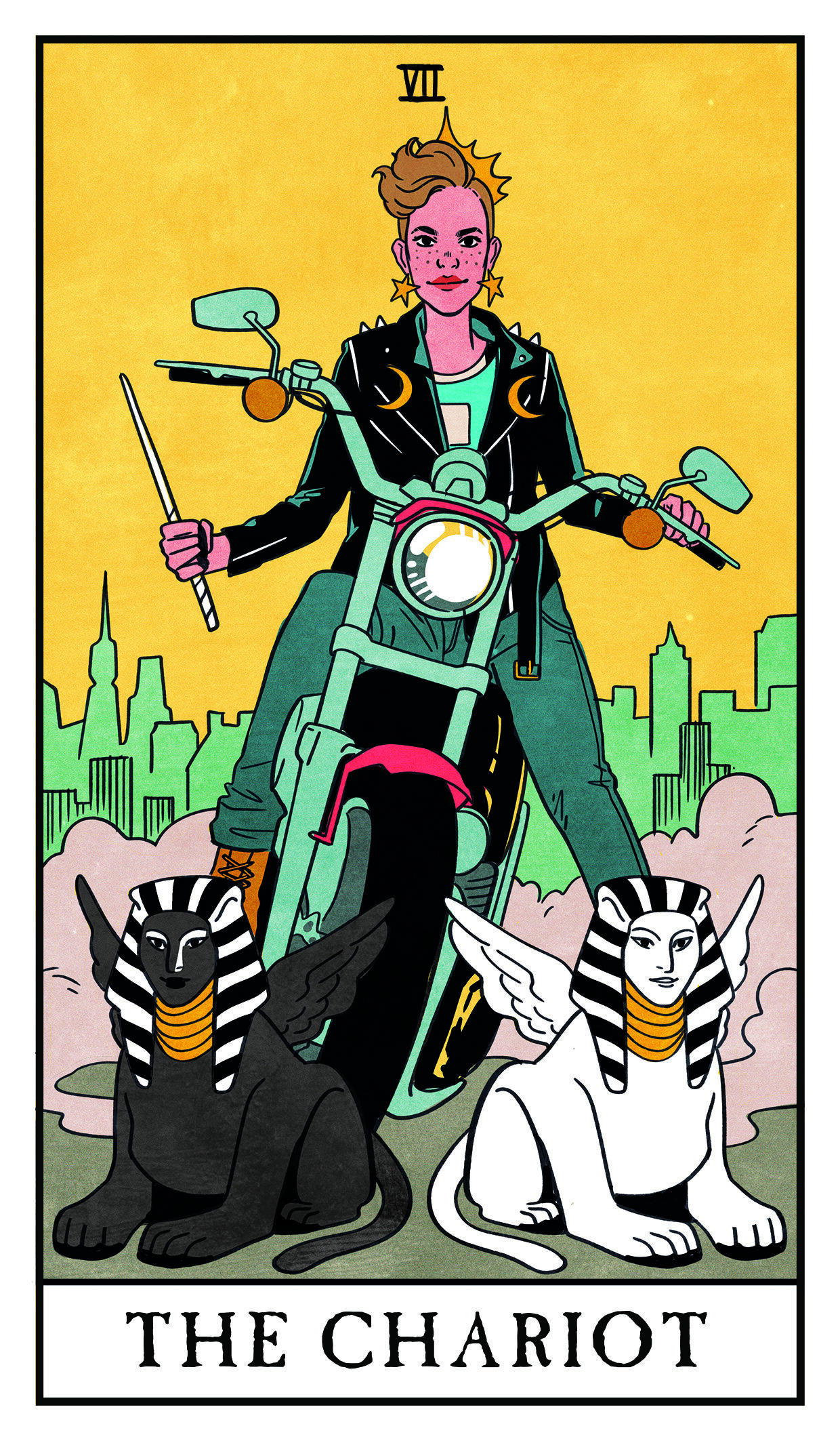
CF You’ve employed unmistakably modern imagery in the cards – for example, The Fool (0) is listening to an iPod-type device, while The Chariot (XII) is riding a motorcycle. Were you ever worried that modernizing the cards might date them, perhaps detracting from their traditionally timeless occult qualities?

LS I think attempting to create ‘timeless’ art is a sort of a fool’s errand. Sure, I’d love my work to persist through the decades, but that’s not really up to me as an artist. I can only try and create what feels true to me right now.

CF As well as updating the imagery of cards, I notice you’ve also updated some of its more traditional symbols around. The pomegranate print we usually see The Empress (III) wearing has transformed into a lemon print in your deck. What was the thinking behind this?

LS That was a nod to a particular musician that inspired that card in a big way.

03_Empress_tarot.jpg

CF You’ve also flipped other, traditional images; for example, The Lovers (VI) are usually pictured in daylight. In the MWD, we find them in a night garden. Were the changes you’ve made ever purely aesthetic, or was there a clear reasoning behind all of these updates?

LS Sometimes they were aesthetic, sometimes not, With The Lovers in particular, I think the night time setting adds a nice romantic element to their union.

CF Do you yourself appear anywhere in the deck? You’ve said the Ten of Swords was the first card you drew, but I wonder if we might also see you in a card like the Eight of Pentacles, hard at work at the drawing board?

LS Haha, yes! The Eight of Pentacles is indeed a self-portrait. I wasn’t originally planning on it, but when I got to that card, the meaning just felt too perfect for a bit of a self-insert.

CF Which card are you most proud of reinterpreting? Which card proved the most challenging?

LS It’s so hard to pick a favourite. The Ten of Swords will always stand out to me as the card that started the entire deck, and was actually the easiest for me to reimagine. I also love The Chariot and The Magician. As far as the most challenging, it tended to be the simpler cards that actually proved the hardest to reinterpret. For example, The Star was tough to figure out how to put my own spin on. Ditto the Aces. Mainly, because the imagery in the RWS is already so strong and iconic on it’s own, it was tougher to figure out how much or what to alter.

07_Chariot_tarot.jpg

CF You say that you hope the deck will allow would-be diviners to “find a path to your best self.” Has making it allowed the MWD allowed you to find your own best self?

LS Definitely. Working on this deck was such a joy, and honestly one of the most creatively fulfilling projects I’ve worked on. It really helped me get closer to figuring out my own personal artistic style as well, which is something I’ve struggled with for a long time. I hope that these cards speak to readers, and that the love and care I’ve put into creating them shines through.

The Modern Witch Tarot by Lisa Sterle is published by Liminal 11 in November 2019. Pre-order now, £21.99 standard or £65 for the special limited edition. All images © Lisa Sterle and Liminal 11.

In conversation With Kristen J. Sollée

Kristen J. Sollée is the author of Witches, Sluts, Feminists, a lecturer at The New School in New York City, and founding editrix of Slutist.com. Sollée kindly agreed to an email interview ahead of the UK release of Cat Call, her second book. Being the cat lady I am, I was thrilled to get my paws on a copy; it’s a well-researched and compelling exploration of the cat archetype and its connection to gender politics in magic, mythology, pop culture, folklore and beyond.

Photo by Natasha Gornik

ESK First, please tell me about your cat Cherie, to whom you dedicated this book.

KJS Cherie Purrie—a play on Cherie Currie, lead singer of The Runaways—came into my life quite by accident, but at the perfect (*ahem, purrfect) time. I was midway through writing Cat Call, my previous cat had died six months before, and I was in need of something to round out the book. Cherie was in need of a home, and as soon as she moved in I was completely and utterly changed. I had only been living with the cats of partners or friends for years, and having a cat again that I could raise from kittenhood really re-connected me with the power of the cat-human relationship. Much of Cat Call was written with her paws perched on the edge of the laptop, hovering near the delete key. She always seemed to know when to press it.

ESK Other than Cherie, who is your favourite cat? I’m thinking a cat from mythology, religion, literature, pop culture, as opposed to a cat you’ve met in person. 

KJS It’s so hard to choose, but since childhood I’ve been pretty enamoured with the sphinxes of Greek and Egyptian mythology as well as the winged cats in Ursula K. Le Guin’s Catwings series. There’s something about a winged cat that is so appealing, perhaps because the added appendage makes their otherworldliness all the more obvious?

ESK What inspired you to write a book about cats?

KJS When I was writing my first book, Witches, Sluts, Feminists, cats kept coming up in my research. There are long running associations between cats, witches, sexuality, and gender politics, so how could they not? Being the feline devotee that I am, I knew they deserved their own project entirely. (Cats are not known for their sharing abilities.) Cat Call continues the work of WSF around sexual liberation and bodily autonomy and art and politics but through the lens of the cat archetype. You might say I’ve been preparing for this book since I got my first subscription to Cat Fancy at 7 years old...

ESK Why haven’t we the stereotype of the crazy dog lady, or crazy hamster lady—why cats?

KJS It all comes down to the fact that cats have been inextricably entwined with our ideas about femininity and womanhood since the Ancient Egyptians envisioned their goddesses in feline form. (Bastet is the one we think of most, but even Isis and Hathor were sometimes pictured with feline features.) This association was then perverted by Aristotle, who deemed both women and female cats inferior beings, and then Christianity took up the mantle of the demon feminine/demon feline parallel, leading into the early modern witch hunts and finally the crazy cat lady stereotype today. Throughout human history, no animal has been gendered in the way the cat has.

ESK There’s a lack of nuance in people’s perceptions of cats. It seems they are either venerated or feared, considered cute or devious. Why do you think cats, in particular, are so polarising? Do you think this is changing? 

KJS I think it’s impossible to escape the designation of cats as demonic, as tricksters, as bad luck in Euro-American lore. There is also something frustrating about a “domesticated” animal that really won’t do as you say that either appeals to or totally turns off people. Add to that the fact that cats are most often viewed as feminine animals/women’s animals and that cat allergies can be quite nasty, and you’re either going to be firmly for or against them. It might be changing a bit now that there is less stigma attached to cats and “cat ladies” and cats have found such a home online, but I’m not so sure!

ESK Is the internet part responsible for making cat-loving acceptable?

KJS Absolutely. Cat videos reign supreme even after all these years. I mean, the phrase “internet cat video” can be used to conjure up everything we loathe and love about contemporary internet culture or the digital age as a whole.

ESK Many people who identify as rationalists reduce cats, and other animals, to machines incapable of suffering, feeling, and loving. Why do you think that is when science actually shows our cats do love us?

KJS I attribute that to anthropocentrism. One common side effect of rationalism, of positivism—of patriarchy!—is often speciesism, which allows humans to buy into the delusion that our cognitive abilities or cultural accomplishments mean we have more emotional depth than other animals.

ESK What distinguishes a familiar from a pet? Is this a reciprocal relationship or an exploitative one?

KJS To me, a pet is an animal that you care for, and a familiar is a magical partner. People have different definitions of what each means though. Some practitioners I interviewed said they don’t view their cats as familiars because they don’t think it’s ethical to involve them in their magic or leverage their abilities in any way. Other folks felt their cat freely gave them knowledge and insight and that the relationship was purely reciprocal.

ESK You write about how the suppression of the feline coincides with the oppression of the feminine. Do feminists need to liberate animals, too?

KJS I think that animal liberation—which means many things to different people—is certainly tied to feminist action. If feminism is about fighting patriarchy and fighting for gender parity, it makes sense that it also means fighting against the subjugation of animals and for equality amongst all life on the planet.

ESK On the topic of the stereotype that cats are female and dogs are male, you write in Cat Call about how cat-loving is perceived by some as a cure for toxic masculinity, and how some people are actively seeking out “cat men”. Is there some truth to the idea that the feline is feminine? In A Room Of One’s Own, Virginia Woolf wrote about how “psychological androgyny” is essential to creativity. So many male writers and artists seemed to love cats, as you pointed out Baudelaire, Mark Twain and Freddie Mercury, but also Jorge Luis Borges, Ernest Hemingway, Charles Bukowski, Neil Gaiman, Ray Bradbury, William Burroughs — the list goes on. There’s also the belief in magic circles that magic is feminine. To acquire creative or magical powers, do men need to tap into the feminine?

KJS This is a question I often wrestle with. Ideally, I would love to break away from the masculine/feminine dichotomy in all arenas, and stop applying gender to ineffable energies or practices that don’t require gender at all. That said, dominant cultural ideas about the masculine and the feminine are indeed pervasive and powerful and you could say that we ignore them at our peril. If we associate femininity with creative prowess, with intuition, with receptivity, then absolutely, we need the feminine more than ever to manifest, to make magic.

ESK How can we embrace the feline archetype and what is to be gained from doing so?

KJS Cats are icons of the untamed, of feral appetites that survive despite the constraints of civilisation’s most repressive, controlling functions. I believe these are indeed aspirational aspects to emulate, but how we do that is a bit trickier. Spending dedicated time with your feline allies and watching them closely is a good place to start.

Cat Call is available in the UK from 25 September 2019.

In conversation with Sophie van Llewyn

Sophie van Llewyn is the author of Bottled Goods (Fairlight Books), a novella-in-flash longlisted for the Women’s Prize for Fiction 2019. Her prose has also appeared in The Guardian, Ambit, Litro and the New Delta Review, among others. She grew up in Tulcea, in south-east Romania, close to the Danube Delta.

Set in the 1970s in communist Romania, Bottled Goods tells the story of Alina, who is regarded with suspicion by the secret services after her brother-in-law defects to the west. Alina turns to her aunt Theresa for assistance, a secret practitioner of old folk magic. Writing with a fairytale cadence, the author shows that there is hope beyond the difficult circumstances we find ourselves in. Sophie van Llewyn kindly responded to some questions I sent her via email.

Sophie van Llewyn_pic.jpg

ESK I’m curious. When not writing, you work as an anaesthesiologist. Has this in any way influenced your outlook? I can imagine you’ve had interesting conversations as people fall out of consciousness before surgery.

SvL Being an anaesthesiologist has influenced my outlook, but not as you think. I generally prefer to keep my conversations before surgery light and funny (people tend to be terrified before a surgery, so humour helps them relax a bit). What has influenced the way I see the world were the (patients') brushes with death that I witnessed. This is a fight doctors lose sometimes, no matter if they do everything right. It really puts things into perspective.

ESK Bottled Goods is based on your godparents’ story. Can you sum up the true inspiration for your novella-in-flash?

SvL In the communist era, controls at the border were very thorough, especially for people who intended to go to the West, even on vacation. The regime wanted to prevent its citizens from defecting, and sometimes Border Security took their cars apart in search for hidden cash or foreign currency. Upon leaving the territory of Romania, only a certain amount of cash was allowed per person. What started ‘Bottled Goods’ was this image of a hungry woman who had been detained for a day at the border. She had hidden something in a perfume bottle—something very precious that she was trying to smuggle across.


ESK What was the communist position on local folk magic and folklore in Romania at the time?

SvL This is a very interesting question. While communism persecuted the practice of religion, folklore was promoted and used in the interest of propaganda. In Romania, religion and folklore were hard to separate, so some bits of folklore were ‘written out’ altogether—like Christmas carols. On the other hand, folk tales went on to be printed in manuals and magazines. It had come to the point that folklore was even counterfeited to serve propagandistic purposes.

Think about this paradox: while in communism large gatherings in villages to dance the ‘hora’ ( a dance involving many people spinning in a circle) were forbidden, the communist age also meant the birth of the professional folk dancer.


 ESK Bottled Goods has a fairytale-like quality and you employ magical realism. This contrasts with the bleak, oppressive political regime: ‘Alina writes to Father Frost, ’Please make me a child again. A teenager. A student. A girl who hasn’t lost her father yet or her romantic views concerning the world, poverty, kindness, a parent’s love.’’ In many ways this seems to be about a return to that sense of wonder lost in the regime?

SvL I think it has much more to do with Alina’s despair at finding herself in a situation where she sees no way out. It’s a fundamentally human feature to be able to hope, even in the most desperate moments. Alina has to turn to the magical: the last resort. But in a world so densely populated by folk beliefs like Romania, trusting magic to deliver a solution doesn’t take much of a leap of faith.

ESK What is your connection to Romanian folklore and folk magic? What research did you do?

SvL I hardly had to do any research, really! Folklore and folk beliefs are still such an important part of the contemporary Romanian’s life. Perhaps not in the sense that Romanians would necessarily believe in the existence of Saint Friday, let’s say (who is a character out of the folk tales), but they do believe in the evil eye, for instance.

A person/child touched by the evil eye would feel very tired and have strong headaches. The evil eye (‘deochiul’) could be inflicted on someone (children are especially vulnerable) by making too much fuss about a positive quality—like repeating that a child is beautiful, or good, or smart. Children were guarded by red strings tied around their wrists, or by wearing a red item of clothing. I remember my grandmother also suspected a few times that I had been touched by the evil eye, and she recited a counter-evil eye. I have to specify that my grandmother was an educated woman, who had worked as a clerk, and lived in the city her entire life! Superstitions are just something Romanians heed and fear much more than the people in Western Europe.


ESK Can you speak a little about the folkloric elements in Bottled Goods? For example, Saint Friday, ‘shrinking people’, and Father Frost.

SvL ‘Father Frost’ (Moș Gerilă) is actually Father Christmas, but communists couldn’t acknowledge the existence of Christmas, a religious holiday, so they had to ‘rebaptise’ him. He brought gifts to the children on 30th December — the day when the last King of Romania, King Michael, abdicated, and Romania became a republic.

Saint Wednesday, Saint Friday and Saint Sunday were characters from Romanian folk tales. They usually helped heroes by granting them magic objects that help them in their quests. But sometimes, Saint Friday (and only Saint Friday) would come around women’s houses and try to prevent them from doing housework.


ESK Aunt Theresa and Alina use magic as a form of self-empowerment; magic is the pursuit for freedom—both personal and political. Is that what magic is for you in Bottled Goods?

SvL Magic is there to say that there are other forces at work in our world than the political. Think about it: even the most powerful states are powerless when confronted to natural catastrophes like floods, hurricanes or earthquakes.

As terrible as it was, the communist regime wasn’t for all eternity. And it was escapable, just as Alina’s story proves.


ESK Where can we read/learn more about Romanian folklore and folk magic?

SvL Petre Ispirescu’s Folk Tales from Romania have been translated into English, and they’re the most emblematic. They would be the folk tales every Romanian child grows up with — his and Ion Creangă’s.

In conversation with Pam Grossman

Pam Grossman is a Brooklyn-based author and witch. She is also the co-founder of the Occult Humanities Conference at NYU and host of The Witch Wave Podcast. Her new book Waking the Witch traces the history of the shapeshifting witch archetype, from scapegoat to the feminist reclamation, across politics, literature, art and popular culture. Pam shows us that the witch can belong to all of us, whether we identify with her literally or symbolically. It’s the book I’ve been waiting for, so I was thrilled when Pam so graciously agreed to a Skype interview ahead of her book launch.

Pam Grossman jpeg (1).jpg


Elizabeth Sulis Kim Your book is named after a Kate Bush song. Can you explain that?

Pam Grossman It’s definitely winking at the Kate Bush song. I love her. I love her music. I love that song. But she and I are also referencing a pretty horrific means of torture that was used during the time of the European witch hunts, which was sleep deprivation. In order to get a so-called witch to confess, you would not allow her to sleep. You’d wake her up in the middle of the night and try to get her to confess when she was more vulnerable, when her defences were down. So there is that kind of dark background to it as well. I love that idea of re-appropriating this terrible practice and transforming it into a kind of call to arms and celebration. I loved even the phrase being re-appropriated into this positive phrase, a phrase that will hopefully galvanise people and allow them to feel inspired by this archetype in the way I am.

ESK Why were you drawn to witchcraft as a child?

PG Oh my goodness. I often say “baby I was born this way.” I just loved books and television shows and film and artwork that centred on magical females. Sometimes those were witches. One of my favourite novels growing up was Wise Child by Monica Furlong, which I mentioned in the intro to this book, and that was a very powerful, very witchy book. But honestly I loved mermaids, I loved fairies, I loved anything that had to do with the magical feminine. I was just a very imaginative kid. My love of creativity in all forms, whether that was drawing or doing spells in my backyard or writing stories, all kind of developed at the same time. I really see my creativity and my magic as two sides of the same coin.

ESK How did your parents take you becoming a witch?

PG I started publicly calling myself a witch as an adult, over 10 years ago. But privately thinking of myself as a witch—or some kind of magical girl— since I was very small. And my parents were honestly very encouraging. They’re Jewish and I was raised Jewish. But both of my parents are artists. My dad is a musician and my mother is a painter. They’ve had many different day jobs but art was a big part of my upbringing. My mum is very into the divine feminine and goddesses and my dad is very into meditating and Buddhism. So I was very fortunate to be raised in this eclectic and open-minded and creative household. My parents just wanted me to be myself.

ESK In Waking the Witch, your perspective seems consistent with Ronald Hutton’s view of witchcraft being a very creative, non-dogmatic path, set of beliefs or a new religion. You talk a lot in your book about how witchcraft is not a set of dogmas but something personal. You also write about your initial discomfort at participating in group work and joining covens. When people come together in a group, how do you avoid groupthink and how do you avoid creating dogmas?

PG I think one of the great things about witchcraft is there is no one leader. That can also be challenging at times, but because there is no one leader, because there is no one book, one set of dogma, no pope or one high priestess or authority figure the way there is in some other religions, that really allows for free thinking and evolution. That also means there is debate and there are some different perspectives and interpretations when it comes to what magic is and what a witch is and how a coven should operate. I can only speak to my own experience, but generally speaking, it has been hugely positive for me to find groups of kindred spirits who are fortifying each other and supporting each other and connecting with each other. While the image of the solitary witch is certainly part of the archetype, and I was a solitary witch for most of my life, we need each other as human beings. We can’t change the world by ourselves. So I think for whatever shortcomings groups may have, they are ultimately the way forward as they are a way of pulling our resources and sustaining each other, and we need that if we are going to make the changes that need to be made in the world. That doesn’t mean everyone needs to join a coven. For some people, their solitary work is hopefully fortifying them enough so they can go do whatever work they need to during their everyday lives. But I do think that unity and interconnection while still respecting each others’ individual perspectives is the way that we’re going to fix the broken parts of this world.

ESK People are increasingly interested in magic and witchcraft, feel in many ways an existential need for it, but often struggle to actually get on board with the belief in magic, deities and the rituals. How can you reconcile the two?

PG This is really one of the thesis statements of the book. The term ‘witch’ means so many different things depending on the context. We’re taking a word that has traditionally been used as a negative epithet against people, particularly women, for many hundreds if not thousands of years, obviously in different languages too. To me, I think the most useful way of thinking about the witch is as a symbol or an archetype, and so nobody owns that word. I know some Wiccans or some modern Pagans or some people have what they identify as a witchcraft practice in their own family lineage, may feel ownership of that word, and I can see why. But at the same time, it is a word that has been fairly recently re-appropriated as a positive thing to be, because it was such a negative word that has been used to brutalise people. For me, if someone calls themselves a witch, it is an act of reclamation. That can be for spiritual purposes for sure. But it can also be for political or cultural purposes, so if someone calls themselves a witch because they are a feminist or an environmentalist or they see themselves as someone who is subverting white cis straight heteronormative forces, I’m all for it. If that’s a word that gives them a sense of empowerment and allows them to tap into their own purpose and meaning-making and change making, then I think that’s a wonderful thing.

ESK So there’s been a boom in witchcraft in the past few years. You wrote about how the witch archetype is often something people who are somehow marginalised or feel like an outsider identify with. You also wrote about the re-appropriation of the term witch hunt, often by middle-class white men in power. Do you think the witch can ever be re-appropriated by people aren’t somehow deemed ‘other’ by society?

PM I really grapple with this question a lot. To be honest, I don’t have a clear answer to it. But I think we’re talking about a few different things at the same time and I think it’s important we tease this out a little bit. With my own biases and and my own opinions about what the word means to me, I do think it has come to symbolise someone who carries a spirit of rebelliousness and transformation and defending the most vulnerable, someone who is a feminist, someone who believes in the powers of imagination and intuition to make literal, material change in their lives and in the world, so it has that very specific meaning to me and many other people. But I can’t stop anyone from identifying with that word. And it is a really curious, shapeshifting word that has so much nuance and so many facets, so people are going to continue interpreting it and giving it many new meanings for many years to come. Ultimately it’s a word which no one has ownership over, and ultimately there’s no gatekeeper for that word, including me.

The question: can white people who call themselves Wiccan or witches—but are doing so by appropriating certain cultures that are not white—is that a problem? Absolutely it’s a problem, and I talk about that towards the end of Waking the Witch. There’s a question in society in general about appropriation and being respectful to cultures other than one's own—people’s backgrounds other than one’s own, acknowledging your behaviour and being responsible. Essentially I think that is its own issue. So when it comes to magical practice, certainly there are certain practices that originate from the African diaspora, from indigenous cultures, certainly in America but also all over the world. That can be very problematic and offensive and exploitative. A really good example is the popularity of so-called “smudging”, which certainly in the US has an offensive association with Native American people. To them, even that word is a word that belongs to their culture, a ritual that belongs to their culture. It doesn’t mean you can’t burn herbs to protect yourself—but to use the word without getting permission to use it or knowing what that word means—or what those rituals are— is very offensive. Can anyone just call themselves a witch? Can a chick who’s just really into crystals who has just got into them a month ago call herself a witch, compared to someone who might have been studying witchcraft for most of their lives, or who have gone through certain initiations, or who has done tonnes of research about it? I think it’s that kind of conversation that I think is honestly a bit of a waste of time. People are attracted to explore the archetype of the witch at many different times of their lives. Who am I to judge someone who is just very enthusiastic and new to this community or this word—who might not have the same experience I do. Also our idea of who is oppressed: who am I to judge? Obviously, you need to know your privilege, I think especially here in the states, people of colour, women, non-binary people and trans people definitely do not have the same rights as cis white men. So I think that’s why the archetype of the witch is so attractive to people of colour and gender non-binary people and trans people and queer people, because the witch is so often an outsider.

ESK Thank you for such a thorough answer. Quite timely, you wrote about the threats to bodily autonomy in the US in your book—and obviously, things have got worse since. Generally, do you think people turn to magic when they feel politically disenfranchised?

PG I think that’s absolutely part of it. One issue I have with that though is that magic never goes away. There are always people who are practising it, studying it, attracted to it, using it in their own creative expression, but in terms of why it seems to get more popular, or at least the media seems to focus on it more, it is certainly a means of tapping into one’s power, particularly when our governments, our businesses, our religious organisations are oppressive and harmful, which we’re seeing all over the place. So I do believe that magic is a really great alternative system for world-building. If you look at the four waves of feminism, at each crest of those waves you see a renewed interest in the witch, and you see the witch being taken up as this symbol of feminine, rebellious power. Autonomy over bodies that are not up to the “standard” of whoever is in power and whoever is making the rules. In terms of a pattern, absolutely, but I always want to be careful because I don’t think it’s as simple as witches being a trend. I actually see it as more a growth in interest in this archetype that’s gaining momentum over time and has been since the 19th century when women and people of colour were starting to demand rights and to tap into their own sense of worthiness, particularly here in America.

ESK Speaking of “tapping into one’s power,” you’ve said that for you magic is synonymous with art. Can you just expand on that? I mean, what is magic for you personally? I think that’s something I’ve struggled with myself.

PG I think the word magic is like the word witch in that it means so many things, and it depends on the context and it depends on who is using it. When I’m talking about magic, I’m talking about an invisible force that is catalysed by the imagination and ritual to make consciousness shifting change, which can often result in material change in the real world. I know in my own experience that my own focus and attention and intention are all important tools in my own magic-making and that my spells and my creative work are all more effective when I’m focusing my imagination, attention and intention on the work. In other words, every time somebody draws a picture— is that magic? I’m not entirely sure. I think there’s a relationship there and when it is infused with intention then it can be a magical act.

ESK Why do you think people are still scared of magic?

PG Because there have been thousands of years of propaganda against it. I think people fear the unknown— they always have. Certainly, we saw in the middle ages and early modern period, a very targeted campaign not just against witches, but against magic and the occult in general by the Church. There started to be an influx of translations of occult books from other cultures that the Church deemed very threatening. As I write in the book, the devil wasn’t even that big a concern to the Church. The devil is barely mentioned in the bible, and really it was when these books started getting translated in the middle ages. So really it was in the middle ages that the Church started feeling very threatened by all these occult books that started being translated and these outside forces, and that’s when the devil as a character played a much bigger role in Christian rhetoric. Shortly after that the witch quite literally became his bedfellow in stories and in writings about diabolism, which was seen as a very real threat to people but certainly to the Church overall.

ESK And what about with the conflict between science and magic. I think science in a way has the same goals as the occult—to explore the unknown and to discover new things. Do you think that the same sort of discourse that’s anti-witchcraft and anti-magic continues in the so-called “rational” age?

PG I certainly think so, particularly in academia there’s still a lot of disdain for magic. It’s seen as the opposite of so-called rationality and objectivism and empiricism. So some people think that, but what’s interesting is if you think about someone like Isaac Newton, he was very into alchemy and mysticism, and now with studies of Quantum Physics and all these amazing things that are showing that in fact, our thoughts can affect the material world in literal ways, I think those lines between science and magic are starting to blur once again the way they did pre-enlightenment, because magic and science were kind of considered part of the same spectrum. So I think we are starting to circle back. There are so many people now who are starting to get interested in things like spirituality and psychedelics and meditation, all of this stuff that was often seen in the more mystical realm, and people are starting to realise that there is some kind of science to it, that there is an actual physical effect to these different practices. So I think we’re starting to circle back to a time when spirituality and science are seen as having this very deep relationship that is real and that one doesn’t necessarily have to discount the other.

ESK Definitely. We’ve come to think in very categorical terms, particularly in Western society. Many of the artists, musicians, writers and some scientists I know were in some way influenced by the occult. So do you think history is cyclical?

PG I don’t know. In a lot of witchcraft conversations we have, we tend to use the image of the spiral - particularly one that spirals upwards, picture yourself climbing a mountain or up a spiral staircase. It’s this notion that things are improving and we are elevating our consciousness together, but when you do that you keep having to loop backwards. It sometimes feels like you’re having to retrace your steps, and it sometimes feels like you’re not learning from history, but in fact, you have to revisit some of the dark shadowy things in order to move forwards and upwards. So that’s the image that resonates the most for me, and it’s one I really hang onto, especially in tough times. I know you’re going through difficult times with your government, here in the US it really does feel like we’re going backwards. I just have to hang onto the notion that we’re doing that in order to really look at our shadows and our monsters and hopefully figure out ways to move through them so they don’t have to keep coming back to us, and that we’re getting to be more sensitive, kinder and more compassionate people. People who care about the earth. People who care about the most vulnerable. People who care about each other.

ESK That’s a really hopeful perspective.

PG Yes, for me the witch is hopeful in that way. You can’t talk about the witch without talking about a history of horrors against women and against outsiders, and the fact that the witch has been re-signified as this beacon of hope, and that we have shape-shifted her and re-made her, and she shape-shifted and re-made us in turn, is something I see as extremely hopeful. That’s one of the biggest takeaways I hope people get from my book. Even though there’s a lot of pain and suffering and oppression, that is inherently part of this archetype, it is ultimately a liberating force that I think can shine some light and illuminate our path forward.

ESK Yes, I got that from reading your book. I saw you also started the Occult Humanities Conference at New York University, despite the aforementioned general academic disdain towards the occult. How did that come about and how have other scholars taken it?

PG Interestingly we are seeing more and more classes and academic degrees that are including studies of esotericism and witchcraft and the occult. It’s happening in the states and some areas throughout Europe, including England. I would say it’s been in the past 10-15 years and it now seems to be gaining steam and validity. Remember, just because you have a conference doesn’t mean you have to believe in it. You and I know a lot of the people who are attracted to this material also have some kind of spiritual practice. But there are those who don’t and it’s still important that we study the history of these concepts and practices. So I’m really excited by the fact academia is starting to embrace these different paths of scholarship. And obviously, they should because the occult has been hugely influential on so many people throughout history who have shaped our culture. If you look at art history alone, the whole advent of the modern art movement has spiritual roots, and roots in theosophy and spiritualism and ceremonial magic and all of these things. Just because it might make some scholars uncomfortable doesn’t mean it’s not a very key part of the lineage of thought in our culture.


It gives me a lot of hope because there are so many indigenous cultures that have shamanism and ritual and consciousness-altering plants as part of their healing practices, and I think for a long time there has been the notion that these cultures were “primitive” and now scientists are starting to realise that those people got it right all along, that they weren’t just making things up because they were ignorant, but actually they were tapping into some deep wisdom. It will only benefit us if we honour those practices in respectful ways and learn from them. We’re seeing it in the environmental movement, certainly in the medical sphere. I was just listening to a podcast this morning with Michael Pollan, the writer who famously has written about food and agriculture for many years, his most recent book How to Change your Mind, is about psychedelics, how they can heal depression and anxiety and PTSD. This is using the plants of the natural world that many shamans have been using for many thousands of years. I’m excited by the notion of science and magic and spirituality all learning from each other.
Waking the Witch: Reflections on Women, Magic, and Power by Pam Grossman to be published by Gallery Books, an imprint of Simon & Schuster. Available 11th June in the US, 11th July 2019 in the UK. You can read an excerpt from the book in Time magazine.

Tarot For Modern Times: in Conversation with Litwitchure

Since last summer, Litwitchure — otherwise known as Fiona Lensvelt and Jennifer Cownie — have been delighting crowds at festivals and literary events with their fabulous tarot cabaret, interviewing authors, hosting workshops, and offering tarot consultancy services. Terri-Jane Dow caught up with Fiona to talk tarot.

Photo by Gavin Day

Photo by Gavin Day

Firstly, can you explain who and what Litwitchure is?

We are Fiona Lensvelt and Jennifer Cownie, 32 both.

We're London's first and so far only literary tarot cabaret and consultancy, which is a rather opaque way of saying: Jen and I interview authors using occult methods. Rather than asking the questions in the usual way, we read their tarot cards. Jen's background is in book publishing and marketing; mine in journalism and editing. We've both spent a lot of time, professionally and personally, around books and authors. Litwitchure is our way of injecting a little mischief into our work.

How did you both get involved in tarot reading? Was it something you'd always done?

We've long been dabblers but as anyone who has dabbled in tarot probably knows: you need to do a lot of work to learn the cards. So a few years ago, we decided to take a course at Treadwell's in London, which helped us to cement that knowledge and began us on our journey to become certified card slingers.

Why do you think there's been such a tarot resurgence recently?

I guess one reason might be that we're living in turbulent times: there was a resurgence of interest at the start of the 20th century, when times were tough. Today, many people feel that the systems that are meant to govern us and protect us are broken. The future feels uncertain and people are turning to alternative methods — however unlikely — to seek reassurance or understanding.

Another thing worth noting is that this new wave of tarot is much less focused on fortune-telling than it has been in the past. Many people, including us, are using tarot not as a way of predicting the future but of reexamining the present. For many, the tarot has more in common with mindfulness than mediumship. For us, it's also a cracking conversation device — when you place tarot cards in front of your querent (the term that is used to describe a person you're reading for — it means "one who seeks"), it doesn't matter if they're well versed in the tarot or not. Everyone responds to the images and symbols that are laid out before them. Think: Rorschach blots with more mystery to them.

What are your favourite tarot decks?

I have to say, I love the Rider-Waite-Smith deck, illustrated by Pamela Colman-Smith, which was published 110 years ago this year. The RWS is the best-selling tarot deck in the world but Pamela died with barely a penny to her name and in obscurity. It's only now that Pamela's legacy is being reappraised and rightly so. The artwork may look a little outdated to some but her imagery is so rich — the more you get into the history of the cards and the tarot, the more it bears fruit.

I love and regularly use the Spolia deck by Jessa Crispin, formerly of Bookslut, and illustrator Jen May. It's based on the RWS but the images, which are collages, are more modern and free of the "woo-woo" occultness that occasionally puts off those who are new to the cards. People respond very well to this deck when I use it and tarot readers can gain a lot from reading Jessa's interpretations of the cards. Her interpretation of the Lovers is spicy! And her Ten of Cups is fabulous, too.

What advice would you give to budding tarot readers?

Learn from someone who has been using the cards for much longer than you! And be creative with how you could use and adapt tarot for your own purposes.

What's been the best thing about Litwitch-ing, so far?

Travelling the country with my best friend Jen, combining our favourite things: books and tarot (and, often, wine)

In conversation with Illustrator Alexandra Dvornikova

Alexandra Dvornikova is an illustrator based in Saint Petersburg. At Cunning Folk we’re huge fans of Alexandra’s work and delighted to be able to share it. Her dreamlike illustrations of flora and fauna mirror her everyday life, much of which is spent immersed in nature, foraging for mushrooms and feeding birds. Her Instagram feed is an enticing invitation to step into the woods we have for so long avoided. We spoke with the artist about the deeper meaning behind her work and her thoughts on magic.

Moon-atnoon.jpg

Follow Alexandra Dvornikova on Instagram @allyouneediswall


CF Why do you draw?

AD It’s obvious, but I really love drawing. Since early childhood, it was my favorite thing to do. I loved it even more than playing with toys because it was possible to imagine absolutely everything I wanted without any limitations. I think what I still appreciate most is this ability to create a whole new world from nothing just from imagination.

CF Who are your main influencers?

AD I think my main influencer is Carl Jung. His books are something that I'm coming back to again and again. In visual art: Ivan Bilibin and Yevgeny Charushin, among others. I grew up on the books they illustrated and that’s imprinted in my mind on a very deep, almost subconscious, level. Dark and beautiful tales with mystic powerful landscapes illustrated by Ivan Bilibin with palpable love to nature in each brush stroke, attention to tiniest details,  touching and simple animals with individuality by Yevgeny Charushin. I absorbed their perception when I was a child and I think it affected all my future life. It changed the way I see the world. In terms of music, it could be John Frusciante. I was 14 when I first listened to his album Niandra. He was nearly dying when he recorded it. It’s dark, very sincere and the music is beautiful. His openness taught me a lot.

830d7550328753.58cdb0c6f0c60.jpg

CF Which stories from folklore, in particular, inspire you?

AD Honestly, I don't feel inspired by particular stories. I think it’s a special sense of archaic story - or myth - that inspires me. It's hard to explain. The numinous sense - the sense of Mystic, these special places between the other world and our world. Usually, I feel something that could be such a tale, it comes from the inside, but I can't write and I always see some fragments of it, so I don't know the whole story. It feels like a momentary flash of some old forgotten memory. I love to think that maybe it's something that I inherited from my ancestors from centuries past and I just somehow recall it. It definitely has its own power which doesn't depend on me, I'm more like a transmitter. I noticed, for example, that the brighter this flash is - the more people will resonate with the work. I just try to depict it as it feels to me and to share my awe and enchantment. Maybe some particular parts in the structure of a folktale draw more of my attention. When the hero is lost (usually in woods) and it's uncertain what happens next - these moments always fascinate me.

CF What place do you think magic and folklore has in the world today?

AD It’s hard to say for sure. I think nowadays it stands in opposition to the pragmatic reality, being instead a good way of escapism and enriching life of the soul. Not so long ago, maybe even 50 or 100 years ago, there was a different situation entirely. For many people magic and folklore were a part of everyday reality or at least important mental representations highly intertwined with life.

I can see five types of relationships between people today and magic (and archaic knowledge). I made a very rough classification:

1. Sincere belief, when the scientific understanding of the world becomes mythological by its nature. The person actually lives in the mystery world and can easily explain everything by energies or even witchcraft - electricity, physical illness, work or relationships difficulties. Something that fits the term ‘magical thinking’.

2. Nostalgic: "I want to believe" which is a little bit like a game that has an important role for an individual who lives "in two worlds at the same time". Metaphorically speaking, they already ate the forbidden fruit so will not get the magician to heal their injuries. But magic and folk (symbolic) representations still play an important role in their inner reality. Outer reality may be not affected at all or affected on the symbolic level.

3. Researchers who study these topics for many different reasons including aesthetic interest. Due to the nature of their interest, they stand at a distance from actual beliefs in magic and watch them from an outsider’s perspective, not letting it mix with their view of the world.

4. Neutral individuals. They are very indifferent to magic and folklore, occasionally they may read a folktale or watch the magical movie, but they have no interest in looking deeper because they have other unrelated interests.

5. Magicophobes and those who fight against magic. People who feel some discomfort regarding the existence practices/beliefs in their rational picture of reality. People who can often deny even the cultural importance of folklore and magic. I have an assumption that on some level they are afraid of some irrational power of these phenomena. Their protection is to laugh and deny. Their world is very rational, well-explained and materialistic.

Of course, this is very approximate and some groups can mix. For example, I personally fall in between 2 and 3 and can sometimes switch (even if these feel like very different approaches).

goats.jpg

CF Why do you think so many people are returning to these stories?

AD I think those who return are seeking something more than just a "mechanical" material life with endless consumerism, rationalism and career competitions and it's one of the possible ways to return the meaning to life.

We always had magic (I mean the broad term, including religion) in our lives since the beginning of humanity. It's something rooted very deeply in ourselves and it is something natural for us as a species. There’s even the opinion that animals have something resembling magical beliefs like the well-known experiment by Burrhus Frederic Skinner, ‘Superstition’ in the pigeon’.

Magic was disturbed and nearly destroyed not so long ago. It seems to me that humankind reacted by suffering increasingly from mental health-related problems. On the one hand, it's just a natural development for humans to gradually abandon superstitions and try to find the objective truth, at least the trend is that society becomes more and more humane and accepting (again, I talk very broadly about people in general excluding some cruel political games). But on the other hand, we seem to have nothing in to fill some kind of emptiness inside which appeared when the large network of meanings which was connecting us to the universe disappeared. Many people need something to believe in, otherwise life is not as meaningful as it could be.

sweater_700_hi_res.gif

CF You seem close to nature. How important is this closeness to you as an artist?

AD Extremely important. I can't do anything without recharging in nature. It's part of a cycle - I take something (mostly through my eyes) and I return it as drawings. And actually, I do not exclude myself from nature. I think I'm a part of nature and it’s some power in nature that forces me to draw, so somehow it is possible to say that nature reflects itself through me. My brain and my hands and my eyes are made by nature. Maybe I don't have good enough hands and skills and patience, but it still works this way.

I have a very special relationship with nature, I see it as a teacher and a partner. If I ask, it always answers. It shows me a lot (I just know how to ask it to show me), I think nature trusts me with some of the secrets it prefers to hide from many people. I think nature "knows" that I can speak a bit from its perspective, expressing something that it wants to say. But it doesn't mean that I'm good at it or anything like that. It's just my relationships with nature.

memento_mori_opt_700.gif

CF You’ve spoken before about the unexpected nature of drawing - how you often don’t understand your finished works. Is the beauty of drawing - the mystery of delving into the unknown?

AD Yes, for me it's like that.

deer2.jpg

All images © Alexandra Dvornikova