The Myth of Disenchantment by Jason Josephson Storm – read by Elizabeth Kim
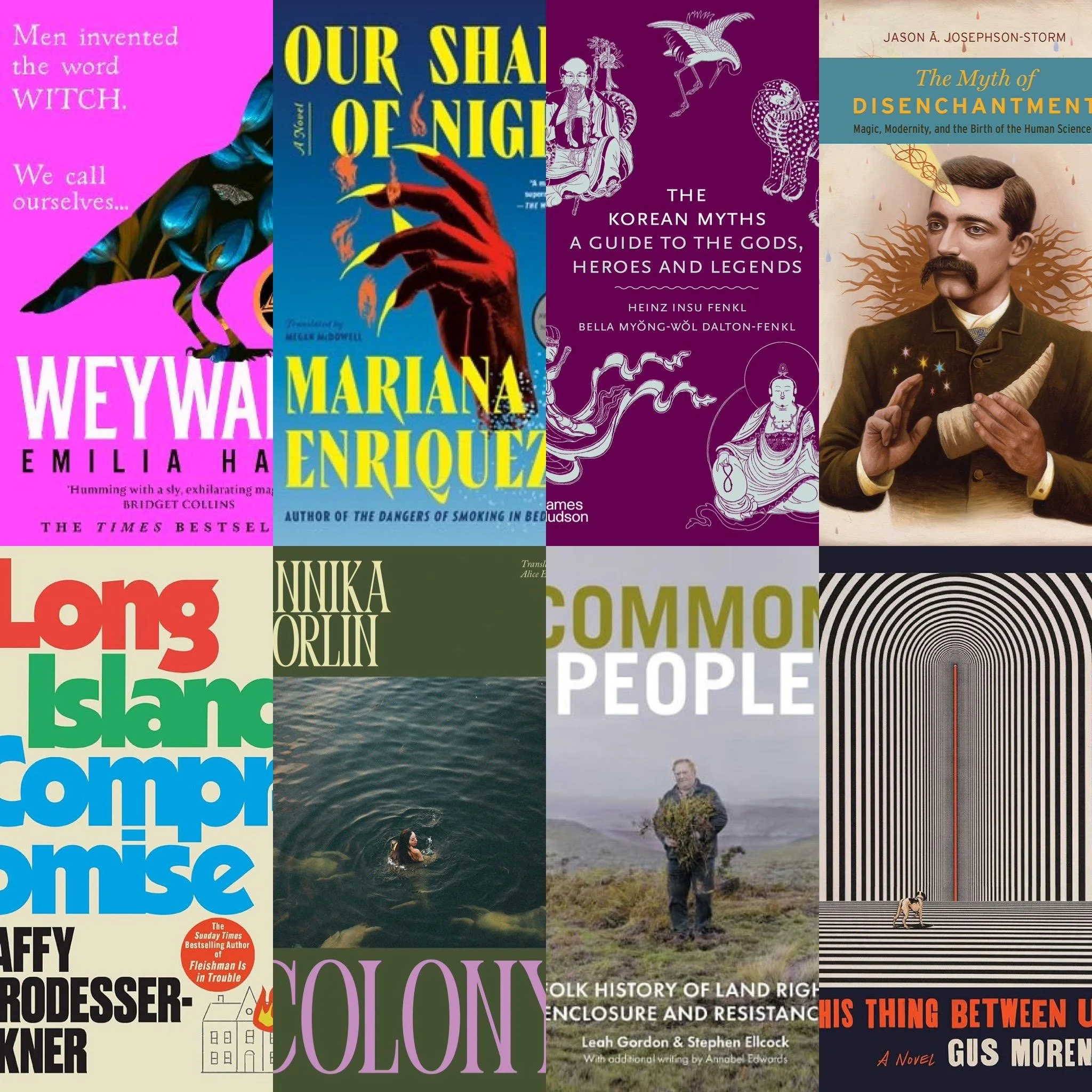
At the turn of the 20th century, German sociologist Max Weber hypothesised that modernity was marked by disenchantment; modern people were leaving the enchanted garden and entering an ‘iron cage’. The idea mirrored the story of Eden, and was tinged with melancholy. Jason Josephson Storm puts forth a compelling theory that western society never really went through a period of disenchantment, that disenchantment was a ‘regulative ideal’ to distinguish the modern era from what came before. In this deeply researched book, he reminds readers that the occult and science were at their roots interwoven, that the forebears of the scientific worldview also frequently held mystical or magical beliefs. He also shows how beliefs in the supernatural persist even into the so-called age of rationality, though they are more fragmented and people are less likely to share them publicly; we may see modernity as the death knell of animism, but we still fetishise celebrity culture, see consumer goods as transcendent or markers of identity, and attend our ‘cathedrals of consumerism.’
Our Share of Night by Mariana Enríquez – read by Amelia Aston
As the story opens in 1981, Juan and his six-year-old son Gaspar are on the run from Juan’s in-laws – leaders of a demonic cult called The Order, who have their eyes set on Gaspar. A sprawling, twisted family saga of a novel, Our Share of Night cuts across four decades of life for the Bradford-Peterson family, contrasting the power and corruption of The Order with the crimes of the Argentine military dictatorship. It’s a big novel, a “proper gothic door stopper” as the Times Literary Supplement called it, and Stephen King’s impact on Enríquez is clear. Flavours of Salem’s Lot and It echo through the narrative, combining lush language (Megan McDowell’s superb translation certainly deserves its roses) with a densely layered plot that I can’t stop thinking about several months after finishing the novel.
Wayward by Emilia Hart – read by Hope Whitmore
Weyward is a gorgeous celebration of what it means to be a woman and a witch. It is a harnessing of power we have within, with some magic elements and a satisfying sense of righting wrongs; an elderly rapist is plagued by insects who fill the stately home he has stolen; crows are allies, showing the way through a snowy forest, and bees sit, friendly but not tamed, in the palm of a small girl’s hand. This novel was beautifully written and kept me up late into the night as my toddler slept beside me. It’s a compelling exploration of time, landscape and power, told through the interwoven stories of three generations of witchy women.
Long Island Compromise by Taffy Brodesser-Akner – read by Elizabeth Kim
Long Island Compromise is a sharply observed novel about the Fletchers, an affluent Jewish family, and how ancestral trauma and their wealth (and loss of it) both devastated and enabled them. The Fortean notes are subtle here but impactful: a Dybbuk, a malicious spirit or demon, haunts certain members of the family as their worlds fall apart.
Colony by Annika Norlin – read by Elizabeth Kim
“But that’s how it is with most things. We are all part of a perfect system. Everyone is needed. Except maybe humans. We are the only ones who take more than we give.” Swedish pop star Annika Norlin’s Colony moves backwards and forwards in time, showing how burnout, trauma, existential crises and social ostracisation brought a colony together, to live more harmoniously with nature, fishing and foraging among the old growth forests and observing ant colonies. This is the story of how they came together and how their world unravels.
This Thing Between Us by Gus Moreno – read by Sophia Adamowicz
Despair drips from the pages of this novel about a widower tormented by a force that plays with his grief. What begins as a meditation on death shifts into what seems like poltergeist story about a possessed smart speaker, before shifting again into cosmic horror. This Thing Between Us is a narratively and emotionally unsettling novel about communication failure in an interconnected world. Thiago, the protagonist, is derided by his Mexican American family for not speaking Spanish, and his inability to understand the language is a major obstacle to overcoming the malevolent force, which, fittingly, manifests via a solid stone doorway to another realm. We are stuck with Thiago in this nightmare that knowingly combines Carpenter’s The Thing with Kubrick’s 2001: A Space Odyssey.
Korean Myths: A Guide to the Gods, Heroes and Legends by Heinz Insu Fenkl and Bella Dalton-– read by Elizabeth Kim
An accessible introduction to the myths and legends of the Korea, from ancient time to modern pop culture. Korea is at the confluence of cultures: Taoism, Confucian, and Buddhist philosophies interweave with Korean Shamanism and folk beliefs, as well as influences from invasions and trade routes. Modern culture is chimerical, and the belief in vengeful ghosts, fate and Shamanism is widespread in both rural and urban regions. This book considers Korea as a whole, not neglecting the impacts of partition on mythology and folklore, with Soviet culture permeating North Korea and Christian and American cultures influencing South Korea.
Common People: A Folk History of Land Rights, Enclosure, and Resistance by Leah Gordon and Stephen Ellcock – read by Elizabeth Kim
‘In 1600, 50% of England was common land. Now it’s 3%. This is the story of how it happened.’ A beautifully illustrated book about land rights resistance, by and for the people. Archival pictures sit alongside Leah Gordon’s photograph and collages of folk traditions, allotments, the Diggers, luddites, and people occupying land. Common Land offers an important glimpse into another strand of cultural history, oft neglected in canonical history books.
The Book of Mysteries by Rebecca Tamás – read by Elizabeth Kim
Many books have been written about the Pagan year – notably Alice Tarbuck’s A Spell in the Wild, Jennifer Lane’s The Wheel and Rebecca Beattie’s The Wheel of the Year. Rebecca Tamás’ The Book of Mysteries carves out its own space in this territory, a hybrid memoir focussed on ‘wild time’ as something that resists the dominant western, capitalist notion of time and tells it alongside a relatable portrait of depression and grief. Tamás anticipates and resists the brandification of wild-time, acknowledging that many nature-based experiences such as cold-water swimming have been repackaged as self-development. What Tamás finds, touring the country’s folk customs, are not necessarily ‘old ways’ but alternative ways to contend with the problems we’re facing now – rooted in synergising with nature not ignoring it – and reclaiming non-standardised slivers of culture.
The Naked Light by Bridget Collins – read by Sophia Adamowicz
Set in the interwar years, The Naked Light centres around the romance between Kit, a tortured artist, and the sheltered Florence, who sharply feels the absence of eligible men, so many of whom have perished in action. This lesbian relationship of convenience dominates the novel’s speculative, folkloric element about the Face, an apotropaic chalk hill figure that has been long neglected by the community and can no longer keep the sinister forces of the thurlath at bay. Shape-shifting spirits that drive their friends and families to despair, Collins uses the thurlath as a metaphor for the ‘hollow men’ who have survived WW1 and are struggling to adapt to their physical differences and mental trauma, becoming malevolent forces in their households. Oddly, the two main characters have little to do with restoring the Face, and the resolution takes less time than one of Florence’s many moments of ecstasy.
Sealed by Naomi Booth – read by Elizabeth Kim
I am usually turned off by novels which are very visceral because it feels like a lack of heart is hiding behind blood, guts and vomit. This isn’t the case in Naomi Booth’s beautifully written (but disgusting) Sealed, a startling post-apocalyptic folktale about a disease called cutis which ‘seals’ people into their bodies. This has one of the best scenes of childbirth I’ve ever read.
Catherine by Essie Fox – read by Hope Whitmore
In this retelling, released today, Essie Fox gives voice to reluctant romantic heroine, Catherine Earnshaw. The prose is intricate as Victorian lace, the setting the bleak farmstead and living moors we know well, the voice wild and scared and human, a ghost who invites us into the familiar story anew.
Land of Milk and Honey by C Pam Zhang – read by Elizabeth Kim
In C Pam Zhang’s near future, a deadly smog has destroyed all food crops. There’s no fresh produce. No strawberries, no endives, no fresh herbs; true horror, then. A chef sets out to work for an elite community in a mountain community who are unburdened by the global crop shortages. But Land of Milk and Honey, a lament about food injustice, also has quite a mythical feeling to it; it is a parable of appetite and of hunger.