Witch Hunt: Salem, Massachusetts

Sollee_WitchHunt_Fin.jpg

The witch is a traveler. She has traversed continents, cultures, and epochs, carrying with her millennia of conflicting ideas about sex and gender, magic and power. The witch has made us travelers, too. She leads us on a journey through the horrors and wonders of myth and history. Seeking the timeless archetypal witch, those who were branded witches centuries ago, and those who identify as witches today requires travel both literal and figurative. Witch Hunt is a guide through this mercurial terrain. 

Witch Hunt traces the legacy of the witch through significant sites across Europe and North America. Witches no doubt appear in cultures around the world, but the witch who looms largest within the nebulous conceptual region we call the West—the monstrous maiden out to seduce and destroy men, the Satanic sorceress hell-bent on killing crops and livestock, the horrible hag out to consume children—was born in ancient myths, raised in medieval times, and came to full furious fruition in the early modern era. 

Between the fifteenth and seventeenth centuries, thousands of people accused of witchcraft suffered and died. Families were ripped apart. Villages were decimated. Terror, torture, and paranoia ravaged communities. It is a delicate matter to craft a travel guide through such horrifying episodes in human history. Whenever we immerse ourselves in periods of historical oppression, we run the risk of glamorizing or aestheticizing them, which can make light of real people’s pain and trauma. First and foremost, this book aims to honor the victims of the witch hunts.

And yet, the morbid appeal of the witch hunts is the reason they continue to survive as a subject of intrigue. Cunning women, stunning sirens, and vengeful crones strike fear into the hearts of young and old. Sexually gratuitous confessions and untrammeled cruelty against a backdrop of apocalyptic weather, religious corruption, and personal power struggles; magic, destruction, and seduction all wrapped up with a poisonously pretty bow—the whole thing is so Shakespearean the witch hunts literally inspired the writing of Macbeth

The most curious piece of this puzzle, however, is how we got from witch being a word you didn’t whisper without fear of recourse in early modern times to an identity voiced proudly by thousands of people in the twenty-first century. “The transformation of the witch from a figure who had occasioned fear and loathing for the best part of 2,000 years into one perceived as sympathetic—even aspirational—is one of the most radical and unexpected developments of modern Western culture,” proclaims John Callow in Embracing the Darkness: A Cultural History of Witchcraft

Witch Hunt explores this radical shift in Italy, France, Germany, Ireland, the United Kingdom, and the United States. It tells the story of the witch on the ground, through sight, touch, scent, and sound. My journey began with a visceral need not merely to read history but to feel it in full-body immersion. I sought out art, literature, scripture, and academic scholarship, but my research deepened in the moments when I put myself in a hallowed place and simply sat still. There is no substitute for the magic of place.


Halloween in Witch City

Salem, Massachusetts

Handmaidens of the Lord should go so as to distinguish themselves from Handmaidens of the Devil. —Cotton Mather

Salem was a ghost town on Devil’s Night. I trekked through the soaked grounds of Salem Common in the dark, not a soul in sight. Red lights burst like flames from the windows of a stately home across the street. The Salem Witch Museum lurched into the night sky next door, turning shades of blue and green and purple. A lone man appeared, stumbling in circles toward me, deeply drunk or perhaps deep in ritual. I wielded my umbrella like a shield, hoping he would take his presence elsewhere. He hovered nearby in uncomfortable, wobbly silence before disappearing into the abyssal borders of the park. 

Just then, there was movement in the gazebo at the center of the common. A man in clerical robes towered over a woman in street clothes. They seemed to be in the middle of some sacred rite, as if he were initiating her into something terrible. At least that’s what my imagination conjured up as I passed the two strangers. They became sinister statues in the domed platform, as the costumed man held the woman’s face in his hands and kissed it, uncannily slow, no one around to witness the bizarre scene but me. 

A thick mist twisted through the trees. The carnival booths ready for the next day’s Halloween festivities were slick with rain, the glow of string lights overhead melting into orange and yellow leaves shivering in the wind. The city I traveled so far to see was nearly empty, and the sinister lore of Salem was getting to me. I wasn’t frightened by supernatural evil or the lure of Satan’s sweet embrace in the woods, though. It was the threat of everyday men, drunk on power or just plain drunk that sent me hurrying back to my Airbnb that night. They were the real danger in Salem centuries ago. After all, the most frightening part of the witch hunts has never been the fantastic lore about the Devil and his minions, but the evil that men do.

*

The next morning the rain came in undulating sheets. Branches did backbends in the squall. Despite nature’s screams, Salem slowly came to life for its most hallowed day. 

Halloween has roots in the fiery harvest festivals of Europe like Samhain, the Celtic celebration of “summer’s end” and a time of death and rebirth in preparation for the cold, dark half of the year. Samhain is thought to be when the separation between the living and the dead—the veil—is the thinnest. For contemporary Pagans, it remains an occasion to honor those who no longer walk among us (the Catholic holidays All Saints’ Day and All Souls’ Day are roughly the same time), and many practitioners provide offerings to their ancestors—like those of Mexican heritage do on Día de los Muertos.

Things are never what they seem on Halloween. Our masks become more visible, and we reveal more of ourselves—both literally and figuratively—through the costumes we choose to wear. For twenty-four hours, identity is a category in disarray. Intimates become unrecogniz- able; strangers become fast friends. This carnivalesque atmosphere is only heightened in Salem, setting up potential scares at every corner and the option to channel forbidden energies you wouldn’t dare to at home. 

Caught in a reverie about the sacred and profane ways we celebrate this transitional part of fall, I ducked into a side street to get some respite from the fast-growing crowd. It was afternoon, and the weather was humid and wet like a fog machine was malfunctioning somewhere. I narrowly avoided a fanged clown, a trio of Hocus Pocus drag queens, and Jack Skellington on stilts only to find myself in the company of a small black cat, rubbing up against the brick facade of the Old Town Hall. She was a liminal creature, like all of her kind. She could easily have been a consort of goddesses or Satanic star of supernatural affairs, like the black cat Tituba confessed she encountered in 1692 that said, “serve me.” 

Taken with this visitor, I followed her as she padded across the cobblestones of Essex Street. Her tail undulated in the air, becoming a hypnotic pendulum that coaxed me into an imagined past. She finally settled in front of a seafood restaurant down the street—not unusual fare for a cat—but in a flick of her vertical pupils we were in some other place—or, rather, some other time. Apple trees were everywhere. Unpicked specimens littered the ground, their protective skins pulled apart by insects and small animals, leaving their browning flesh exposed to the elements. A figure moved through the orchard back into a wooden house, her gait brisk. There were noises inside, glass shattered. A man roared “Bridget!” and a woman’s screams echoed through the rafters as the sound of flesh met flesh. She ran outside, her face bleeding.

The cat beckoned me to watch, clawing at my calves to keep me in place. Seasons turned, the trees withered, and Bridget’s face turned shades of blue and green and purple as snow kissed the outstretched boughs around her home. The sounds in the house continued, forcing Bridget in and out of court as neighbors lodged complaints. He hit her; she hit back. She deemed him “old devil” with every blow and ended up in court again for coarse language. She was forced to sit out in the town square, mouth gagged, with her foul offense written on a piece of paper fastened to her forehead. And then one summer, the fighting stopped. 

I watched Bridget prepare herself for the silent funeral and scrub her home of every trace of his violent musk. His land and his livestock were hers, but she had debts to pay and there would be little time to enjoy these new riches. Soon enough, she was accused of witchcraft, of appearing as a spectral black cat. Later, she was accused of theft. A lack of evidence saved her, but she was now marked with a heretical stain. 

The harvests came and went and came, and only a few years later, Bridget was back in court. Now remarried to a woodcutter, she was accused of bewitching Abigail Williams, Mercy Lewis, Elizabeth Hubbard, Mary Walcott, and Ann Putnam Jr. The young girls were tormented by unseen evil, beset with terrors that drove them into fits. Demoniacs? Casualties of conversion disorder? Perpetrators of petty revenge on a power trip? Whatever the case may be, witchcraft was the diagnosis, and Bridget Bishop was a suspect. 

I stood in the middle of the street, unbothered by people pouring around me. I saw Bridget’s day in court in the old courthouse. She climbed to the second floor to face a reckoning with a town that didn’t care a lick for her life. Witness after witness testified against Bishop, saying she tried to force them to sign the Devil’s book, that she hit a child with a spade, that poppets stuck with pins were found in the walls of her home. They said she killed her first husband. They found a “preternatural teat” when they searched her trembling body. “I know nothing of it. I am innocent to a witch. I know not what a witch is,” was all she could manage. But even though a second examination failed to find that same bit of flesh, she was the first to fall victim to the hang- man’s noose. 

I was jostled back to the present by a crowd of tourists in costume, cackling and hooting. The cat became a phantom itch around my ankles. There was no courthouse, no Bridget, save for a play reenacting her trial—Cry Innocent—that was about to begin, mere steps from where her orchard once stood.

*

Halloween in Salem is witch tourism at its finest. Visiting the city at any other time of year doesn’t make nearly as much as sense once you see jack-o’-lanterns lit and leering at you from local homes and shop windows, the streets shut down, overrun with costumed revelers, and incensed Christians protesting and proselytizing in front of the bronze Bewitched statue amid the crowd. The number of witch-hatted heads bobbing along the cobblestones increases exponentially, and witchcraft shops can barely contain the droves of gawkers and curious dabblers who mix in with the practicing witches in search of books, candles, oils, or burnables for their own celebrations. 

It’s a confusing mix of supernatural and historical lore that draws people to Salem throughout the year. The numerous museums, tours, plays, and merchandise reflect this ambivalence. Misinformation abounds—as it often does when witches are the subject in question—so “Witch City” has become a microcosm of the ways Western culture conflates and confuses ideas about witches and witchcraft. 

Salem was the site of America’s most infamous witch hunt in 1692, but those “witches” being hunted were merely women and men caught up in a frenzy driven by a mystery illness, intercommunity conflict, Puritanical zeal, and a broken justice system. The backdrop to all this? Eldritch darkness of the material and spiritual kind. 

“In isolated settlements, in smoky, fire-lit homes, New Englanders lived very much in the dark,” Stacy Schiff writes of Salem in The New Yorker, “where one listens more acutely, feels most passionately, and imagines most vividly, where the sacred and the occult thrive.” 

During the frigid winter between 1691 and 1692, two prepubescent girls in Reverend Samuel Parris’s household began to exhibit signs of an unexplainable illness or, rather, they fell into “fits.” At times they would be lifeless and still—all but dead to the world—then suddenly crescendo into violent cries and howl as if pinched and bitten by unseen entities. Upon multiple examinations, it was determined the reverend’s daughter and niece, Elizabeth Parris and Abigail Williams, had been bewitched. 

A growing number of girls began to exhibit the same symptoms across Salem Village, and the first three accusations were unleashed against Sarah Good, Sarah Osborne, and Tituba. Good was a beg- gar known for unruly, aggressive speech; Osborne was an outcast who rarely attended church; Tituba was an enslaved woman Reverend Parris had brought from Barbados. Under questioning—and, likely, physical aggression—Tituba confessed to a meeting with the Devil, saying that Good and Osborne were indeed witches and many more lurked in Salem, too. 

As the group of afflicted accusers grew, so did the number of accused witches.The town was in such a state of upheaval that the Court of Oyer and Terminer, which had been convened in Salem Town to oversee the case, began to throw procedure out the window. “In Salem, the usual standards of evidence in New England courts had been abandoned for a time,” explains Robert W. Thurston in The Routledge History of Witchcraft, “due to a strong sense that a conspiracy by evil forces against the good people was at work.”

Dozens were accused of witchcraft based on spectral evidence—Bridget Bishop included. The possessed girls blamed Bridget for sending her specter to attack them, and a male neighbor accused Bishop of sending her spirit form to terrorize him in bed at night. Rebecca Nurse, an elderly grandmother, was also accused by the girls of afflicting them with her specter and “urging them to sign the devil’s book.” Nurse was later convicted and hanged, too. Martha Carrier would suffer the same fate, charged by the same possessed cadre of causing harm with her ghostly apparition. (They also revealed Carrier was told by the Devil “she should be Queen of Hell”—a plumb position indeed.) 

Just as in Europe, the accused in Salem were predominately women. “Puritan belief made it easy to hold women responsible for the failures of the emerging economic system,” writes Carol F. Karlsen in The Devil in the Shape of a Woman: Witchcraft in Colonial New England. She explains that the Puritan clergy had long fostered the idea that “if anyone were to blame for their troubles it was the daughters of Eve.” 

There were other reflections of old-world witch hunts in Salem, too. Englishman Michael Dalton’s Countrey Justice was in use across the Eastern Seaboard, and the legal manual affirmed that the testimony of the afflicted or bewitched—including that of children—was admissi- ble evidence in cases of witchcraft. In his manual, Dalton references nine-year-old Jennet Device supposedly speaking truth to power about Malkin Tower. 

Cotton Mather, the Puritan minister who consulted on the Salem trials and who crafted multiple sermons and publications on the subject, also had a grandfather born in Lancashire. Mather had been told of the Pendle witch trials growing up and compared the incident to the one at hand in The Wonders of the Invisible World. When Mather delves into the case of minister George Burroughs, one of the few men to hang for witchcraft in Salem, he writes: “When the Lancashire Witches were condemn’d, I don’t Remember that there was any considerable further Evidence, than that of the Bewitched, and then that of some that con- fessed.” Although torture wasn’t technically legal under Massachusetts code, as in Lancashire, the appalling conditions of the jails and callous interrogation methods applied to the accused remain highly suspect. (There’s more on that subject at the Witch Dungeon Museum.)

By the end of 1692, well over 150 people had been accused and dozens had undergone trial when Governor William Phips forcibly concluded the craze. Fourteen women, five men, and two dogs had been hanged, and one man had been tortured to death with heavy rocks. A few more people died in prison. Within the following years, Reverend Parris, a judge, and members of the jury involved in the case would express deep regret at the outcome of the trials. It became Salem’s greatest shame. 

For centuries after the end of the Salem witch trials, writers, philos- ophers, artists, and politicians alike would appropriate the story for their own devices—most notably Arthur Miller. Though many Americans take his 1953 play The Crucible as a documentation of what happened in Salem, it is in no way historically accurate and best understood as a polemic criticizing Cold War McCarthyism. While Miller and his ilk were busy twisting history to create great art, scholars were hard at work trying to uncover the exact motives for Salem’s witch hunt. Stacy Schiff details a laundry list of causes that historians have come up with in The Witches: Salem, 1692. She writes: 

Our first true-crime story has been attributed to generational, sexual, economic, ecclesiastical, and class tensions; regional hostilities imported from England; food poisoning; a hothouse religion in a cold climate; teenage hysteria; fraud, taxes, conspiracy; political instability; trauma induced by Indian attacks; and to witch-craft itself.

Scholars still disagree about what exactly happened in 1692. Robert W. Thurston suggests that Salem hysteria was “above all the problem of evidence during a panic, not any broader streams of thought or eco- nomic development that produced the Salem witch hunt.” However, he does recognize that Indian attacks, sexism in early modern society, and additional local issues “sharpened suspicion that Satan was on the scene.” 

Others continue to offer alternate readings of New England’s most haunting debacle. 

Salem was the place where the witch’s body was irrevocably politicized in North America. Because of Salem, “witch hunt” remains a potent political firebomb—and frequently misused metaphor—in the contemporary United States. The fact that there is no single, universally agreed-upon narrative of the Salem witch trials can be frustrating, but makes them endlessly fascinating. Such is the allure of Salem, a beloved destination for travelers hell-bent on miring themselves in his- tory, myth, witchcraft, and mystery.

*

I went in and out of shops, museums, and memorials, trying to make sense of Salem. In the buildings on Essex Street, ghosts, witches, and pumpkins peered out of every glass orifice. Neck crooked beneath an umbrella in full costume, I was a Satanic chorus member of Cats in desperate need of a hair dryer. Droplets splattered in all directions as I passed books excavating Salem’s past and witchy merch that ran the gamut from charming to uncomfortably tacky. (The “I Got Stoned in Salem” shirt, a gruesome play on Giles Cory’s death by pressing, gave me pause.) Nearby, I saw a Hawthorne vs. Poe sign in a window, pitting Salem’s greatest novelist against another master of the macabre. (The house Nathaniel Hawthorne made famous, the House of the Seven Gables, is still an eerie must-see.) I was equally taken by the various mundane bits of infrastructure emblazoned with witches on broom- stick—police cars, water towers—that have been transformed into sights in their own right. 

The somber side of Salem is just as compelling. Visitors can find a memorial for those hanged and tortured to death next to Salem’s Burying Point cemetery in an enclosure of twenty benches dedicated to each victim. Some of these victims’ partial last words are chiseled into stone beneath your feet as you enter, an apt metaphor for their silencing. A ten-minute drive takes you to the location of the gallows at Proctor’s Ledge, where another memorial was erected in 2016 to those hanged there. Due northwest is the Witchcraft Victim’s Memorial across from the site of the Salem Village Meeting House where many examinations took place, as well as the Rebecca Nurse Homestead. Both are in Danvers, the former site of Salem Village. The sprawling grounds of the homestead feature an 1885 memorial—arguably the first Salem witch trials attraction—which was built to honor Nurse long after death. 

But what of witchcraft? For Salem today is far more than a site of murder, persecution, and fun-house spooks. It is also the home of many practicing witches. In 1970, TV ’s bounciest, blondest, and most benign witch, Samantha Stephens, hung her pointed hat here in several Bewitched episodes (hence the statue on Essex and Washington), but it was Official Witch of Salem Laurie Cabot who ignited Salem’s witchcraft revival when she opened her first witchcraft shop in 1971. Some fifty years later, Salem is overflowing with witchcraft as much as it is witch history. There’s the yearly Psychic Fair and Witches Market, Salem Witches’ Halloween Ball, Olde Salem Village Dark Arts Night Faire, and a panoply of stores offering all kinds of books, services, and classes. Some establishments explicitly reference Salem’s past—Hex: Old World Witchery sells Bridget Bishop poppets and The Cauldron Black offers courses that delve into historical folk magic traditions. Other shops do so implicitly—HausWitch harnesses the intersection of politics and witchcraft in its intersectional feminist wares and workshops.

After dark, Halloween reached fever pitch across Salem. The sky was blackened violet and people were proudly blood-dripping, wig-wearing, and pentagram-clad. I decided to push past my fear of crowds and step full force into the maelstrom for a walking tour. 

As with every attraction in Salem, there are so many options it’s hard to know what to choose—but healthy skepticism is always a good place to start. I chose a tour equally enamored with skepticism: the Satanic Salem Walking Tour. Crafted and led by veteran tour guide, practicing witch, and historian Thomas O’Brien Vallor, the walk is affiliated with The Satanic Temple and takes you through Salem both real and imagined. Witty, irreverent, and historically accurate, Satanic Salem draws important parallels between the witch trials and our contemporary political climate, warts and all. 

Nimbly moving amid the throng of costumed revelers clogging every inch of the city, we learned about Salem’s past and present. Like the best art and writing that have been spun from Salem’s legacy, the Satanic Salem Walking Tour helps to unveil the destructive potential of Christian fundamentalism and unchecked governmental power. (It also underscores the many ways contemporary activists, feminists, Satanists, radicals, and rebels are fighting back against this scourge in the present.) In between stops, Vallor offered up withering bon mots like “We should be called the hysteria city, not the Witch City” or “the Puritans were the Taliban of Christianity.” Fog hung specter-like in the unseasonably warm night as the group kept moving, the wind whipping my hair into Whitesnake video heights. 

Two and a half hours later, the walking tour ended near the Old Town Hall. Our guide graciously answered questions from the group about witchcraft (all witches aren’t Wiccan!), Satanism (it’s not just Devil worship anymore, kids!), and local transportation (Uber on Halloween, are you kidding?) before disappearing into the night with a flourish. The streets remained alive with a teeming psychedelic congregation, drunk on booze and illusions. Halloween still had a hold on Salem. 

I headed to the outskirts of town thinking of the dead that this holiday is supposed to memorialize and the ways in which their memories have been embraced and distorted in Witch City. Although I have visited many times, Salem always seems to remain just out of reach. Is it a haunted theme park? The witch industrial complex gone wild? A sacred site of cultural memory? A charming New England town? It is all these things—but more. Like so many cities with weighty history, Salem is a shape-shifter, becoming the place you want it to be when your feet are on the ground, when you walk among its people and parks and streets. Like the archetypal witch, Salem’s magic lies in eluding simple characterizations.

Reprinted with permission from Red Wheel/Weiser, Witch Hunt by Kristen Sollee is available wherever books are sold or directly from the publisher: www.redwheelweiser.com

Can Hypnotherapy Treat My Fear of Public Speaking?

Jessica Boston, cognitive hypnotherapist

Jessica Boston, cognitive hypnotherapist

You’re at an event. There’s a circle. People are introducing themselves and soon you will have to do so too. You begin rehearsing the words in your head. Your ears feel blocked; you can’t hear what others are saying. How on earth will you hear your own voice when it pierces through the room, somehow not your own? When it’s your turn to speak, the words jumble, dissolve; you’re not sure who you are anymore, let alone what you have to say. You can feel the heat in your cheeks. This is what public speaking anxiety feels like. At least this has been my experience of public speaking anxiety.

In the past few years, I’ve come to accept that this is a part of me that cannot be exorcised, purged via talking therapy or tamed with pharmaceuticals, mindfulness or meditation. For as long as I can remember, I’ve been terrified at the prospect of speaking in front of a group of people. My reaction has always been physical as well as psychological. 

For the Re-Enchantment Issue, I spoke with Professor Ronald Hutton about cunning folk. We discussed the various practices and alternative therapies around today that could be said to be derivative of cunning craft. One of these was hypnotherapy. Curious, I took up London-based hypnotherapist Jessica Boston’s offer to see what hypnotherapy could do for me. 

What is hypnotherapy?

Put simply, on the NHS website it says: “Hypnotherapy uses hypnosis to try to treat conditions or change habits.” Stereotypically the word “hypnosis" conjures up an image of being coaxed into staring at a spiralling circle of a pendulum, by someone who re-writes your mind. Hypnotherapy isn’t really like that. 

In a hypnotherapy session, you are encouraged into a relaxed trance state and guided through various moments in your life. Your true memories aren’t rewritten; rather, the goal is to change how these memories impact your life now. Jessica Boston, in our two sessions, emphasised the importance of speaking directly to the unconscious mind. So many of our fears are “irrational”, in the sense that they exist, but we know they shouldn’t.

A brief history of hypnotherapy

Elements of hypnosis and hypnotherapy were employed by cunning folk who needed to get their clients into this trance state and in dialogue with the unconscious mind. Such trance states probably date to pre-history. Modern hypnotherapy traces its history to mesmerism, named after the German physician Franz Mesmer. Mesmerism, also called Animal Magnetism, was a popular concept in the Victorian period. It was believed there was a universal fluid in all things which could be manipulated to bring about change. Though soon discredited, useful components of the talking therapy later became hypnosis and hypnotherapy, named after the Greek god of sleep, Hypnos. Freud was initially interested in hypnosis for its psychologically therapeutic benefits, though later disregarded it for psychoanalysis.  

Today, hypnotherapy is still used, though there is limited understanding concerning how it works. This may well be because it appeals to the unconscious mind, our ancient animal brain, the realm of dreams and symbols and imagery that’s not yet fully understood. There’s also the question: “Does it work?” It is generally thought that it doesn’t work unless you allow it to work, which is quite reassuring.

What happens in a hypnotherapy session with Jessica?

I was surprised at how well our session worked via Zoom. The work you do is all in the mind, so I suppose it makes sense. With compassion and sensitivity, Jessica guided me through difficult, sometimes traumatic memories, helping me re-visit parts of myself I’d left behind or buried and have conversations with these ghosts. Along the way, she prompted me to pull out symbols and images and mantras that served as guides and anchors in the vast realm of memory and interiority. These were drawn from the stories that I find empowering and from recurring dreams—I have written about my recurring whale dreams before—I found this part extremely powerful. As Jessica said, if others were to work with my own set of symbols, they’d likely find them total nonsense. 

Towards the end of each session, Jessica drew some oracle cards that strongly resonated. After each session, she made me a personalised MP3 that I was to listen to daily. I often did so before sleep, which sometimes resulted in vivid dreams. A week or so in, my whale dreams returned to me.

So does it work?

There are so many alternative therapies which claim to “cure” lifelong anxiety. None of them work like that. Different therapies work for different people. It is good to approach alternative therapies with a healthy dose of scepticism, so long as your mind is open enough that you won’t miss things that are really there. A lot of these things won’t work unless you have this openness to experience.

Early on, I discussed with Jessica my previous experiences with conventional talking therapy. She said that for many people, this can help; for others, it can make issues worse. In therapy, you’re generally dealing with the conscious mind and constantly re-iterating your problem. You know rationally a fear is irrational, but that does not alleviate the pain it causes you. She said that sometimes, with hypnotherapy, you can get to the root of a problem quicker. Your unconscious, as Cormac McCarthy describes in his essay “The Kekulé Problem”, sometimes works in mysterious ways. 

Two months on, and I believe Jessica’s sessions did help alleviate my fear of public speaking. Perhaps it worked because I let it. But I can see the benefit in this therapy which delves into the unconscious mind. As a writer, I have a storytelling brain. Jessica helped me re-frame this anxiety and see how the stories my mind tells itself, based on its prior experience, can be re-written. Again, the memories are not re-written but the narrative is. I found little soundbites from the therapy, which weren’t part of the process, very helpful too. For example, when I’m catastrophising about what might happen, I’m actually channelling my creative capacity in an unhealthy way. It would be healthier and more fulfilling to sit down and write a short story or novel when I need to purge something. 

I am not cured of social anxiety, but I went out the following week feeling a lot less hyper-vigilant. In the weeks that followed, I got over the idea that I needed someone else to host the Cunning Folk book club. I started hosting it on Zoom alongside an occult writing group. During lockdown, it’s hard to see full results, so only time will tell. I would recommend trying hypnotherapy if any of this resonates. 

How to explore hypnotherapy for yourself

Jessica Boston offers hypnotherapy sessions online and in London. Alternatively, you can find a therapist via Quest Cognitive Hypnotherapy, an association dedicated to documenting evidence-based research on the efficacy of cognitive hypnotherapy. These may not be accessible to everyone.

Alternative therapies can be prohibitively expensive, but there are ways of reaping the benefits without the high price. Jessica also offers group sessions, and has a CD, “This Feeling is You”. It’s described as “an immersive experience, part music, part hypnosis and meditation”.

There are some techniques that you can learn to do yourself, and they might not feel like self-hypnosis—I like how Haruki Murakami describes his writing discipline as a form of mesmerism. In a Guardian article, cognitive hypnotherapist Katie Abbott shares some self-hypnosis techniques that can be done by anyone, anywhere. Without the label of hypnotherapy, many occult and esoteric practices, such as tarot, share a similar goal: to speak directly with the unconscious through the language it knows best. 

To Sleep Perchance to Dream

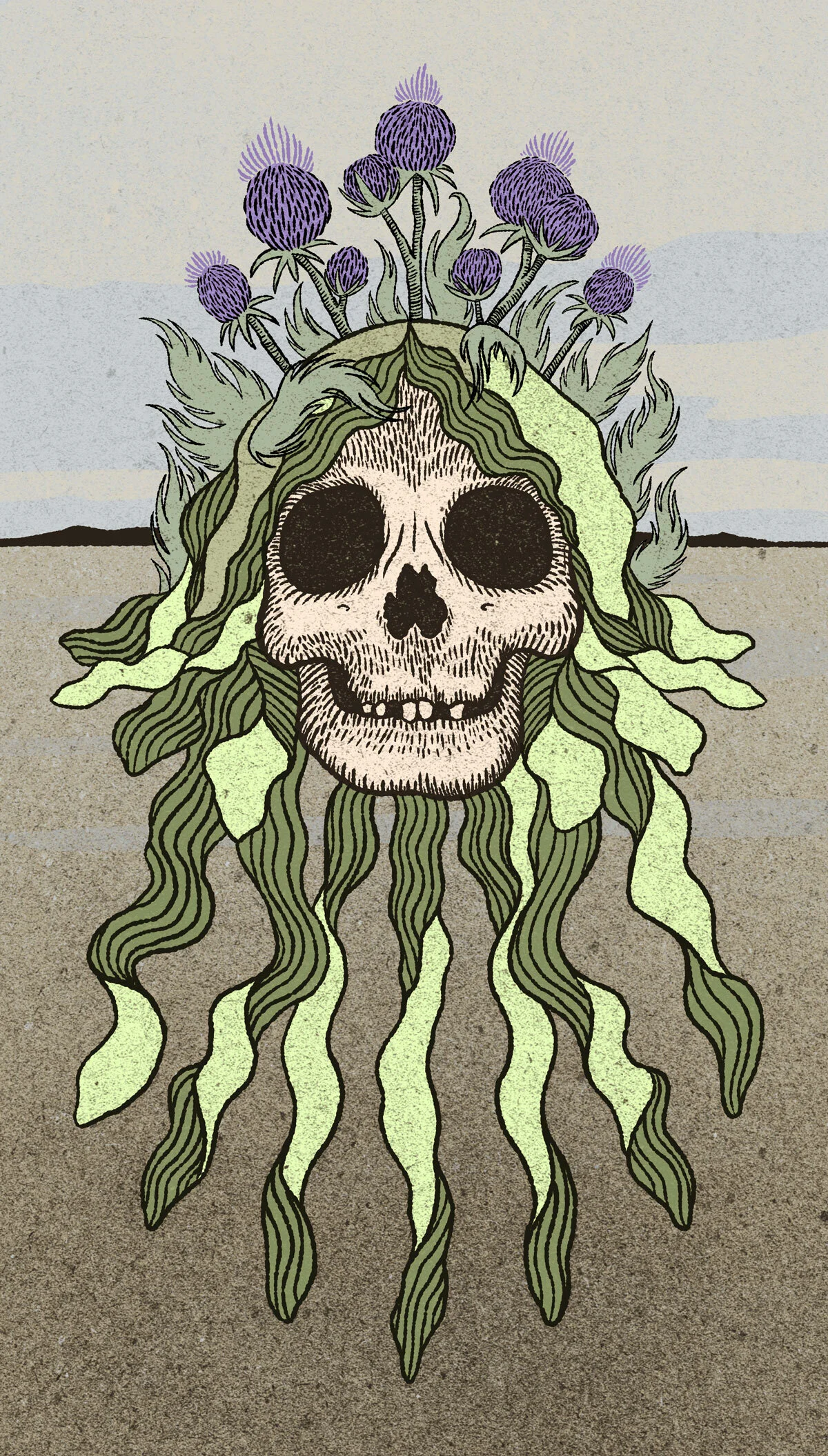
Illustration © Kaitlynn Copithorne

Illustration © Kaitlynn Copithorne

From time to time I dream of swimming. Nothing unusual there, except that I can’t swim. Sometimes I am navigating a vast lake with the deftness of an Olympian, and others, I am in an indoor pool, flailing, sinking to the bottom. Sometimes that’s okay though because I can breathe underwater. But what does it all mean?

What are dreams?

The average adult sleeps between seven and nine hours a night, but we only dream for around two hours of that having several dreams that last for five to twenty minutes. Whilst dreaming can take place during any sleep phase, we have our most vivid dreams within REM sleep. Dreams are often considered the language of the unconscious mind, but there is no universally accepted definition of what a dream is. Many psychotherapists agree that they are a neurological phenomenon, a way for the mind to process memories and events. 

Very few people nowadays base important decisions on revelations gained via dreams, but up until the 18th century, they were seen to belong to the realms of the spiritual. 

A Brief History of Dreaming

The Ancient Greeks believed the gods communicated their will with mortals through dreams and that some had portentous capacity. Greek myths are rife with prophetic dreams, for example, Penelope in Homer’s Odyssey explains that dreams of significant meaning come to her through a gate made of horn. This is how she knows to pay attention to her dream in which fifty geese are killed by an eagle. In her waking life, Penelope hosts fifty unwanted suitors, and just as in her dream, Odysseus returns to kills them. 

This had a cultural impact seen in the “dream vision”-form used in the literature of the Middle Ages. This literary device involves a dream being recounted and deemed to reveal knowledge to the dreamer. In a British Library article, Mary Wellesley explains that “the flexibility of the rules which govern the world of dreams meant that the form could be used for consolation, advisory literature, religious and philosophical explorations, courtly comedy, social critique, mystical experience, or feminist polemic. Dream visions are, therefore, some of the most captivating works of the medieval period.”

After the fall of the Roman Empire, Christianity spread throughout Europe in the Middle Ages and with it, the Bible’s teachings. According to the Bible, dreams can be a mode of receiving divine instruction:

By a dream in a vision by night, when deep sleep falleth upon men, and they are sleeping in their beds: Then he openeth the ears of men, and teaching instructeth them in what they are to learn. That he may withdraw a man from the things he is doing, and may deliver him from pride. Rescuing his soul from corruption. (Book of Job, 33 14-17)

Likewise, in the Book of Numbers, God says, “I will appear to him in a vision, or I will speak to him in a dream.”

In David Hartley’s publication of Observations on Man (1749), we see a shift in perception from dreams being spiritual to having a more scientific context prompted by the scientific study of dreams and how the unconscious is influenced. In this book, we are presented with three neurological/physiological ideas as to the causes of dreams. Those are: the residue of what has been observed that day; that they relate to the dreamer’s stomach and brain; that they are a product of the thoughts and actions during the day that can roam unrestrained during sleep. Dickens popularised the connection between meals and dreams in the character of Scrooge who insists the ghost of Marley is nothing but a bad dream, reasoning at him, “you may be an undigested bit of beef, a blot of mustard, a crumb of cheese, a fragment of underdone potato.”

Dickens would no doubt have been influenced by Hartley’s text. During a period of unprecedented scientific and medical exploration, the occult deeply fascinated Victorian society. Dream studies were published and sat beside books and magazines. In Henry Fuseli’s painting, The Nightmare, a goblin-like creature, possibly a succubus, personifies a bad dream. In Emily Brontë’s Wuthering Heights, the dead return via nightmares and characters take instructions from dreams. We can see how, culturally, dreams are translated as spiritual, with a shift beginning to take place in the advent of dreams studies. This is exemplified later in Orwell’s 1984 where we see Winston fearful that his dreams will reveal hidden secrets to the Thought Police.

Sigmund Freud revolutionised psychoanalytical dream studies in the 19th century, and his theories are arguably the most well-known in Western science. Freud’s The Interpretation of Dreams played a large part in influencing modern dream theory. His psychoanalytical theory which involves instinctive human drive and repressed desires spills into his dream theory. He believed that dreams are designed to be secretive, the product of hidden desires, leading to some questionable ideas involving wish-fulfilment and sexual taboo. His contemporary, psychoanalyst Carl Jung disagreed. He believed that dreams were revelatory, and he rejected Freud’s ideas about repressed sexual desire. 

Dreaming today

Transpersonal psychotherapy is a contemporary area of psychology that bridges the space between psychology and the spiritual aspects of the human experience. Speaking with Dave Billington at The Dream Institute about his research into The Waking Dream Process, he says that, “…[it] brings together some techniques for re-imagining and re-visiting dreams with psychotherapy techniques for focusing attention on the physical sensations to process emotional experiences. It is undertaken in a transpersonal context, meaning that the experience being explored is seen as having physical, mental, emotional, and spiritual aspects and outcomes. The Waking Dream Process and transpersonal psychotherapy as a whole draw on modern psychotherapy as well as practices and perspectives from what are known as the wisdom traditions—those aspects of global religions and spiritual traditions that teach how to be happier and live better—or hedonia and eudaemonia.”

With lockdown provoking a slew of hyper-vivid dreams that had many questioning their cause and meaning, there is no denying that the subject of dreams continues to captivate us. During lockdown my dreams also took on a hyper vivid quality that left their aftertaste long after waking and had me questioning what was bringing them on. Dave Billington at The Dream Institute explains that the origin of dreams is not necessarily the focus when exploring them further but rather,  “We ask, 'Why has this dream arrived now?' and 'What is this dream bringing to me (my conscious self)?’” This view encourages us to look at our waking life and dreams as connected. For example, is there something worrying us in our waking life that is playing itself out in our dreams? Billington goes on to say that:

"The classic ‘anxiety dreams’ are nice clear examples of this. We tend to have those dreams of being unprepared for school exams, or finding ourselves undressed in front of colleagues, or trying to speak and having our teeth fall out, when there is a current anxiety or stress. The dream reflects our current feelings, or we might say it draws our attention to them and gives us the opportunity to address them directly. When a person can start to understand their dreams in this way, then more subtle experiences can also start to come to consciousness via their dreams and not only help them respond better to current stressor or mental/emotional difficulties, but also guide them toward greater mental/spiritual wellbeing.”

Whether you believe that dreams are a message from beyond the waking realm or simply a highlight reel of events from your day, there is no denying the otherworldly quality they possess. 

The Re-Enchantment Issue

The Re-Enchantment Issue. Cover illustration by Natasa Jovanic.

The Re-Enchantment Issue. Cover illustration by Natasa Jovanic.

When co-founders Elizabeth and Rachael first dreamed up Cunning Folk, it was always intended to be a print magazine. There’s something special about holding a physical magazine in your hand. About smelling the paper and leafing through the pages and not knowing what you’ll find within. There’s been a renaissance in print magazines and zines in recent years, and the quality and creativity seen in so many of these publications are incredible. People enjoy the tactility of a physical magazine. Reading is never quite the same on a computer screen.

As many of you will remember, we were going to print in 2019 but had a few setbacks. In retrospect we are glad for it; we had the opportunity to hone our voice online, to foster a sense of community. To figure out what works and what doesn’t. It has been a huge learning curve.

While retaining the online community and our digital content as much as possible—made feasible by our generous patrons—we are now looking forward to working on this new printer chapter. 

First up, The Re-Enchantment Issue is a 92-page zine lovingly put together by a bunch of friends with a shared vision. We hope it will be the first of many. Expect personal essays, interviews, practicals, features, photography, and beautiful illustrations. Our print magazine is not a literary magazine but we will aim to publish one short story and at least one poem in every issue. For more fiction, poetry, creative non-fiction, check out Spiritus Mundi

When planning, we used scrapbooks and playlists as mood boards. To get in the mood, listen to The Re-Enchantment Issue playlist; we had fun putting it together. 

FAQ

When will I receive my copy of the Re-Enchantment Issue?

We aim to send out orders as soon as we can, often the next day. We ship from London, England. During the pandemic, the post has been generally reliable but inconsistent; one customer received their order the next day, another in London received it the following week. International orders are predictably slower. For Christmas orders, we recommend allowing one month if overseas, two weeks if in the UK.

I am outside the UK and I want to buy more than one product and the price of P&P increases. Why is it so expensive?

Squarespace is a little inflexible with its P&P options. We realise our international delivery costs are a little steep if you want to order more than one thing from our shop. For larger orders, please do drop us an email and we will consider international orders on a case by case basis.

How can I get hold of The Re-Enchantment Issue?

We sold out of our first printing quickly. We now have limited copies of the second printing. You can buy our first issue via our online shop. Alternatively, show some support for our stockists. All are independent shops who we love!

Stockists

We will keep updating this list. Note: not all will sell this online—it’s worth dropping them an email to see if they have it in stock.

UK

London

Treadwell’s Books

Libreria 

The Second Shelf

Housman’s

Magma

Watkin’s

Bath

Magalleria

Manchester

Magma

Edinburgh

Portobello Books

Black Moon Botanica

Overseas

Lisbon

Under the Cover

US

Peculiar Parish

Abraxas (Maine)

RitualCravt (Denver)

If you’d like your local to stock us, do let them know. If you're a buyer and you'd like to stock this issue, get in touch at cunningfolkmagazine@gmail.com

Florence Farr: Magic as The Pursuit of Knowledge

1_4YXywCr6eEpokLRAadTzGQ.jpeg

In 1920, summoning the ghost of Florence Farr in his poem All Souls’ Night, William Butler Yeats wrote of his departed friend:

Before that end much had she ravelled out

From a discourse in figurative speech

By some learned Indian

On the soul's journey. How it is whirled about,

Wherever the orbit of the moon can reach,

Until it plunge into the sun;

And there, free and yet fast,

Being both Chance and Choice,

Forget its broken toys

And sink into its own delight at last.

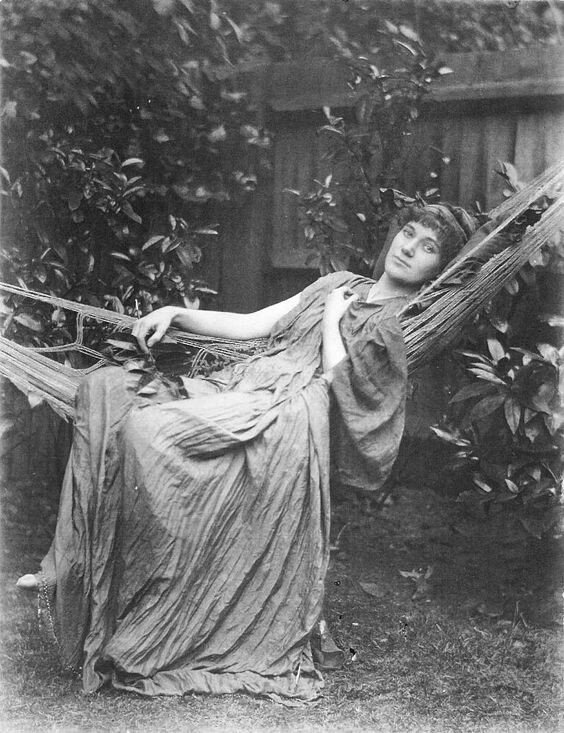
Before becoming the Principal of a Girls’ school in Ceylon, where she died in 1917 at the age of fifty-seven, Florence Farr Emery had been an actress, a producer, a playwright, a feminist, a journalist and a novelist. With Yeats, she had also been a member of the Hermetic Order of the Golden Dawn, a group created “for the purpose of the study of Occult Science, and the further investigation of the Mysteries of Life and Death, and our Environment”, as declared on the charter of its Isis-Urania Temple in London. Farr was initiated into the Order in July 1890, under the name of Sapientia Sapienti Dono Data, “Wisdom (or Knowledge) is a Gift Given to the Wise”. This was her “secret motto”, one which - as hinted in Yeats’ summoning - she would honour through the rest of her days.

Farr’s early encounters with the pursuit of knowledge had left her unimpressed, if not outright disgusted. She had found formal education, in the shape of a regular course of studies at Queen’s College in Harley Street, “damaging to the vital apparatus”. She was relieved to abandon it in 1880, to embark on an acting career which (briefly interrupted by a marriage happily ended in divorce) would eventually see her at the forefront of the Ibsenite movement. This, however, to  the annoyance of her friend and lover George Bernard Shaw, was only one side of Farr’s polyhedric intellectual persona. With William Butler Yeats, for example, she was the beating heart of a movement for the rediscovery of oral poetry, which cast its long shadow both on the Celtic Revival and on classical scholarship.

Farr’s distaste for schooling was counterbalanced by a clear attitude for scholarship and research, which manifested all through her life. In his Autobiographies, Yeats did not conceal his resentment for Farr’s dedication to research, which he perceived as an hindrance to her role as a muse: “she was soon to spend her days in the British Museum reading-room and become erudite in many heterogeneous studies, moved by an insatiable, destroying curiosity.” For anyone in the know, this assessment of her intellectual thirst as “insatiable, destroying curiosity” was a clear reference to the tarot card of the Fool.

Her interest in the occult is perhaps the one factor unifying all of Farr’s intellectual pursuits. Even before they joined the Golden Dawn, her collaboration with Yeats was full of magical undertones. It started one evening in 1889, in the garden at Bedford Park, when Yeats saw Farr invoking the Moon Goddess Selene as the shepherd-priestess Amaryllis, in John Todhunter’s A Sicilian Idyll. It was both her image as a priestess and her voice, which classical scholar Jane Harrison would later call “mesmerising”, that captured Yeats’ imagination. It set him on a life-long mission for the promotion of oral poetry, in which he was joined by Farr and instrument maker Arnold Dolmetsch.

For her part, Farr was always attracted to the possibility of blurring the lines between play-acting, ritual and reality. Her vital contribution to the oral poetry movement, which she continued indefatigably until her move to Ceylon, went towards fulfilling Farr’s interest in performance as a kind of ritual, and vice versa: as she would write in her 1909 pamphlet The Music of Speech, “there is a magic about all arts, because all the arts can be traced to old religions.”

This was also the appeal in the ritualist magic of the Golden Dawn. Founded in 1887, the Order of placed particular emphasis on learning and scholarship, as well as on the practice of rituals. Farr rapidly went through the first four levels of initiation, from zelator to philosophus, in what was primarily an intellectual development based on learning and examinations. By 1895, she had become the Praemonstratrix, the officer in charge or rituals. In this role, she supervised Yeats’ access to the second level of the adepts, as well as initiating into the Order a young Aleister Crowley. Despite her status within the Order, Farr’s thirst for knowledge led her to found a selective group within the Isis-Urania Temple — The Sphere, focusing on the study of Egyptian symbols and rituals. This, together with the discovery that the founding documents of the Order were a forgery, eventually led to a falling out and a schism within the Golden Dawn.

Once that chapter of that life was closed, Farr looked for the power of ritual elsewhere. She found it in the philosophy of Nietzsche and in that Greek Religion to which she seemed to have been destined ever since her performance as Amaryllis. In 1903, she founded The Dancers, “A Fellowship … to fight the High and Powerful Devil, Solemnity”. The group would meet to “restore or design beautiful dances, music and poems, which will inspire the indifferent with the enthusiasm and courage which gives a lasting rapture to existence.” Sitting at the crossroads between ritual magic, Greek religion, art and philosophy, this of all her endeavours is perhaps the one that best syncretised Farr’s polyhedric interests.

Her meeting in 1902 with Tamil Ponnambalam Ramanthan, a lecturer on Eastern philosophy in London, had further enlarged Farr’s philosophical framework. This is reflected in Farr’s fiction production, much of which plays with the connection between ritual magic and philosophical enquire. Her two plays set in Ancient Egypt, The Beloved of Hathor and The Shrine of the Golden Hawk, are nothing if not a philosophical exercise, as is her second novel The Solemnisation of Jacklin: some adventures on the search for reality. A running theme through all these works is the tension between reality and spirituality, between passion and knowledge. Farr’s reflections, in her diary as well as in her published work, often strayed on the philosophy of Shopenauer, on the interaction between the Will Force and Maya — that is, the world as it appears. For Florence Farr, magic was a way to enact that philosophy: magic rituals allowed the practitioner to strengthen her Will Force and use it to tear Maya.  In other words, as Farr wrote, “magic is unlimiting experience”.

In spite of her early rejection of education, learning was always an essential part of Florence Farr’s magical experience, though her “insatiable, destroying curiosity” did not always bring satisfactory results. As she demurely noted in her diary, after a life dedicated to “teaching” in one form or another, she felt that no one was wiser for all her efforts, while “half baked people like Yeats and Shaw have tremendous influence and they only tell half truths”. It is no chance that she spent the last days of her life supervising the education of young girls.

Yet, one may question whether Farr’s assessment of her own influence was accurate. Written three years after her death, Yeats’ All Souls Night is a tribute to Farr in more ways than one. As a character in the poem, her ghost is summoned willy-nilly; as an occultist and a philosopher, her spirit lives on in the very acts of writing and reading about a soul’s journey through art and eternity.

Who are we really?

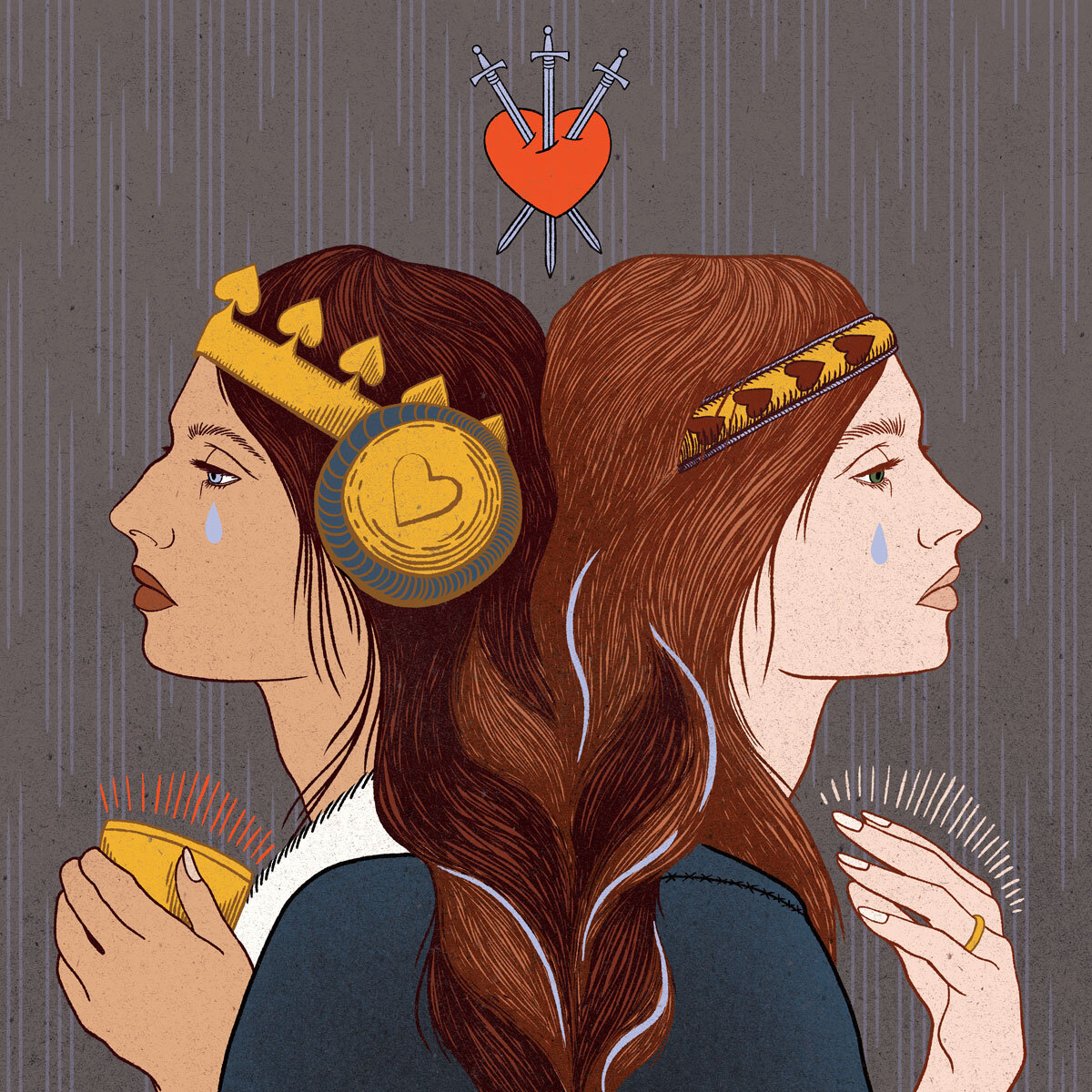
Illustration © Kaitlynn Copithorne

Illustration © Kaitlynn Copithorne

David Bowie wore many guises in his life. Among the most iconic: Ziggy Stardust, the strange alien from space; Aladdin Sane with the iconic lightning strike; in his last years, the Blind Prophet. Throughout his life he dressed up, took on new looks and new identities. But beneath the surface, who is Bowie really? And it’s a question that begets another question: who are we really?

As children, we like dressing up. In our adolescence, we try on different hats. As adults, too, when it’s socially acceptable. But there comes a point in life when we feel we ought to have it figured out. We should know ourselves. And so we become writers, doctors, activists, witches, lawyers, non-conformists, musicians, coffee connoisseurs, white collar workers, jet-setters, politicians, photographers, bird watchers… The list goes on.

These are all costumes, labels, a list of things we identify with. We assume the roles. We learn the script and embody the archetype with its accompanying set of symbols. Who are we really? Are we the jobs we do, the artists we like, the places we’ve lived in, the people who brought us into the world? Or are we missing something deeper, a through-line, a centre, a true self we need to carve out, rescue from some inner labyrinth and bring to the forefront? 

Our social media timelines convey an unnerving insecurity with who we are. Every other post is a reminder to others and ourselves of our eclectic interests, our talents, our virtues, our brand. Shakespeare wrote that “all the world’s a stage,” and it’s true. There’s a decisively performative aspect to the way we live. 

Sometimes, alone, I feel like a ghost. Unmasked, I walk through the world as if I’m embodying impressions. I channel the wind, the sadness the rain brings, the spring gloom. My identity is composed of memories, of spirits of places, of things I tell myself, and of things others tell me. I know it’s all in flux. The masks are shifting. We are one person with family, another with friends. Looking back at old diaries, I know I’m not the same person now that I was 10 years ago—though something remains.

The quest to find ourselves vs create ourselves

In times of crisis, we set out to find ourselves. Perhaps we will find whatever it is that constitutes us out there in the Himalayas, or somewhere out west. Perhaps we’ll find ourselves in another person who teaches us to see, or in the sun that sets over the Pacific ocean. Often we’ll gain access to another part of ourselves through a story that inspires us. 

But this quest to “find yourself” is somewhat self-defeating when the more precise goal ought to be “to create yourself,” as Bob Dylan and many others like him have put it. The young Robert Zimmerman was inspired by the beatnik poets, Herman Melville, country music, and Buddy Holly; from these and other ingredients he created someone new: Bob Dylan. 

David Bowie was also skilled in the art of self-invention. In a 2002 interview, he said that, earlier on, what he’d really wanted to do was make musicals. Instead he became a rock star, but he employed similar theatrics in creating his various personae; from the otherworldly alien, Ziggy Stardust, to the Blind Prophet, each came with its own instantly recognisable mythology, costume and set of symbols. 

Where do these personae come from? 

And what are they, ontologically speaking? Here is a place we still have room to imagine.

Bob Dylan set out to create himself from pre-existing archetypes and inspirations. I was fascinated by something he said during his Nobel Prize acceptance speech. Tracing the history of his musical and literary influence, he started with Buddy Holly: “He was the archetype. Everything I wasn’t and wanted to be.” Dylan recalled seeing Buddy Holly live and the intense feeling of looking at him. “Then, out of the blue, the most uncanny thing happened. He looked me right straight dead in the eye, and he transmitted something. Something I didn’t know what. And it gave me the chills.”

This uncanny sense of transmitting something was commonplace in ancient times. In ancient Greece, our behaviours, personalities, and talents were externalised. As poets often invoked a muse for creativity, a soldier, or lost traveller, such as Odysseus, might have invoked other entities for courage or strength. In medieval Europe, a strange whim might have been put down to demonic possession, excitement to high-spiritedness. The full moon might have induced lunacy.

In Western culture today, we have moved from externalising the changeable parts of who we are to internalising them. We tell ourselves to be courageous, to have confidence, to be kind to ourselves. Thoughts no longer possess us. We change our minds. The language we use has changed. We still speak, even in jest, of “channelling” Shirley Jackson, or David Bowie, or anyone who inspires us. Of “tuning in to” people—of not being “on someone’s wave length.”

But, again, are we these thoughts that grip us? Or are we something else? To answer this we may need to dig a little deeper. There are various schools of thought concerning what constitutes self.

What is self?

In Jungian psychology, the self is the unification of the conscious and unconscious minds. The ego represents the conscious mind. Our personae are part of the ego. A persona, or our personality, is a mask we wear, a social face. A more resilient ego is one that is flexible and doesn’t identify too rigidly with one label. Many people who feel lost or struggle from a lack of self-esteem benefit from doing deep inner work with archetypes, projections of human needs, or deities. Such work enables us to tap into parts of ourselves we don’t know exist, conjuring up new ways of being. In turn this adaptability makes us more resilient. We have seen the problems of a rigid ego during lockdown. There are people whose mental health and happiness relies on certain structures: a nine-to-five job, or a brunch date with friends on Saturdays. The disintegration of normality has likely contributed to growing global anxiety. 

Perhaps it works the other way, too: in a capitalist matrix, the self internalises and identifies with values of the state. The self too, is homogenised then. This homogenisation of the self can cause great anxiety for the more flexible ego, as it is conscious that this “hyper-normal” self is just one mask among many others, which are forcibly repressed (including, when we grow up, the playful, imaginative aspects of our being). When I speak about a hyper-normal self, I’m talking about a sense of self that is so normal, it only exists within the context of a fake world, like that depicted in Adam Curtis’ documentary HyperNormalisation.

Carl Jung’s approach thus suggests that the ego and the conscious mind are changeable. But are we our egos? If so, does this mean our very core is changeable? The ultimate spiritual quest of many religious practices is to transcend the ego, to find an unchangeable core, a centre, a through-line, something shared and universal. In Buddhism and in many occult belief systems there is often this goal to “forget oneself,” which doesn’t demand followers to suffer an identity crisis, but to forget the ego and get closer to something else. There’s a comparable belief in many, if not most, religions. For instance, in his book Living Buddha, Living Christ, the Buddhist monk Thich Nhat Hanh compares the surrendering to Christ to the Buddhist idea of finding this inner peace.  

The true self

The true self, it is believed by many, is something deeper, beyond the costumes we wear and names we go by. In ritual magic, practitioners are often naked or all robed. The idea is that when we strip back our constructed personae, we realise we are all the same thing.

We ought not forget that much concerning the nature of consciousness has come to us from the Indian sub-continent. In Hinduism, the ego is a trapping of the physical world. The body is often likened to a flesh tomb, and the ego is like the glass that contains our true self and shapes it. The true self—the atman—is a silent, conscious witness. It exists within every creature at its core. This is why in modern mindfulness practices, derived from these Eastern roots, it is often repeated that “we are not our thoughts.” Adherents are told to watch thoughts as one might watch rain clouds. They are passing and in flux, but behind our thoughts there is a self. It’s in re-connecting with this inner self, often described as a true self or higher consciousness, that we might find union. 

The general consensus is that, no, we are not our egos. This doesn’t mean they aren’t important. They are tools we need to live in this world and to play our part. To be without personae or with a rigid persona is self-limiting. In Freemasonry, and in more esoteric temples, such as the Hermetic Order of the Golden Dawn and the Ordo Templi Orientis, many of the rituals entail performance. Practitioners slip into roles, embody entities, but only for the duration of the ritual. On the next meet up they will take on new names and faces. Practitioners become increasingly aware that their personae are constantly changing, but something remains.

Behind the masks: who is the real David Bowie?

Who then is the real David Bowie? The one behind the imagery, the masks, the costumes? What is this “something” that remains? There may be an answer in ‘Quicksand’, his most metaphysical song. Bowie is well-versed in the teachings of the Hermetic Order of the Golden Dawn and—as he puts it in ‘Quicksand’—“Crowley’s imagery”. In this song, he is standing at the precipice of self-annihilation. Bowie acknowledges the limits of human logic, if not language: "I’m tethered to the logic of Homo Sapien.” His concluding words are: “Don't believe in yourself, don't deceive with belief / knowledge comes with death's release.” 

Such thoughts can be vertiginous. What grip have we on reality if not in identifying with our personae—the masks we wear? These bolster our egos, maintain the very thing we identify as “I”. According to Jung, personae are an integral part of our reality. The changing nature of our masks does not make them less authentic; they are how we cope in a difficult world. 

Personae can have the dramatic distinctiveness of Bowie’s personae, or the differences can be more subtle. We are often different people in different contexts. Who are we in front of our colleagues, our parents, one group of friends, another group of friends? Who were we when we were 13? Are we the same person now? The enlightened person whose consciousness and unconsciousness have found union might say yes. Most of us are not so unwavering.

Thinking about personae, another artist comes to mind: the photographer Cindy Sherman. In a series of self-portraits, Sherman wears costumes and adopts personae that render her unrecognisable. She morphs into hundreds of different people. But behind the photographs, where is Sherman? Does she identify with one guise more than another? Which mask is closest to her own? Undoubtedly, off the canvas Sherman is probably different people at different times in her life and in different contexts. But her ego, like our own egos, might recognise itself more in some of her masks than others. 

Looking at Sherman’s transformations, like Bowie’s, reminds us that we can wear new masks when our old ones no longer serve us. When we ask who someone really is behind their masks, we’re also asking who we are.

The limits of self-invention

Whether we’re deeply into mysticism, ritual magic, occultism, or just living life, all of us take on personae. And not only is it a coping mechanism for living, but, like fancy dress, having personae at our disposal makes life all the richer and more enjoyable. The more flexible our ego, the more open we are to adopting new personae, and the more it seems life has in store for us. It is freeing to set about creating oneself rather than finding oneself. 

Sadly, it must be said, we don’t always have a say in who we can become: we are born into a body and a place in society. Experiences shape us. Family and society-at-large tell us who we are. Whether by the politicisation of our skin colour, or accent, or name, from the moment we are born, much of our personae are already drawn out for us. We must speak out against all forms of discrimination, including racism, homophobia, transphobia, classism, and sexism. Everyone should have the freedom to be who they want to be, to define themselves on their own terms. 

But within the confines of what is possible, the more privileged among us can have a say in who we become. We can delve deep into the shadow of our psyche or look outward to nature and summon those personal entities which best serve us and reject those that don’t.

Choosing our other faces

Besides David Bowie's musical legacy, I will remember him for his ability and conscious efforts to reinvent himself. “Be true to yourself” is often a measure of control. Authenticity is to some extent artificial, and we can often choose a different way to be and to serve. The ideal is one that not only improves our lot, but that of those around us. Our personae might help us fight discrimination of all varieties, discrimination that prevents others from having this freedom to self-invent. We might campaign for a better world. Find a cure to a deadly virus. Befriend someone who is lonely. Our personae might give us the courage to write stories or make music which changes people’s minds and makes us feel alive again and give us a reason to carry on through the darkness. That is how a shy working-class boy called David Jones went on to become the musical legend that is David Bowie, and all his other faces.

No Country for Old Women

This short story was originally published in Foxfire, Wolfskin and Other Stories of Shapeshifting Women by Sharon Blackie. It is illustrated by Helen Nicholson and published by September Publishing.

p200 final story - revised 13 May.jpg

Even stones have a love, a love that seeks the ground. 

Meister Eckhart 

‘When I was a young lass,’ the old woman mutters to herself, as she closes the red-painted front door of the cottage behind her, ‘the ocean was a forest, full of trees.’ She has long white hair, is small and stooped, and mutters to herself quite a bit, these days. You can call her the Cailleach, though she’s had many other names over the centuries. Beira, Buí, Garravogue, Cally Berry, the Old Woman of Beare. And when she was a young lass, the ocean was a forest, full of trees. 

She’s out and about in this newly hatched month of May before the sun has risen, though the fullness of the moon offers her just enough light to see by. Even though her eyes are failing now. Failing, but the blue of them is as bright as ever. Blue as lapis lazuli; blue as a Connemara lake on a clear, crisp winter’s day. Some things don’t change, even when you’re old. Though mostly, things do. Yes, there’s just enough light to pick her way down to the lake before the sun begins to rise, and the dog who lives with the old shepherd on its northern shore sets up his usual barking. If the dog barks before she gets herself into the lake, it’ll all be over. And she’s running a little bit late, this morning. Her old joints aren’t what they were, and last night before she went to bed, she forgot to bank up the old Stanley range with turf. So the fire had gone out and she’d been slower than usual to dress herself, all a-shiver in the still-chilly spring air. 

It’s hard, being old – but it’s not as if that’s anything new to her. Being old is something she’s done often enough before. Every hundred years, to be precise. Down all the long aeons of her existence. She counts her age not by the turnings of the sun, but by the geological upheavals of this ever-changing planet. And every hundred years, just at the point where she feels so desperately decrepit that she can’t possibly go on, the time comes around once more. To grow young again – to renew herself, transform herself. The time to go down and bathe herself in the lake. On Bealtaine morn, before the sun rises and before the first dog barks. Otherwise, she’s dead. 

It’s hard enough being old, but dead? She’s been alive so long that she can’t imagine what that might be. Has no idea what it might entail, for a being such as her. She’s not entirely sure that she can die at all, if the truth be told. Though increasingly she’s been wondering. If it wouldn’t be a relief, after all. These are difficult days. She’s seen difficult days before, but somehow these feel different. They feel like the end days – though she’s seen those before, too. She remembers the Great Flood as if it were yesterday. Not that the Flood had presented any problem for her. In those times, she’d walked the land as a giantess, and the ocean’s flood-waters had simply come up to her waist – rather than, as usual, to her knees. But she’s diminished now, as well as old. She’s not sure she’d have the stamina to wait out another Flood. Her strength has faded, along with human belief. And belief in her has been dwindling for centuries; so few now even remember her name. Even fewer can pronounce it. So she wonders whether it isn’t time to abandon her long vigil – for, anyway, what could possibly be done now to hold back the tide of men? These days, if truth be told, she feels powerless. Powerless to prevent their growing atrocities, to insist that they restrain themselves and hold to the balance, as once she could. 

She treads carefully down the rocky track to the valley below: if she were to fall now and fracture a leg, she’d be done for. She loves this valley; it’s a garden of great stones. Stones whose unfoldings and flowerings have taken place not in the space of a solar year, but over the long geological ages of the Earth. Rocks uprooted and rerooted by the passage of time, and the movement of great glaciers. And she is this Earth’s gardener. A rock gardener, a stone teller, a stone tender. She knows these rocks, every one of them; they’re her people, her children, her tribe. Each one has its own unique character; each one its own particular way of expressing the essence of stone. She has known them through all their long metamor- phoses, seen them born from pressure, torn from fire. Yes, she has stood firm as the ground shifted around her through all the long ages. As plates swivelled and continents drifted; as volcanoes erupted and meteors fell from the sky. She’s seen glaciations and desertifications, seen forests wither and die, and peat form from their ancient bones. She’s strode along the glacier paths, sat on the highest summits and watched the burning deaths of a million stars. 

But she fears that the stones’ voices are fading these days, dissolving into ever-longer stretches of sleep. For who is there to keep them awake, now? To sit with them, and talk to them; to rest in their lichen-covered arms like a lover? Who will listen any more to their long, slow songs; who understands the language of stones? Not these people, for sure. They don’t even know that the stones are alive. And the stones’ sleep is uneasy now; their dreams are fractured and torn. It’s all she can do to wake them up, sometimes; it’s all too much for her to do alone. Yes, it’s powerlessness that squats in the heart of her now. She’s powerless to shore up the bedrock of the land, to strengthen it against the ever-increasing violations. 

This land, she sighs; this beautiful, singing land. This carefully drawn map, this sculpted reflection of her own strong body. She does not remember a mother of her own, but she has been mother to mountains, dreaming them into being through the first fiery eras of the Earth. She can feel their growing anger now, their grim desperation, as dark as the looming storm-clouds they gather around themselves each day. She senses them shifting at their roots; she feels their longing to erupt. There is little she could do, now, to stop them. 

She turns the corner, and there it is: all a-glimmer through the trees, its mirror-like surface reflecting the fading light of the stars. Even the stars aren’t as bright as they used to be – though here, in these wild and little-populated hills of Connemara, they’re as bright as they’re ever going to get. She pauses for a moment to catch her breath; she nods to the Great She-Bear and slips a wink to the Pleiades. Sweet little sisters; she remembers the night sky without them. She was walking this Earth long before they were even born. 

To the human eye it wouldn’t look like a particularly splendid lake, and, besides, lakes are ten a penny in this wild, western waterworld. But it’s a long lake, and deep. Deep and bright, and its waters so clear that it was teeming with sleek- backed serpents, back in the day. Yes, back in the day. When she was a force to be reckoned with, when she danced across mountain-tops and leapt across continents. When a pack of wild wolves ran alongside her, and rich was the milk that flowed from her fine herd of deer. 

But she’s old now, and much reduced. Moss and lichen gather in the folds of her apron. A hundred years have passed since last she came down to this lake and made herself young and beautiful again. Young and beautiful and strong. And now the time has come around once more. To lower herself carefully into the smooth, calm waters; to transform herself, and take up the mantle of life again. 

Ah, but she’s tired, now. She’s exhausted at the thought of doing it all over. Exhausted by the responsibility, by the long slow ages without rest. She is old, and tired, and forgetful. She chuckles for a moment as she stumbles down the path; she’s had some fine moments of forgetfulness in her old-woman years, before. The best of them was that time when she left the lid off the well – the one where she’d water her cattle when she took them with her to graze awhile in the green hills of Beara. When she went back to tend to the stones in that land she’d once inhabited. Just one of the many places she’d lived in over the years. A fistful of her centuries she’d spent out east, and a scattering of them up north. A handful across the sea in Scotland; a precious few on Manannan’s Isle. She has left her traces in those places. Her giant footprints etched forever in the rock for those with eyes to see them; carvings of her own silhouette in hills and sharp-faced sea cliffs. 

But anyway: the well. A grand old well it was, too – right there on the hillside which looked out to the island. Oileán Baoi: the Island of Buí. That was the name she took then; that was her name, in that place. There was a great stone lid on that free-flowing well, and as soon as she arrived there in the mornings she would lift off that lid and let the cows at the water for a drink. And she knew all right that if she didn’t place the great stone lid back onto the well before the sun went down, the waters would flow out of it and it would flood the whole world. It would pour out of the well and cover the whole world with a flood. Well, she was there one time, when she was growing old and weak, just like she is now. When it was getting close to the time to renew herself. And so, when she sat down next to the well, she found herself tired, and began to nod off. But something shook her awake with a start. The water was roaring out of the well and the sun was just coming down. She sprang up and she shoved the great stone lid back down onto that well, and she saved the whole world from being flooded a second time. But a new lake was born in the fair county of Cork at that time. A lake that hadn’t been there before the well had overflowed. She chuckles at the memory, and a sudden swift wind tumbles down the valley and whips around her knees as if to laugh along with her. She looks behind her, back up at the mountains, and sighs. Yes, she was mother to these mountains; she made them, as she’s made so many more. Carried the great rocks in her apron, let them fall, and land then where they chose. But the mountains are restless now, and the old god hasn’t been heard of for a while. They think he’s dead, the folk around here; the only stories they tell of him are the ones which say that St Patrick killed him. Threw him into his own dark mountain lake, along with his beautiful white bull. Drowned him, they say: the dark old crooked one gone for good. It’s all stuff and nonsense, of course; that silly little man couldn’t have killed a fly. A hopeless creature he was, Patrick; but a meddler and mischief-maker all the same. She can’t imagine why they placed him on such a pedestal. 

Yes, she met Patrick, of course, back in the day. Met them all. All of them came looking for her, sooner or later. And all of them challenged her – every last one. She’s heard all the stories about how they killed the old Cailleach. St Caitarin, down in Beara, who chased her across the rocks, they say, after she snatched away his Bible while he was dozing in the sun. There’s even a carved stone there, put up by the authorities. Says that he killed her for her audacity. And just beyond the inscription, a fiercely weathered rock which they say is the stone into which he turned her. A fine man he would have been to have had a chance at it! Well, it was St Brendan who killed her down in Dingle, they say, and it was Patrick who killed her here in Connaught. She cackles a little to herself; the rumours of her death have been greatly exaggerated, over the years. But where are those funny little men now? Where have they been all this time, while she’s been tending the mountains and rocks of Gaeldom? She doesn’t believe she’s met a single saint for a millennium or more. Time was, they were ten a penny. Now, they’ve been driven to extinction – along with everything else. 

The old woman shakes her head; they tried so hard to stamp out her memory, those black-frocked Christian men. Like that funny little man they sent, one time: that old priest she made count the ox-bones in her attic. Thought himself a clever one; pretended not to know who she was. Looked her up and down with his hard, black eyes and decided she was far too old to be dangerous. And then he asked her just how old she was, precisely. For every bone you find up there in that attic, she’d said to him, you can add a year of my life. Well, he’d counted the ox-bones for a day and a night and still he couldn’t make a dent in them. His hands were shaking as he pulled at the door handle and left. 

Now the only bones she minds are her own. Brittle and fragile, like the rest of her. Like the sharp contours of her face, skin stretched tight over cheekbones sharp as a mountain ridge; like her knobbly kneecaps and scraggly, thin arms. 

Her arms have held kings. 

There are no more kings. 

Yes, she’s had her sadnesses, that old Cailleach, and they’re all flowing back to her now. The ebb tide of memory turning to flood. Sadnesses rushing over her as they always do, when it’s coming to the time to make herself over again. Like those long, cold centuries on the lower cliffs, staring out to the desolate sea. Waiting for the return of that faithless old bodach her so-called husband, Manannán mac Lir. Some husband he was; he ran off with some pale-haired fairy woman, in the end. She waited, but he never came back. There was a time when she thought she might not survive that particular heart- break. She’d had so many, over the long relentless millennia. So many, and they accrue. She’d had so many kings; she was the mother of tribes. But there had been something about Manannán which pierced right to the heart of her. When she met him first, she had been young and beautiful. But he could not love her when he saw her grow old. 

She stops for a second to wipe a tear from her fossilised face; an early blackbird comes to perch on her head. Gently, she brushes it away. Almost there, now; almost there. Just this one small wood to cross. The wide old oak forests are gone now, the great strong heart-trees cut long ago for the making of English ships. This thin, scrubby little wood is all that’s left. But it’s lovely enough, in its way. There’s birch, the slender silver lady of the woods; there’s fairy hawthorn and witch- willow. There are still some ash trees here; the die-back hasn’t reached them yet. It’s a lovely little copse, so, but her heart yearns for the vast oak forests. Destroyed, like so much else. Destroyed, for greed or sport. 

The leaves of the strong ash trees are only just beginning to unfurl, just as she herself is coming to a new unfurling. Round it all goes; round, and around. Nothing ever really dies; she knows that better than most. And yet it can still be gone from you. She’s faced so many losses; so many things loved and passed. Humans and their so-called gods; animals and plants and trees. She’s seen the disembowelling of mountains, and the concrete dams which stem the flow of the Earth’s lifeblood through its ancient veins. Her old knees have buckled at the tremors which surge through the Earth from their fracking fields and their tar sands. She’s watched and wept as cement has spread like cancer over living land. These memories aren’t good for her – but ebb tide has turned, nevertheless, to flood. And even she cannot hold back the tide. You have to harden yourself against the memories, in the end. If you don’t harden yourself, you will go mad. And gardener of stones she might be, but she herself is nevertheless no stone. She is the Cailleach, the oldest of the old, and she has seen too much. Sometimes, she thinks it would be better to go mad. 

She grits her ground-down teeth and shakes her tired head; finally, she glimpses the farthest edge of the still-gloomy wood. Just a few more minutes, and she’ll be home safe. After the wood, only that gently sloping sweep of grass to cross, and then she’ll come to her launching spot: the long, flat rock which leans down gently into the water like a slipway, tailor- made for an old woman’s fumbling descent into the lake. The water will be cold, but clear; she will lower herself in and say the words. And a ray of the Bealtaine sun will rear up over the hills like a blessing as she rises up out of the water, renewed. 

She is old, and she has done this more times than she can remember; it doesn’t always go according to plan. The time the shepherd forgot to lock the dog up the night before, and him starting down the hill like an angel of death just as she got one foot into the lake. The time when her morning alarm failed her, and she hurtled down the track in her nightgown, feet bleeding and raw by the time she reached the water’s edge. No, it doesn’t always go according to plan, and this Trickster morning has something more in store. She smells it before she sees it; smells the blood, as she’s smelled it so often before. Smells it, and then she sees it: a flash of fire-coloured fur at the farthest edge of the wood. 

She closes her eyes, and feels her lips begin to move; the instinct is ancient, but futile. For who can the gods possibly pray to when their own courage fails them? Who might be there to hear them, when they themselves grow old and afraid? And besides, she has no time now. She is rapidly running out of time. She opens her eyes again and straightens her bowed back as best she can; she slowly picks her way through broken branches and mossy stones. And at the base of a crumbling old willow, nestled between two gnarly roots as if cradled in an old woman’s arms, she finds the fox. Dead, and its fragile, furred thigh caught tight in a gin trap. 

The old woman’s breath catches in her throat, and tears erupt like lava from stony old eyes as they follow the length of soft russet fur. ‘Oh, fox,’ she whispers. ‘Beautiful, brave fox.’ But the fox cannot hear her; the fox will never hear again. Not the nasal squeak of a ripe young grouse as the night wind ruffles its feathers; not the harsh screech of a willing vixen calling from the depths of the wood. He had been an old fox, but a handsome one. He would have taken a vixen or two in his time; he would have eaten his share of grouse. But now, his delicate face is contorted still in pain; his golden eyes are tightly closed. Blood is pooled like thick, dark tar around his back paws. The Cailleach has seen so many things die, and grieved for them all, in her way. Buried the bodies of dead dogs, made land art from the bones of dead sheep. She has witnessed and mourned the passing of many beauties, great and small. But here and now a fox is dead – and who can ever know what will succeed in breaking us, after all? What will break us, at the end, after standing strong and steadfast for so many years. She sinks to the grass by the tree and strokes his dead body; her shaking hand hovers over his mangled leg. There is too much blood; the smell of it turns her shrivelled old stomach. 

She has no time to pause here; she is running out of time. But time seems nothing to her now; she cannot find the heart to go. She cannot bear to leave the fox’s body here, cold in the wood, and alone. And she cannot bear to see another creature slaughtered in this way. Another badger butchered on the roads, another hare mown down in the fields by their fume-spewing farming machines. She is old, and tired, and sick at heart. She cannot go on in such a world. She cannot; it is enough. 

She will let go now, she thinks; it’s time to let it all go. This is no country for old women. For old women who have seen too much, who have cared too much and loved too much and who find themselves loving too much, still. How can it be that still she loves so much? This is no country for wild things. No country for foxes, for the fine red deer who linger still in the mountains. Her laughing wolves are long gone, and with them her fine, bold bears. Gone are the bright, fierce eagles, and the bands of wild pigs that would run beside her across the wintered hills. 

Her head sags forward on aching shoulders, and she raises her hands to cover her wet face. She cannot face another hundred years of this. The last time she renewed herself, the Great War had just ended, and there was hope. Who’d have imagined they’d do it all again? Who’d have thought, in just one hundred years, they’d have caused so much carnage? What could they do in another century, with all their implacable power? 

No, she will let go. There’s nothing she can do here: not any more. She cannot hold back the relentless tides of men; she is powerless in the face of them. She cannot protect the wild things from them; she cannot shore up the rock. She cannot hold the balance of the world against such hate. 

The Cailleach lowers herself to the ground, and gently rests her head on the fox’s slender back. She will let go; she will go with the fox. She will follow his fiery spirit into the mist. She’ll lie here with his body for a while; she’ll wait for the old dog across the lake to bark. And then she’ll be done with it. Once she was young and beautiful; now she is old, and tired. She has been tired before, and old, but she has never learned how to die. And what is old age for, if you never can use it to learn how to die? She knows everything, except how to die. She plans to learn it well. 

A small sigh escapes her, and a small sigh in reply from the fox beneath. The very faintest of sighs, and the small- est twitch of his chest. Startled, the Cailleach lifts her head. Could this old fox possibly still be alive? But even if he is, he has no chance; there is too much blood in the grass around his feet. The damage is too great; the fox’s strength is gone. Well then, she will sit with him here, and let him teach her how to die. She will die with him; she will keep him company on his journey. There will be no lake for her; no lake this fine May morning. No lake for her, ever again. No new transformation, no more renewal . . . 

‘Renewal,’ she whispers to herself – ‘renewal.’ She heaves herself up into a sitting position, face clouded with thought. If she were to take the fox into the lake with her, would her powers of renewal reach to him too? Is it possible she might be able to save the fox? To save just one more bright and shining creature from the claws of this gods-forsaken world? Would it be worth it, to save just one more wild thing? One more bright, fierce beauty flashing through the fields. Would she do it all again, for the life of this one fine fox? Could she do it – one more turn of this relentless, endless wheel? 

The old woman briefly closes her eyes, then opens them again with a shuddering sigh. She reaches out to the trap. She has no tool to prise open the powerful jaws; has only the strength of her own stiff, ageing hands. This Cailleach has now grown old, but she is the Cailleach nevertheless. The strength of stone threads through her bones still; a rock’s resolution drums in her faltering heart. She is the Cailleach, and she will not fail in the face of such atrocity. She takes one steel jaw in each hand; she musters all the strength in her arms; she begins to prise it open. Grits her teeth as the trap’s teeth bite into the soft pads of her fingers, as blood trickles down her arms and pools in the sagging hollow made by the crook of her elbows. She cries out as finally the trap springs open, as her hands fall to the ground and her own blood seeps into it and mixes with the blood of the fox. 

Slowly, painfully, she clambers to her feet. She braces herself for one final effort, and with a groan, she gently lifts the fox out of its bloody bed of moss and twig. She shuffles slowly out of the wood and on through the dew-covered grass, cradling his broken body in her tired arms. Arms that have held kings, and now hold a fox. Quickly now, quickly; it’s late. Soon the sun will stretch its long arms over the hills to the east. Quickly – but as she lifts her eyes from the uneven ground and raises her face beseechingly to the sky, she sees that it’s already too late. 

The dog has reached the lake in advance of her. The dog, in advance of her. He’s getting old now, like her. But he stands firm on the shore with his tail erect, with his teeth bared and his upper lip slowly curling into a growl. Was the dog going to bark? Of course the dog was going to bark. The old woman closes her eyes in defeat; tears well up again in her eyes. She lowers her head to her chest, and whispers ‘I’m sorry’ to the fox. The dog growls again, and sprints suddenly towards her with his mouth open, ready to shout. Then, all at once, the dog catches sight of the fox. The dead fox, snuggled tight in her arms like a baby; sees the tears and blood which streak the old woman’s face. The dog tilts his head to one side – then he whines quietly and swiftly lowers his tail. 

The dog closes the mouth which he had opened, ready to bark; he bows his head to that old Cailleach, and gives way. 

*

The water is clear, and cold. By the time it reaches her waist she is shivering convulsively, but she will not let go of the fox. ‘Let it live,’ she whispers. ‘Just this one. Just one more beautiful, wild thing. Let it live.’ And down she goes then, down into the water. Down into the bright, clear water with the fox. The lake takes them both, laps around them, soothes them and sings to them. Seeps through her skin and into her old bones; seeps through her ribcage and into her tired old heart. Seeps into her cells and mingles with the blood in her veins. She sings the old words and everything is singing, now; everything is alive. All you have to do is remember. Long ages unfold their wings and fly away out of her; the flood tide of her memory turns to ebb. And when finally she lifts herself out of the sun- spangled water, her body is young again, and strong. 

Her ears are open again; she can hear them all now. All the new voices, calling to her. The eldering woman in the fields of Offaly who makes paintings of her; the young woman on the Kerry coast who writes poems about her. Two sisters from the land across the ocean leave flowers on her chair at Loughcrew; a middle-aged woman from the country across the sea leaves a bracelet at the Hag’s Rock in Beara. Her ears are open again, and everything is new. The waters of the world are awakening, and the mountains murmur love songs in the west. Maybe it’s not all lost. Maybe it’s not all lost, after all. 

She shakes the shining droplets from her hair, for it’s time to go home, now – there is work to do. She will go first to the Pass of the Birds, and she will raise up the serpent that Patrick cast into the deep, dark waters at its peak. She will bring out the old god’s white bull, too. She will roar in the ear of that dark, crooked god till he wakens, and the fire in their ancient hearts will set the world alight again. 

She knows about stone; she is the Cailleach. Rock-solid and as old as time. She’s a stone-shifter, a rock-reaver; she’s the mother of worlds. She will walk through the prison walls they have built to contain her; she’ll bring them down around their knees, if she must. She will gather together the ones who long for her; she’ll show them the ways in which the needed work should be done. Tending the bedrock, tending the wild things. Tending the soul of the land. More than any other living being, she knows there are never guarantees. But maybe it’ll be enough. 

Something stirs in the water at her feet. The Cailleach looks down, and laughs at the sodden little fox. He is young again too, and strong. His soft fur glows like fire in the first rays of the Bealtaine sun, and his amber eyes are bright with life. ‘Madra rua,’ she whispers; ‘madra rua beag.’ Little fox, little red dog. And as she steps out of the water with the fox trotting along beside her, the old dog’s excited yapping echoes through the valley. 

The hills that are gathered around it answer back. 

Greek Myth and Misogyny

Judith slaying Holofernes, Illustration © Kaitlynn Copithorne

Judith slaying Holofernes, Illustration © Kaitlynn Copithorne

When looking at Greek myths with their pantheon of both male and female deities, we can easily forget that these tales were born out of a deeply patriarchal society where women were treated harshly to maintain their subservience. Evidence of misogyny can be traced back to the Greek myth of the origin of women. Prometheus famously steals fire from the gods and gives it to man, thus gifting them with knowledge. As punishment, the gods chain him to a rock, and a giant eagle eats his innards. How do they punish man? They give him women. Pandora is of the first race of women, outwardly beautiful, inwardly flawed. She receives a box that she is forbidden to open, but temptation gets the better of her and so she lifts the lid, releasing all misery and suffering upon mankind. Only hope remains. This echoes of elements of the biblical Eve, seduced by the snake on the Tree of Knowledge, succumbing to what was forbidden and blamed for the original sin. Framing the origin of women in such a way perpetuates the misconception that weakness and aspects of deceit and temptation are inherently female traits. Weakness in particular is key because it speaks to power; those who have it and those who don’t.

In Mary Beard’s Women and Power, she opens with the story of Odysseus’ wife Penelope who is ordered to be silent by her son Telemachus when she enters the communal space to complain about the singing. Songs were used to narrate significant stories, and when Penelope complains, he silences her and tells her that stories are men’s domain before banishing her to her chambers. It is interesting that, while his father Odysseus spent years away on voyage, it was Penelope who ruled Ithaca in his place. Yet a woman remains inferior. Likewise, in Aeschelus’ play, Agamemnon, when the chorus yells an insult at the eponymous character, they shout “You woman!” (p. 65). Here ‘woman’ implies weakness, in that it means to be less than a man. When the chorus praises his wife Clytemnestra who rules Argos in her husband’s absence, they say she has “…words like a man’s, both wise and kind”(p. 23). So even when a woman is permitted to speak and does so well, she is never fully credited since speech, words, and stories have been identified as the domain of men. 

My first experience of Medusa was as a small child watching Clash of the Titans. She was a monster: snake-haired with a petrifying gaze. I feared for Perseus and cheered as he used his cunning to slay the horrifying creature. The image of Medusa’s severed head, snakes writhing beyond the point of her death, still haunted me days later. When I met her again in Ovid’s version of her tale within Metamorphoses, my image of her as a monster was challenged. Here, she is a beautiful mortal, raped by the sea god Poseidon in the temple of Athena. Athena was his rival and so this act of desecration would humiliate the goddess as well as Medusa. In an act of vengeance, Athena transforms the once beautiful Medusa into the well-known snake-haired monster with the power to turn anyone who looks upon her to stone. No longer will she be an object of desire. Here Medusa is clearly the victim of a violent crime, and I began to see how her transformation could be metaphorical of the irrevocable damage caused by sexual assault. Her transformation into a monster compounds her inferiority both as a woman and within the tale, because it dehumanises her.

Another of Athena’s victims, Arachne, suffers a similar fate. When the goddess becomes so enraged by Arachne’s superior talent for weaving, she transforms her into a spider, fated to weave for the rest of her life. Sometimes it is the gods themselves who transform in order to obtain the object of their desire. When Poseidon pursues his older sister, Demeter, she transforms herself into a horse to escape him. But he does the same, catches up with her and rapes her. Zeus also transforms himself into the form of a swan to ‘seduce’ Leda, and in another instance, disguises himself as Alcmene’s husband and rapes her, resulting in the birth of Hercules. Calisto, he rapes while she sleeps. 

The theme of rape is prolific within Greek mythology. Look at the stars. The sky is filled with constellations depicting victims. Take Andromeda, also known as ‘the Chained Lady’. When we see her in the night sky, we see a princess chained naked to rocks, while she waits for the sea monster Cetus to eat/rape her. You can also find her mother, Queen Cassiopeia, seated on her throne in the sky. This depiction strikes us at first as regal and distinguished. But appearances are deceiving because she is, in fact, another of Poseidon’s victims, suffering a fate much like her daughter’s. She, too, is bound for all eternity, not to rocks, but to her throne as punishment for her vanity. 

This brings us back to the role of female beauty in the subjugation of women within these myths. Reputed to be the most beautiful woman in the world, Helen of Troy is at the root of an epic war. It is said that a thousand warships were launched for her sake. Later, we see the same Helen crop up in Marlowe’s Doctor Faustus. Only this time, her beauty is responsible for Faustus losing his soul. Helen’s beauty is so tempting that he bargains eternal damnation for a single glimpse of her face. Similar to Medusa and Cassiopeia, her beauty was her only crime. This is important: When the myths don’t explicitly acknowledge rape, they describe the gods as either being ‘seduced’ by a woman’s beauty, or of obtaining her by ‘seduction’, when actually, it’s still rape. The use of ‘seduce’ is significant because it weakens the image of sexual violence, and, in a lot of cases, places the onus on the victim. This resonates with modern-day victim-blaming culture. However, it is clear that the gods either raped women or punished them for refusing their advances. Take Cassandra, the daughter of King Priam of Troy. Inspired by her beauty, Apollo gives her the gift of prophesy. When she later refuses to sleep with Apollo, he curses her gift so that no matter what she foretells, nobody will believe her. This story thus features another discomforting theme that extends to modern-day society.

Mortal women are not the only ones to suffer at the hands of the gods. Not even the goddess of wisdom and military victory, Athena, is immune to this threat. She is pursued by her half-brother, Hephaestus, the blacksmith who attempts to rape her. He fails, but it is recounted in Hyginus’ ‘Fabulae’ that, while they struggled, Hapheatus’ seed falls on the ground and creates a child, a boy whose lower half takes the form of a snake. And even Persephone’s Olympian parentage of her mother Demeter and father Zeus doesn’t protect her from Hades who kidnaps and rapes her. 

Telemachus says to his mother Penelope that stories are the domain of men. But what happens when women begin to tell their stories? Take Carravagio’s Medusa, severed head suspended in the air, her eyes wide in horror. She is the monster slain. In contrast, when we see female figures from myth and allegory painted by another renowned Baroque artist, Artemisia Gentileshi, we are met with a different story. Her paintings frequently depict women from myths, allegory and biblical stories, but these women show complex emotions. They are not subservient. They have agency. Artemisia was the first woman to be accepted into the Academia di Arte Disegno and also a rape survivor. 

Like Medusa, the witch Circe is traditionally perceived as a villain. Daughter of Apollo, she is famed for turning men into pigs for no reason. In recent times, she has undergone a retelling by classicist Madeline Miller. In her novel, we encounter a character who is vulnerable, rejected, and alone on an island. There she spends time learning the art of magic. Through this knowledge she is empowered to protect herself from rape by the sailors that she provides shelter to. Unlike what we have seen with other deities, Circe does not transform these mortals to punish them, but as an act of self-defence. 

We need more of this, women taking control of the narrative. For so long, stories have belonged to the domain of men, resulting in them being filtered through a deeply patriarchal lens. Now women can tell their own stories. We can revisit the past and lend these wronged women the voices they didn’t have.

The Witch’s Skull: The Search for Lillias Adie’s Remains

We are the granddaughters of the women you weren’t able to burn. Such is the rallying cry of modern witches, of which I’m one. It isn’t historically accurate, but it’s useful, as so many fantasies are. It’s more likely that many of us are descended from those who tortured and killed women accused as witches. If we are looking for ancestry, those men in power left a much better paper trail. The accusers wrote the records of the trials. Of the women who died, almost nothing remains. They had no voice, and the secrets and revelations of their lives went to the fire with them. Many of us have claimed these women as our ancestors, to mourn them properly.  We watch Hermione and Nancy Downs for a glimpse of power, something real and lost. 

According to the Survey of Scottish Witchcraft, the overwhelming number of people accused of witchcraft in Scotland in the 17th century were women. Those found guilty were sentenced to strangulation, their bodies burnt to ash. The witch hunts in Scotland lasted for over a century, terrorising generations of women. There are no remains. Our ancestors were thoroughly erased, but we have stories. This is a story of bones, of a skull gone missing from the village in Scotland where it was once buried deep in a revenant grave.

The skull once belonged to a woman. Tides washed over her for a century until she was dug up by hired rouges who carved her coffin into a walking stick for Andrew Carnegie. The phrenologist Joseph Neil Paton paid these men to open her grave. According to Douglas Speirs, the archeologist who discovered her grave, Paton kept her remains in his personal museum and proclaimed her “animal-like” as all witches before her. The skull became a prop in the fantasy of the witch that persists, even now in our witch-wave zeitgeist. This phrenologist’s museum is no more, even the memory of it is flattened beneath a Tesco car park. The skull isn’t there. It isn’t in the anatomical collections at Saint Andrews University where it was photographed in 1910, posed in a flattering three quarters profile. The photo documents her prominent cheekbones and the high bridge of her nose, the white teeth as singular as a thumbprint. In 1938 people queued at the Empire Exhibition to see the witch, her skull displayed as part of the History of Scotland. Her last appearance was at this exhibition hall in Glasgow. Then war began. Decades went by and her memory was buried under the rubble of a new collective trauma, sunk deep like her grave in the tidal mudflats of Torryburn.

For the past year I’ve been trekking across muddy fields, dodging bulls and barbed wire, reading marker stones obscured with lichen, pouring over old Presbytery session records written in Scots, searching for our common ancestors burnt as witches. I’m driven by their stories, our stories. The shift in power we see now, the grotesque death throes of patriarchy, has witches at its heart. The established roots of power for men like Trump, Weinstein and others lies deep in this systemic, mass killing of women. The Survey of Scottish Witchcraft claims the witch hunts in Scotland claimed over four thousand lives. In the UK, these women’s stories are dusted off in newspapers at Halloween. The special interest pieces include salacious details of sex with the devil along with stock photos of green faced hags with warts on their chins. This cliched image of the witch is fantastical, but like any myth there is some truth in it. Those dragged to the stake to be strangled and burnt had greenish bruises over their faces from beatings. Most of the women accused were old, and they would have been shaved and strip-searched for the tell-tale mole or “devil’s mark.”

My research started with the face of a woman killed in 1704. Her features were as clear as an Instagram selfie in night mode staring back at me from my iPhone. I have kept this image of her, this woman named Lillias Adie, on my laptop. A forensic artist named Christopher Rynn created her face from the photo of the skull. She has been the tutelary spirit of my work. When I tell people about it, they ask, “were they really witches?”  When I say “no” I can see they’ve lost interest. They’re no Glendas, Gellises nor Willows. Stevie Nicks wasn’t singing as American Horror Story’s coven, in their nugoth OODT, prepared to do battle: not a Prue, Piper nor Phoebe among these dead, our dead. Before Gellis was a time traveller carried out writhing to her death on the show Outlander, Gellis Duncan was a Scottish healer tortured in front of King James the VI, killed for the thought crime of witchcraft. Nothing is left of her, save a distorted version of her life and death in a 16th century witch hunting propaganda pamphlet, Newes from Scotland.

According to her confessions, Lillias Adie claims she had been meeting the devil since the previous witch hunt in Torryburn. Women must have seen these public executions over the course of their lives, even if they weren’t subjects of the hunts themselves. Midwives and healers need not be singled out. No one was immune to accusation; this is how terror works. Lillias must have seen the fate of others as a young girl. The interrogation went on. She met with a coven of “twenty or thirty,” all now dead. She stated that she could name others who she had seen, but they were “masked like gentlewomen.” 

As with all confessions extracted under torture, one must read beyond what is written. In this detail of others being dead or masked, we glimpse Lillias’ courage. Her interrogators wanted names, and she initially provided none. In her further confessions she elaborated that the devil had come to her hundreds of times and “lay with her carnally.” His flesh was cold. Though he promised her much, he gave her only poverty and misery. Hours before she died, she affirmed that her confession was “…as true as the sun shines on that floor, and dim as my eyes are, I see that.”  Frustratingly, the records don’t mention the cause of her death, but here we glimpse that she was either going blind or her sight was dimming because she was dying. 

Much can be made of the more fantastical things she said under duress. Other confessions have been the inspiration for many fictional witches, like the most recent incarnation of Sabrina. The playful world building on the show is a subversive version of the demonic pact elaborated in these confessions from the witch hunts of the 17th century. While some interrogation records reveal fragments of an authentic folk magic, Lillias’ records are nothing more than the confessions of a woman who wished to hasten death, naming as few others as possible. 

The pattern of interrogation at Kirk sessions was laborious. Simply saying, “yes, I made a pact with the devil” wasn’t enough. The interrogators wanted the confession to be personal, to ring true. The accused were repeatedly called before the ministers and prosecutors. In Lillias’ case she was held for a month before she died. The most common form of torture in Scotland was called “waking” the witch.  The accused were constantly monitored and denied sleep.  Scottish witch trial scholar Christina Larner found there are records of this form of torture being used in nearby Dunfermline. Sleep deprivation caused hallucinations and could be one source of the fanatical elements of the confessions. The session record of Lillias ends with a note from September 3rd, 1704. “Lillias Adie was buried within the seamark at Torryburn.”

When I began my research I saw a picture of her grave in a local Fife online paper, The Courier. It was an older story from Halloween. An archeologist named Douglas Speirs knelt in the mud over it. Speirs explained that this grave was expensive and time consuming for the 18th century town council. Those in power were terrified of her. They buried her in unconsecrated ground at a distance from the place of her trial, beyond a stream she couldn’t cross should she return. A slab of sandstone seals her grave, preventing her from returning to torment the living.

What is a witch? Lillias Adie was not one and would never have identified herself as a witch under less dire circumstances. The witch hunts and hundreds of years of demonisation have distorted this word, but the current movement to reclaim it is a powerful one. Anarchic and feminist, it resonates with me; I grew up going to punk shows and writing fanzines. I had my first tarot deck in 1984, a garish Coleman Smith Deck, with me on this path for over 30 years. I am, like others who claim the word witch as their own, dazzled by Instagram accounts with their picture perfect altars and crystal grids, the GIFs of candles forever burning, incense dancing on repeat. The lifestyle fantasy is seductive, but I’m an old witch, a crone. I know what it’s like to work without glamours. But what of the women gone before, the folk healers, midwives, and grandmothers who died so that we may walk this path freely? 

In my work I’ve found women who lived and died in a nightmare we can’t imagine, not even with our nightly dose of witches dying and coming back to life on television. In most cases, the only evidence of their singular lives is a confession extracted under torture, written down by men who wanted to kill them. For most, there is no memorial to mark their sufferings and death. Some accused witches did not exist at all, yet they have a cenotaph. One such woman is Maggie Wall. Hers is perhaps the best known monument to a woman in Scotland. It is imposing, marked with “Maggie Wall Burnt Here 1657 as a Witch” in bold white letters. Her cross-topped cairn is famous on the internet, probably because of the drama of its presence and mystery. No remains have been excavated from this site and Maggie Wall probably never existed.

There is a pub in Glasgow called the Saracen Head that has a woman’s skull in a case above the bar. The pub’s legend has it that this is the “skull of the last witch burned at the stake,” and that it’s Maggie Wall’s.

There’s no truth in it. There are no remains left from those burned at the stake, but when I read this I wondered, what if the skull did not belong to Maggie Wall at all but to Lillias Adie? The evidence of her skull ends in Glasgow and it would be distinct enough that I could recognise it from my research. 

The Saracen Head is a football pub in Glasgow’s East End, known to locals as the Sarry Heid. I tried to visit it in hopes of seeing the skull for myself. I walked from the Tollbooth tower and the Mercat Cross, which is in the centre of a crossroads. It is said witches danced here at their sabbats. I followed Gallowgate to the Saracen’s Head. Its name is a throwback to the days of the crusades when “saracen” was the term for an Arabic Muslim. The Saracen’s Head pub is old, but not that old. I visited at 4pm on a Thursday and it was locked up tight.

I emailed Douglas Speirs who has written to every anatomical collection in the UK, searching for Lilias Adie’s bones which might have been traded as curios, with no leads. I forwarded a photo I had found online of the skull in the pub. He said that its dark colouring is typical of skulls that have been in numerous anatomical collections, the result of repeated handling, and that the skull shows some similarity to Lillias’. He also cautioned that it might be “too good to be true.” It was. The skull isn’t hers, but it is a woman’s skull, probably from a medical school. 

I imagined her there, the shadowed sockets of her frail bones staring out above the hoard of men, gathered to drink and roar at the flickering screen where other tiny men run and kick a ball. After the place is closed and emptied out, it’s dark. Like a trophy from a forgotten war, whoever is in that case waits. 

Lillias’ story has gone viral. If her skull is found, the country would need to decide what it wants to do with it as an object that was once a person, and in that decision rests a larger question. What will we do with this history of atrocity and ancestral trauma? Do we keep it in a dusty case, ushering the fantasy of the witch out at Halloween to exploit the suffering it represents, or do we finally remember and pardon these souls, giving them the dignity and peace they deserve? 

The sea was rising as I walked out to Lillias’ grave in this liminal zone between the low and high tide. It was Samhain and I was with local Councillor Kate Stewart, the fiery woman behind the search for Lillias. We stood in mud, the horizon blotted out by a wall of cold, white humidity that sunk into my bones. Lillias’ grave is doorstop sized, wreathed with black seaweed. Kate Stewart and Douglas Speirs have asked for her grave to be a protected site. She asked me, “What would you do with her, if we found her? Would you put her back in the mud?” No, I would not. I dream of a long-awaited justice finally come. This story will have a proper end, and we witches can bury our dead. 

To Everything a Season

Illustration © Kaitlynn Copithorne

Illustration © Kaitlynn Copithorne

Like many people, I have always held a deep reverence for the seasons. Not just the seasons themselves, but the way in which they bleed into one another, how light and dark ebbs and flows during one full turn around the sun. As a child during autumn, I would be filled with near-euphoric delight as the days grew shorter, coaxing the leaves to finally give up their secrets; the blushing pinks, yellows and oranges they’ve kept hidden all year long. Bare winter branches never cease to amaze me when, after a period of dormancy so like death, their branches are studded with buds that burst into bloom, showing us that hope and life can flourish even after such a harsh and barren period. This lesson came back to me as an adult, helping to guide me out of my darkest times, dissipating my anxiety.

Living with anxiety is sadly something that many people can relate to, now more than ever. For me, it has a sidekick: Panic. At its worst, anxiety becomes a sticky, heavy thing that takes up residence in the base of my stomach, leaving no room for food. It tarnishes every thought with its sticky little fingers, stealing joy so that I only see threat. It wakes me at 4am pounding its Morse code through my heartbeat. It resonates in my throat, in my ear drums.

Panic tricks your body into thinking there is threat looming where there is none, and it leaves me with a lingering sense of detachment. For me, healing came in finding ways to reconnect with myself and my environment in order to regain a sense of security, and nothing is more reassuring than the persistence of the seasons. Pablo Neruda said that “[you] can cut all the flowers, but you cannot keep spring from coming.” I discovered immense comfort and relief by observing the Neo-Pagan Wheel of the Year. I focussed mindfully on the equinoxes and solstices, points indicating the harvest, when animals would be born and when they should be brought in to slaughter. In doing so I was able to reconnect with the seasons. These moments of pause, celebration and reflection encouraged me to stop resisting my challenging feelings and delve deeper in order to explore the healing lesson that each season has to offer.

My anxiety had always been worse in the winter, and for a long time, this was something I simply accepted. Winter was a season that I wished away. Samhain, or Halloween, marks the final harvest, and from then on, unpicked fruits rot on the branch or on the ground beneath it. The black hooded geese that flew over my back garden were the first portents of winter, and I would hear their broken trumpeted call announcing the darkness to come. From then on, it would seep into the day like ink and into me until I became saturated with it, feeling a heaviness that made it impossible to move at times.

It wasn’t until I read a novel set in the winter, the snow in the book mirroring that falling outside my window, that I felt truly connected with the season. I realised how much of what I felt was to do with resisting the natural rhythm of that time of year. Yule time is when plants and animals conserve their energy and turn inwards. It is a time of reflection and introspection. Light and dark are not opposing forces as we frequently see them presented (how often do we see darkness referred to as something that should be ‘fought’, ‘banished’ or ‘overcome’ by light?).

Darkness brings connotations of malevolence, but it can also be nurturing and replenishing. It is the soil that holds bulbs and seeds deep within its belly until they are ready to split come spring. It is the depth that we sink into each night when we close our eyes. Darkness is not the opposition of light. The seasons work in a perfectly balanced cycle, therefore light and dark are complementary, each with its own purpose. Through this, I gave myself permission to let go of the expectation that I should be rid of my darker emotions, and as a result, made room for them.

So many of us are turning to creativity and nature during lockdown as a tonic to these febrile times. Even the sourdough craze fits with this notion of cycles and healing; it involves a yeast that needs feeding over a number of days, bread that sits proving for hours. There is reassurance in the fact that within those seemingly passive intervals, growth and life are taking place. 

I now have rituals that I practise each solstice. My favourite entails taking a long walk, whatever the weather, in nearby woods, navigating thick tree roots emerging out of mud made slick with London clay, spotting a sparrow hawk swoop into the canopy or a heron glide overhead, thin legs trailing like the ribbon of a kite. I pick up treasures on my way; a pine cone, a feather, a broken branch covered in blossoms, and I return home feeling full. I think of Sylvia Plath’s words in The Bell Jar, “I felt my lungs inflate with the onrush of scenery—air, mountains, trees, people. I thought, ‘This is what it is to be happy.’” 

There is a scientific reason behind why we tend to feel better after a long walk, particularly when that involves a natural setting. Emma Mitchell extols the benefits that nature can have on mental health in her book The Wild Remedy where she discusses the scientific aspects of oils and compounds (phtyocides) produced by many plants to protect against infections and viruses, studies of which “have shown that the inhalation of phytocides triggers the same effects on our immune system, endocrine system, circulatory system and nervous system.”

Being in London, it can be difficult to find ways to be in sync with nature’s rhythm. But it’s not impossible. There is a reason why so many of us are turning to nature for comfort and healing when so much can feel bleak and uncertain. At times, it feels like we are all living within the pages of a pastoral novel with pictures shared online of skylines, woodsy walks and all sorts of botany and wildlife, all the while nature continues to operate entirely indifferent to the joys and suffering of humanity. 

The next solstice is probably the most well-known: Midsummer, or Litha. The sun is at its peak, making this the longest day of the year, and from there on, the nights will gradually steep into the day as the Oak King, who brings light, lengthening our days, relinquishes control to the Holly King, bringing darkness. It is a time to celebrate warmth and light. The young animals born in spring have grown and replenish the ecosystem, outdoors is verdant and fecund with fruits and vegetables ripening.

The summer solstice is associated with the goddess Epona, matron of horses. She is the mother goddess of the fruits of the fields and orchards, and represents abundance. At a time when we feel lack due to the constraints we currently live within, this time of plenty encourages me to celebrate the immaterial things I do have. On Midsummer, I will be thinking about the abundance of time I have gained with my husband and children that I would otherwise not have, and how much I appreciate the cacophony of bird song each morning that I swear is louder now than I have ever known it to be. I will be thankful for my wild little garden where I can sit amongst the bees and chattering starlings. I will be thankful for the abundance of ways we are able to stay connected. 

Themis Doesn't Belong to You, Officer

Illustration © Kaitlynn Copithorne

Illustration © Kaitlynn Copithorne

On June 3rd—a day after police in Washington, D.C. had hit the streets in riot gear, had hit peaceful protesters with tear gas, flash bangs and a show of force by military aircraft that was designed to terrify—Madeline Miller (@MillerMadeline) tweeted the following:

"The military action against citizens in DC went by the name 'Operation Themis,' after a Greek goddess. Another example in a long line of Classics being used as a weapon in service of white supremacy, and as a way to add a pedigree to abuse."

Miller is right, of course. There is a long line of classical figures that have been co-opted in this way. Last year, in an interview with Arizona State University, classicist Donna Zuckerberg said that these antiquities have been "a great topic of interest for several ... white supremacist groups throughout history, most notably the Nazis and also the slave owners of the antebellum U.S. south." More recently, for white supremacists on social media, "the classics have become like a meme for them," a shorthand to communicate their views.

Even so, this particular co-option hit me hard. Themis doesn't belong to white supremacists. She's no emblem to fly on the flags of a militarized police force, especially when that force is being used to put down a cry for justice. Let's be clear: none of the classical myths belong to that cause; just the same it's hard to find a goddess less appropriate for them to appropriate than this one.

Themis is a Titan deity who represents good governance, moral action and justice: what protesters are calling for and what police have failed to provide. She also stands for divine, enduring law: not "law and order" of pop cliché, and not rules that are simply made up, fluctuating from year to year based on this policy or that. Themis's law runs deeper than that. Call it nature. Call it human rights.

At this point, perhaps you're wondering why I speak of Themis as if she were real. Well, I'll give you the truth: because she is. Scientists call our species Homo sapiens—the wise hominid—but we would be better dubbed Homo narrans, the storyteller. According to communication scholar Walter Fisher, all meaningful communication takes place through storytelling. Whether we mean to or not, we use stories constantly to explain the world, to persuade ourselves and others, to teach and learn. Certainly some of the tales we tell are frivolous, but those we truly believe and connect with, those that move us under the skin, are in a different weight class. You may not believe in eagle-headed horses, in fates snipping string, in chthonic sisters who will punish your moral crimes, your broken oaths, your murders—but you do believe something. Those beliefs exist in a narrative context. They are your myths.

And they're powerful. In the book Sapiens, historian Yuval Noah Harari wrote, “Large numbers of strangers can cooperate successfully by believing in common myths. Any large-scale human cooperation ... is rooted in common myths that exist ... in people’s collective imagination.” This is as true for a nation or a corporation as it is for a militarized operation. When a police force co-opts the name of Themis to code their brutal crackdown on a peaceful protest, they're bringing the power of a strong and ancient story to their service. Even if no one else were to hear about it, their use of Themis's name would have an effect: it would give them misplaced courage.

Why misplaced? Because if Themis herself were to show up on the scene of that operation—if she were to hear the screams of those who gathered in D.C. that day to stand against bad governance, immoral action and injustice—you can guess for yourself whose side she would be on.

So, no, white supremacists. You don't get to have Themis. No, officers: she's not yours. Invoke her name at your own peril, because that demand for good governance, this force of justice, the courage of moral action that you see on the streets before you right now is indeed very real.

She's coming for you, officers. And when she gets here, you may find you don't like Themis as much as you thought you did.

Elisabeth Carol Harvey McCumber is a mythologist and brand strategist who lives in Corvallis, Oregon. Visit ramblersjournal.com to read the first 55 pages of her upcoming novel, The Bird and the Book, in which Medusa and Cyclops haunt a woman who married young and regrets it. It's thoughtful, funny, sexy and full of heart (with a cameo appearance by Themis herself). (Full digital version available online for purchase.)

What's in a Name?

Illustration © Kaitlynn Copithorne

Illustration © Kaitlynn Copithorne

A few years ago, a man—too young for me and already in a monogamous relationship, but who was very handsome and obviously fancied me—sent me an email with the subject “I know.” When I opened the email, it turned out that what he had discovered, through talking to a mutual friend, was that one of my middle names was Isolde.

Some people might have found that creepy. In fact, my housemate, whose bed I was sitting in when I received the email, was slightly alarmed. I wasn’t though. I was on the precipice of reciprocating his crush and it leading to a doomed relationship. But I thought it was romantic, further proof of the magical quality of my middle name. 

My dad had something like a rule that each of his children should have an ‘unusual’ middle name or two. He was an academic and an old hippie who changed his own first name to Moss by deed poll in the 1960s. What ‘unusual’ means in this context, I’m not sure (nor can I remember the exact way he would have described it—he died 20 years ago and I forget what words he used and even the way he spoke). An anachronistic name perhaps, or one taken from a culture not our own. The fact that my father and the mothers of his children (he had four from three different women) chose traditional British first names, of which mine is indicative, shows their desire not to step too far into the eccentric, perhaps in case it stopped their kids from getting middle-class jobs. 

My mum didn’t have a job when she met my dad, having signed on for the best part of a decade, and my dad found this embarrassing and told her so. She got one after he left his wife for her, and, also with his encouragement (or perhaps at his insistence), she did her A-levels and went to university. By the time I was born, she was studying for an English degree and lifted one of my middle names from the legend she was reading for it, Tristan and Isolde, thinking it was appropriate because of its Irish and Cornish connections. I have Irish ancestors on both sides and my dad grew up in Falmouth and had a proud Cornish identity. 

The romance of Tristan and Isolde is old, probably first told in the 12th century and has had many variations. I first read a version when I was a child and my grandma bought me a collection of stories called The Orchard Book of Love and Friendship, specifically because Tristan and Isolde was included. Underestimating my nascent romanticism, my grandma said that if I wanted to avoid the soppy love stories, I could just read the ones about friends, when I most likely wanted to do the opposite. A lot of the love stories were tragic and I noticed the pattern they followed was quite repetitive—two people loving each other but not being able to be together and then dying. 

In Tristan and Isolde, she is married to Tristan’s uncle, King Mark of Cornwall, but her and Tristan start an affair after accidentally drinking a love potion together, originally meant for Isolde and Mark on their wedding night. Eventually, Tristan leaves Cornwall and goes to live in Brittany where, still in love with Isolde, he marries somebody with the same name, Isolde of the White Hands. As a little girl, I thought it was funny that this story had two characters called Isolde in it, whereas I had never even met one person called Isolde in real life. I had also been identifying with the first Isolde up until this point, because of the connection with my middle name. Now I was thrown off and didn’t know which Isolde I was, the one who Tristan really loves or the one he marries as a consolation prize. The story concludes when Tristan is injured and asks for the first Isolde to come and tend to him. She agrees but Isolde of the White Hands lies to Tristan and says that she isn’t coming. Tristan then dies from grief. When Isolde arrives from Cornwall and sees this, she dies as well. The end. The book was illustrated with small winged hearts that flew around the margins by themselves.

When I think about the story now, its themes of betrayal, adultery, and death seem to mirror those of my early life. My dad was married to the mother of my older brother and sister when he first met my mum. After leaving that marriage, he then left my mother a few years later, when I was one, and married another woman. Then he died. 

Out of all of these things, I only remember his death, as the betrayals happened before I was born or when I was a baby. Instead, I know these things as stories, told to me by my mother and separately by my older siblings—like folktales that explain my origins, why we live like this, why I feel certain things. I know that what I have been told cannot be completely true or whole, like Tristan and Isolde, the plot ebbs and flows as the years go on. Stories based on the memories of those who were there are distorted by time, people frame events so they don’t appear to be the villain. More was revealed to me as I became an adult. I never got my dad’s side of the story, and of course, I won’t now. His death during my childhood transformed him into a legendary figure who looms over my life, and in particular, my relationships with men, adding a certain depth of sadness and expectation of loss which mutates into boredom if it is unfulfilled. 

The man who emailed me when he found out about my middle name later said that he loved me and left his girlfriend, then weeks later took it back and maybe she took him back, I’m not sure. I hadn’t taken any love potion, but still, I had fallen for him suddenly and inadvisably. His fast abandonment left me more hurt than it should have done considering how long we were together, and years later I would still look for his face on a crowded tube escalator even though I knew he didn’t even live in London anymore. 

Obviously, I was not just grieving him. The way we had got together had been reminiscent of the story of my parents which still flaps around in my brain, like the flying hearts in the book my grandma gave me, trying to retell itself at any opportunity. I don't want to be Isolde though, or the other Isolde, or Tristan, or either of my parents, and I don’t have to be. The themes of stories about humans are repeated, and love and betrayal often feel universal, but I can actually only be myself.

Cats and the Salem Witch Trials

Illustration © Kaitlynn Copithorne

Illustration © Kaitlynn Copithorne

We all know about the connection between black cats and witchcraft. From Sabrina the Teenage Witch, to Thackery Binx from Hocus Pocus, the stereotype runs deep in popular culture. But the cat as an agent of the devil or a witch’s familiar isn’t just an invention of Hollywood; it has historical precedent in the witch trials. 

I adopted Berlin, a black tuxedo cat, about six years ago. Having always lived in and around Salem, Massachusetts, and after adopting a cat of my own, I became increasingly curious about the connection that our feline friends have with magic, particularly in regards to the infamous Salem Witch Trials of 1692. As it turns out, there are a number of documented examples of how cats were used as evidence against the accused. 

One of the first to be accused, at the time of the trials, was an enslaved woman named Tituba. At first, she maintained her plea of innocence, but during the course of her examination, a brutal and humiliating questioning and physical exam, she eventually "confessed." When asked whether she’d encountered anything strange, Tituba replied, “I saw two cats, one red, another black [and] as big as a little dog.” She was then asked what the cats said to her, and she answered, “They say to serve them.” (Godbeer, 86). 

A similar claim occurred a few months later—during the examination of Sarah Wilson Sr.—when Reverend Increase Mather recorded she’d seen the devil. When pushed to describe the form that the devil took in visiting her, Mather recorded that the devil had appeared to her in the shape of a cat. 

But perhaps the most fascinating references to cats from the Salem Witch Trials appear in documents related to Samuel Wardwell. Those documents claimed that twenty years before the trials, Wardwell had encountered a group of cats behind the Bradstreet family’s house, the Bradstreets including the first poet published in the American colonies, Anne Bradstreet, and her husband, a governor of Massachusetts, Simon Bradstreet. 

“Constable Foster of Andover said… that being once in a discontented frame, [Wardwell] saw some cats together with the appearance of a man who called himself a prince of the air and promised him [that] he should live comfortably and be a captain, and required said Wardwell to honor him,” (Ibid., pp 142).

Wardwell was one of the last individuals to be executed as an accused witch in Salem, hanged along with seven others. He was known as many things during his time, a Quaker, an amateur fortune-teller, a farmer who could coax his cattle into following him at will, and in essence, a “witch.” It should be noted, however, that none of the accused were witches, and there is no evidence that the individuals who were wrongly imprisoned, tortured, or hanged during the witchcraft hysteria practiced any sort of magic, aside from the occasional “witch cake,” otherwise known as urine cake, practiced by some as a form of “counter-magic.”

My cat Berlin is magical in other ways, too. While adopting him, I realised he is a polydactyl, so instead of only having five claws on each front paw, he has seven. This means that he effectively has thumbs, cute, dangerous, thumbs. 

Polydactylism, which is quite common in cats, gives the animals a unique appearance, which over the centuries has come to be associated with magic. Today, the New England coastal region is home to some of the highest rates of feline polydactylism (Lettice, 979), so it is likely that polydactyl cats were among the first brought to the New World by the early Puritan settlers. Perhaps even Tituba’s “talking cats” were polydactyl.

We know black cats were targeted in the witch trials. It’s important to remember that along with the fear of magic and the devil was the fear of the unknown or unusual. In the Puritan society of early Salem, the “civilized” society of towns and villages were blessed by God, while the wild woods were where witches danced with the devil. All cats, and animals, could be regarded as sources of fortune, misfortune, or familiar spirits. 

There is a preserved non-polydactyl cat on display in the Aître Saint-Maclou in Rouen, France, which is believed to be from a black cat, meant to ward off bad luck. Cats were often taken on long voyages as mousers, and polydactyl cats were also believed to bring good luck (Hartwell). One could venture that this genetic mutation would sometimes make them targets in witch trials, too. Polydactyl cats may have had an even harder time than their lesser toed siblings during the Witch Trials, especially when a simple interaction with a cat might have been enough cause to be sent to the gallows. Luckily, no cats were recorded as being harmed during the Salem Witch Trials, though two dogs were executed as familiars. Even so, I think most cats have it better today.

Some people say magic is synonymous with creativity. If so, perhaps the polydactyl cat was Ernest Hemingway’s familiar, or muse. Hemingway said that he was once given a polydactyl cat named Snow White by a ship captain. He fell in love with the cat’s extra toes and so he bred her offspring specifically to carry the mutation. Consequently, another name for a polydactyl cat is a Hemingway cat. Today the Hemingway museum in Key West, Florida is home to around 40-50 polydactyl cats, most of whom are descendants of Snow White.

All cats are magical. Berlin in particular, as a black cat and polydactyl and Salem resident, could certainly have been a familiar. Contrary to what was reported during the Witch Trials, he can’t talk. But if he could, I doubt he would offer me my heart’s desire. Instead, he would most likely say that I wasn’t feeding him enough, or that I’ve been petting him incorrectly. Come to think of it, I think he would demand that I serve him—as though that’s not already the case. He can’t cast spells either, but there is no denying the wonder I feel whenever he graces me with his presence. And that magical role of the familiar can still be found in the writer’s pet who constantly paws at the keyboard; I don’t think the association with cats and mysticism will be going away any time soon. 


Works Cited

Godbeer, Richard. The Salem Witch Hunt: a Brief History with Documents. Bedford/St. Martins, 2018.

Lettice, Laura A., et al. “Point Mutations in a Distant Sonic Hedgehog Cis-Regulator Generate a Variable Regulatory Output Responsible for Preaxial Polydactyly.” Human Molecular Genetics, vol. 17, no. 7, 2007, pp. 978–985., doi:10.1093/hmg/ddm370.

Hartwell, Sarah. Polydactyl Cats, 2001, messybeast.com/poly-cats.html.

Kitchen Magic: Potions from the Punjab

Suraiya Chaudhry remembers her family’s healing recipes, and the magic that can be found in the kitchen spice cabinet.

Illustration © Suraiya Chaudhry

Illustration © Suraiya Chaudhry

Every so often, I return to the Indian shop in North London that I used to go to with my mum. I’m comforted by the smell of powdered spices and fresh coriander, and the memories of walking the aisles with my mum and nani-ma (my mum’s mum). Nani-ma is the cooking goddess, and I fondly remember her sitting in the living room with a tray in lap, deftly skinning garlic and ginger with a kitchen knife whilst overseeing her four rambunctious grandchildren. Now, she has arthritis and diabetes and can’t cook, but her biryani and kulfi are still unrivalled.

In the Indian shop, I pick up haldi (tumeric), garam masala, chilli powder, and saunf (fennel seeds). I notice the other people drifting through the aisles, putting  different ingredients in their baskets depending on which region of India or Pakistan they are from. In this shop there is no whiff of Partition; it is a safe space for all the sub-continent's people, a haven from being called a fucking Paki. My family are Punjabi Muslim, our ancestral homelands in India, but they had to flee to Pakistan and Kenya during the massacres of The Partition, as did Hindus and Sikhs on the other side. Despite running from one uprising to another, with the troubles in Kenya leading them to eventually settle in the UK, my family has held onto its herbal remedies and traditional recipes, though they are now interspersed with lots of pasta and pizza nights (Punjabi people love a carb). The use of plants and herbs as remedies was once scorned by mainstream Western medicine, but there is now mounting scientific evidence to support the use of natural cures. A clove of garlic won’t cure everything, but it can definitely help with certain ailments.

The first thing I open when I get home from the Indian shop is the saunf (fennel seeds). I cut the plastic packet and pour the seeds into an old jam jar, dropping a few pinches into my mouth as I go. The taste is very bitter and earthy, an acquired taste, but if you can bear it, I thoroughly recommend saunf for Irritable Bowel Syndrome and upset stomachs. It is one of the few things that helps settle my IBS and acid reflux, because it works to relax muscles. As children, if we had stomach bugs, my mum would give us saunf pani (fennel water). It is less strong than eating the actual seeds—you just boil water and mix it with the saunf, then drink it when it has slightly cooled. Add drops of Ribena or sweet fruit squash for fussy children. You can also get mita saunf (sweet fennel—sugar and E-number coated) but I don’t recommend this unless you want all your teeth to fall out! There is some strong scientific evidence to back the health benefits of saunf, as it is high in antioxidants, vitamins and contains selenium, an anti-inflammatory that improves immune function. Its effect as a muscle relaxant can also help soothe period pain.

Recently, I had a horrible cold or flu that I just couldn’t shake. For weeks I had a sore throat and blocked nose and ears. I was complaining to my dad on the phone, when he reminded me what my dadi-ma (dad’s mum) used to do. If any of her children had flu-like symptoms, she would make really spicy food for them to sweat out the fever. I never really put stock in this remedy, but fed-up of being ill, I ordered some very spicy grilled Pakistani food. I sweated, my nose ran continuously whilst I ate, and to my surprise, I woke up the next morning feeling better than I had in a fortnight. The science says this worked because chilli contains capsaicin, which is a decongestant and anti-bacterial. Capsaicin is also used as an analgesic ointment for muscle pains and sprains. Chillis are packed with vitamin C, with half a cup of chopped chillies containing far more vitamin C than an orange.

One of my favourite scents is that of fresh garlic and ginger, peeled and then blended before being put in jam jars and kept in the fridge. My mum would then add these to whatever fresh foods she was making that week, and I now do the same. In the West, I’ve seen a lot of jokes about dreaded garlic breath, but that shouldn’t be a problem if you cook the herb into dishes properly, and mix it with other flavours. It was only as an adult that I realised the health benefits of  ginger and garlic, foods I had been raised on, after seeing a wealth of articles touting them as ‘superfoods’. Garlic is an antifungal and antibacterial herb that has been used in remedies for around 5000 years. In World War I, garlic was used as an antiseptic to treat wounds. It is rich in calcium, iron, potassium, vitamin B6 and C. Garlic has also been proven to lower cholesterol and therefore reduce the risk of heart disease. Ginger contains gingerol, a chemical compound similar to capsaicin, that is both antioxidant and anti-inflammatory. Ginger has been shown to alleviate chronic indigestion, nausea and period pain.

I remember how annoyed I used to be when the haldi in my mum’s cooking would stain my fingernails as a child. If I had known how good haldi was for my health, and that high street café chains would start selling turmeric shots for extortionate prices, I would have slathered it on the rest of my body too. Haldi goes into most Punjabi dishes, and the health benefits are well reported. It contains curcumin, which has strong anti-inflammatory and antioxidant properties. Some initial studies have also shown that curcumin may be able to prevent the growth of cancerous cells. For a cold or sore throat, my mum would melt butter in a saucepan, mix in haldi, then add milk to simmer and saffron. Once warmed and all mixed together, pour into a mug for a soothing drink, and add sugar if you need, to help with the taste.

Interestingly, some scientific studies have shown that Indian and Pakistani people have lower rates of stomach cancers, which could be to do with diet. That hypothesis needs to be more rigorously tested and explored, but in the meantime, I will continue to use herbs and home remedies that I find beneficial to my health, in conjunction with standard Western medicines. This is also what my family has always encouraged, using a mix of Eastern and Western medicines and foods. This fills your diet with diversity (great for your gut) and as the saying goes ‘variety is the spice of life’.


Recipe: Uzma Chaudhry’s Red Dahl Dish

To be eaten with some roti

You will need: 

500g red lentils

Fresh garlic

Fresh ginger

Salt

Red chilli powder

Haldi (turmeric)

Ground coriander powder

Jeera (cumin) powder

A handful of small mixed colour tomatoes

Fresh coriander

Vegetable oil

Water.

Step 1: Melt a few tablespoons of vegetable oil in a saucepan.

Step 2: Add 4 cloves of chopped garlic, and a knuckle of chopped ginger and fry until golden.

Step 3: Add a mixture of dry spices, pouring in 1 teaspoon of salt, ¾ teaspoon of red chilli powder, ¾ teaspoon of haldi, ½ teaspoon of ground coriander and ½ teaspoon of jeera powder. Cook until the spices are lightly browned.

Step 4: Add a handful of chopped small mixed colour tomatoes and 1 green chilli chopped in half. Stir them until they are lightly browned and coated in the spices and oil.

Step 5: Add in 500g of red lentils and mix them thoroughly with the spices and tomatoes.

Step 6: Add enough hot water to completely submerge the lentils, and a bit extra. Bring to the boil and then let simmer for 20-25 minutes. Add more water if the lentils absorb a lot, the trick is to keep the mix thick and rich but not stodgy.

Step 7: Take a teaspoon of the mixture to check the lentils are cooked all the way through, they should be soft and mushy with no hard centres.

Step 8: Right at the end of the 20-25 minutes, add washed and chopped coriander leaves, stirring them into the mix.

Step 9: Ladle out into bowls and enjoy with some roti!

Embracing the Hermit Archetype

In this involuntary period of self-isolation, Gabriella Tavini considers what might be gleaned from channelling the Hermit.

Illustration by Rachael Olga Lloyd

Illustration by Rachael Olga Lloyd

While dawn birdsong and spring blossoms rouse us from hibernation, global circumstances prevent us from emerging in full bloom. I think about The Hermit card and it seems 2020’s hibernation period is going to be longer than we thought. 

Self-isolating may feel like a solitary journey because on some level, it has to be. Although we’re in hibernation physically, are we actually being awoken from a different sort of hibernation, one of lower-level consciousness? A place where we’ve taken a bite of the apple of Capitalism and drifted into unconscious slumber for far too long. 

Stories and videos which spiritualise coronavirus have been permeating our newsfeeds. They’ve been met with both disapproval and praise. Disapproval because the fact of the matter is: people are suffering and people are dying at an alarming rate. Approval, because spiritualism soothes fear of the unknown. If spirituality breeds meaning and encourages humanity to strive for a more meaningful life—so mote it be. 

The UK is on the cusp of lockdown. Businesses have shut; schools are closed, and those who are privileged enough to do so are working from home. Yes, money is tight. Yes, there’s uncertainty and yes there will most definitely be sacrifices; however, savouring this slower and more thoughtful environment gives us space to reflect. Enter The Hermit.⠀⠀⠀⠀⠀⠀

The Hermit is the ninth card in the Major Arcana. The number nine indicates the completion of a cycle and the anticipation of the new cycle. It’s about finding meaningful value, a meaningful path after a long journey. The journey is the transition, a retreat from the world to reflect and learn to connect with our true voice and vision, to return to the outer world with strength and knowledge.

“Only by withdrawing from the outer world can we awaken the inner self.” - Rachel Pollack, Seventy-Eight-Degrees of Wisdom: A Book of Tarot 

Contemporary culture rewards action, materialism and performative ways of living, so we usually perceive the word “hermit” as negative. This is a misunderstanding. 

In his right hand, The Hermit holds a lantern symbolising the unconscious light within us all. It’s that gut feeling. That sixth sense. That place where we can check-in with ourselves and reflect on whether we’re living in a way that feeds our soul. Whether we follow the light or not is another matter. For now, we take comfort in the flame. All that being said, if we don’t protect the flame from the elements, it will go out. 

Inside the lantern is a six-pointed star. Six is associated with beauty, stability and harmony illustrating the aligned cosmos and humanity’s vulnerable place within it all. In his left hand, The Hermit appears to be leaning on a staff. In most tarot decks, the Hermit is illustrated as an elderly man, so it’s understandable to assume he needs assistance getting from A to B. However, do not be fooled—for The Hermit’s staff isn’t really a staff; The Hermit leans on his trusty wand. The disguised wand is a reminder: even though our personal power may not always be visually present or even feel present, we all have the creative capacity and strength to choose how we spend our precious retreat. That being said, it's also worth noting that our individual circumstances: our financial situation, ethnic background or class will either benefit or hinder our ability to access personal power. 

The Hermit can also represent a teacher in our lives. Our current quarantine is many people’s "normal reality." Currently, there are 13.9 million disabled people in the UK who rely on tech or a carer to help them go outdoors. And that’s not even counting those who are prevented from going outside because of mental illness. It’s a sobering fact to discover that one in five of us will be affected by a disability at some point and according to Mind UK, one in four people will experience a mental health issue every year. 

Artists such as Frida Kahlo and Leonora Carrington spent periods of time in isolation due to mental and physical health issues. The reasons for their seclusion was beyond their control, but self-imposed seclusion while working seems to be the choice of many able-bodied creatives. In Susan Cain's book Quiet: The Power of Introverts in a World That Can't Stop Talking, she highlights how "solitude matters, and for some people, it's the air they breathe." Indeed, solitude is the incubator for many solo creatives and their craft.

Painter and diarist Frida Kahlo, known in Mexico as la heroína del dolor, “the heroine of pain” wore her suffering, quite literally, on her canvas. Frida’s lengthy periods of convalescence meant painting became her only relief from the painful reality of her injuries. She contracted polio at an early age, which seriously injured her right leg. She was involved in a bus crash where a metal handrail pierced her lower body, breaking her spinal column, pelvis and two ribs. Kahlo was hospitalised for one month then sent home to recuperate; however, throughout life she underwent around 30 operations and never fully healed. The Broken Column is a self-portrait of Frida wearing a steel corset as part of her treatment for polio. 

The Surrealist painter and writer Leonora Carrington was inspired by hypnotic visions, dreams and the occult to create uncannily original portrayals of her isolated reality. She suffered a psychotic break when her lover, Max Ernst, was arrested and sent to a concentration camp. Soon after, plagued with paralysing anxiety and haunted by disturbing visions, Leonora was confined to a mental institution where she was further tormented by the brutal medical treatment she received. Evidence of Leonora's solitary existence is depicted in one of her most iconic paintings, The Inn of the Dawn Horse.

Both Frida and Leonora's uniquely harrowing experiences resulted in creativity that embodied the horror and enlightenment of The Hermit archetype. 

In times of darkness, we’d be wise to look for The Hermit’s lantern, flickering like a lighthouse, a symbol of safe passage through choppy waters and rocky ocean beds. What can the hermit archetype and these resilient artists teach us? Well, a few things: empathy for those whose pains are greater than our own; acceptance, the realisation that some circumstances are out of our control, that we must make peace with the cards we’re dealt and use the tools at hand; discernment, the realisation that your worldview is unique to everyone else’s; and last but not least, bravery, to have the courage and the passion to sculpt your own vision of what it truly means to live well, no matter the sacrifice.

So let’s withdraw: finish watching Season three of Sabrina, read that next Book of Shadows, study tarot and most importantly, make time to reflect. Let’s keep in touch with loved ones. Let’s meditate and use spell-casting for comfort and healing. And let’s keep sharing what we’ve learned, so when we return to the outside world, we can shape a more fulfilling and enlightened world to live in. Because although this may be a solitary journey, we’re all in this together.

The Cunning Folk Guide to Self-Isolation

What to read, what to watch, and advice on how to cope in these strange times.

Source: Unsplash

Source: Unsplash

Embrace the hermit archetype

‘Only by withdrawing from the outer world can we awaken the inner self.’ Rachel Pollack⠀

Writes Gabriella Tavini: ’This card is about withdrawing from the world. Because contemporary culture rewards action, materialism and performative ways of living, we usually perceive the word “hermit” as negative. But what can the hermit archetype and these resilient artists teach us? Well, a few things: empathy for those whose pains are greater than our own; acceptance, the realisation that some circumstances are out of our control, that we must make peace with the cards we’re dealt and use the tools at hand; discernment, the realisation that your worldview is unique to everyone else’s; and last but not least, bravery, to have the courage and the passion to sculpt your own vision of what it truly means to live well, no matter the sacrifice. By embodying the hermit archetype, we might better understand what it’s like to live with restrictive chronic illnesses, disabilities or mental health issues; and if we're lucky, we might even dip our toe into the magical, creative space where artists and writers thrive.'


Support Independent Businesses

It’s in times like this we realise the importance of small businesses in our community. Support small independent businesses. A few London recommendations: consider buying books from Libreria and Treadwell’s rather than Amazon; rather than stockpiling from chain supermarkets, go to your local grocery. Waste-free shop Get Loose in Hackney City Farm is still open for business. Great vegan food can be delivered directly to your home from Palm Greens and What the Pitta. This is the time to support your indies. 

Learn something new

With a full calendar and daily commute, we don’t always have the time for this. For many who are now working from home, those hours spent commuting to and from work are now free time. Many independent bookshops are still able to deliver. Language centres like the Cervantes Institute have adapted by offering online courses. Masterclass is a good place to learn from experts in their fields, among which are Margaret Atwood, Neil Gaiman, Danny Elfman and Werner Herzog. The internet is also full of free resources for gaining new knowledge. We recommend Magic in the Middle Ages from the University of Barcelona on Coursera.

Attend events virtually


More and more events are now moving online. The Royal Opera House will be live streaming opera and ballet for free during the coronavirus outbreak. The National Theatre be opening up its archives every Thursday night. Treadwell’s had to cancel its events series, but some events, including Rebecca Beattie’s popular urban witchcraft workshops, are going online. You can also get an online tarot reading at Treadwell’s. And consider joining our own online book club, starting on Monday 30th March. 

Read

When you can’t travel physically, reading can still take you beyond the confines of your home. 

As children we often read adventure novels. We could already imagine new worlds before going there physically in later life. Books can still do that for us. Marguerite Duras’ L’Amant perfectly evokes the atmosphere of the Mekong Delta in colonial Saigon, recollecting a lost love there. Lorca’s poetry conjures up a romantic vision of Andalusia. In Haruki Murakami’s novels you can walk the streets of Tokyo by night and witness Japan’s changing seasons. 

Reading is also a place for learning and self-development. If you’re new to occult reading, here is a broad introduction. If you’re feeling a little disconnected from nature, here are some reading recommendations for re-connecting.

If you just want some bloody good reads to get you through the lockdown, here are some of our top reads this year (so far):

Elizabeth: Carmen Maria Machado’s In the Dream House, a bold memoir recollecting psychological abuse; Tender is the Flesh by Agustina Bazterrica, a dystopian novel which imagines a world where humans have turned to cannibalism; Rebecca by Daphne du Maurier, an oldie but a goodie, Manderlay through the narrator’s lens has an animistic quality, and Rebecca, though dead, feels very much alive; The Island Child, Molly Aitken’s gorgeous debut steeped in Irish folklore.

Yasmina: Girl, Woman, Other by Bernadine Evaristo, the recent joint Man Booker winner; The Song of Achilles by Madeline Miller (I know, very late to the party but it is simply stunning!); I am currently reading The Binding by Bridget Collins.

When you can’t go out, go in

Another way of travelling when you can’t travel physically is meditation, visualisation, or by practising lucid dreaming. Creatives know there is a rich world within the mind that can be explored. You may also want to explore ideas about astral projection, popularised in the West by 19th Century Theosophists. Many cultures have their own notion of astral projection. In the Hindu epic The Mahabharata, Drona leaves behind his physical body to see if his son is alive. Several indigenous communities in the Amazonian basin believe the soul is able to take leave of the body; comparable beliefs are held by some Inuit groups. Often this state is reached through taking hallucinogenics and/or ritual.

Rituals

One of the most important things for our mental health is routine. At present we might feel out of control, but we can create a new routine by bringing new rituals into our lives. Rituals allow us take hold of the things we can control. Writes Yasmina Floyer: ‘Rituals anchor us and helps us focus on what matters. It will take a little while to adjust to a period of confinement particularly given that it isn’t self-imposed. All the more reason why maintaining rituals and creating new ones is so important. A daily ritual that brings me light even on the darkest days is to write a list of what I am thankful for. This can be as long or short as you like and items on my list have have included food delivery, a soft cushion, friends calling to check in, a crisp blue sky in the morning.’ Creating a new routine might be as simple as scheduling in time to read or knowing when to stop working. Try scheduling in time for work and play and creating rituals to help introduce good habits and replace the ones that don’t serve us. 


Write

IMG_1836 (1).jpg

We’re biased, but we think writing is one of the best ways to help navigate and make sense of this chaotic thing called life. Keep a journal, write poetry or fiction, letters or long emails. Whether you decide to publish it or keep it to yourself, writing can be therapeutic and help you understand yourself better. It’s a way of organising your thoughts and finding a pattern therein. For those who do have a fiction project underway, and would like mentoring from a published author, we have just launched the (free) Cunning Folk mentoring scheme (more information here). 

Recommended viewing

The Power of Myth. Joseph Campbell and journalist Bill Moyers discuss comparative mythology and the ongoing role of myth in modern society. Though the language is a little outdated at times, Joseph Campbell’s work inspired George Lucas’s Star Wars and continues to inspire artists and writers today.

Myths and Monsters. This Netflix documentary explores a similar territory, and features, among others, Professor Diane Purkiss, a lecturer at Oxford University who contributed to our forthcoming print magazine. 

The Chilling Adventures of Sabrina. Based on Roberto Aguirre-Sacasa’s comic, this series is engaging and draws from the history of the Western occult, folklore, mythology and witchy literature. 

The OA. The third season was axed by Netflix, which is a shame. The OA delves into metaphysical, often esoteric subject matter. It’s original and at times a bit trippy. 

The Good Place. A compulsive sitcom that starts silly and gradually moves into more profound territory, taking us on a humorous journey through Western Philosophy, while remaining accessible. It ends with the questions Western Philosophy can’t answer, and Eastern Philosophy perhaps can. 

The Dark Crystal. Remember Jim Henson and Brian Froud’s puppetry masterpiece? The universe has expanded, and it’s as magical and mystical and beautiful as the original. The message is relevant as we live through the climate crisis.

Portrait of a Lady on Fire In the late 18th century, a painter is commissioned to discretely paint another woman’s wedding portrait. This is a feminist tale of lesbian desire and the female gaze. There is a moment of pure witchy poetry when wise women, friends and neighbours gather around a fire singing Fugere Non Possum. Available on Mubi, a live-streaming service for high quality films.

Exercise

We can go on walks, but gyms, swimming pools and yoga studios are closed. Thankfully many yoga teachers and personal trainers are taking to Zoom and it’s almost as good as going to the studio. Elizabeth recommends her yoga teacher @ashleyahrens.yoga who teaches vinyasa, ashtanga, haha and yin and has a regular schedule. Yasmina recommends her teacher @ruth_kamala_yoga who also teaches pilates.  

Immune-boosting herbs and remedies

Photo by Maggie Eliana

Photo by Maggie Eliana

Maggie Eliana’s immune-boosting gummies for cold and flu seem a pretty sensible thing to make now to improve immune function. To make them vegan, swap the honey for vegan honea.

We don’t know if it helps, but we’ve been heeding advice from medical experts in India and drinking golden milk. It’s delicious. We make ours with fresh turmeric, fresh ginger, saffron, cardamom, black pepper and coconut milk. 

Mountain Tea, sold at Broadway Market’s deli The Isle of Olives, has been consumed in Greece since ancient times and is believed to be beneficial for colds, sore throats and upper respiratory tract infections.

Pick your own food

We wait in long queues for supermarkets. Stare at empty aisles. It’s in times like this we realise how dependent we are on others for food. The British countryside has a wealth of plants you can eat, from elderflower and elderberries to a variety of mushrooms. Some things never seemed edible, but were common ingredients in the past, and are still eaten in other parts of the globe. The acorn, for example, is a staple in traditional Korean cooking; try making Dotorimuk. Foraging is doable even in the city. Herbs abound in London parks. Common herbs that look like weeds include borage, mugwort and yarrow. These plants have folkloric associations and medicinal usages. Yarrow is associated with wound healing. Borage is a common ingredient in Italian cuisine, mugwort in Korean cuisine. Identifying plants isn’t always easy. Seek app by iNaturalist is a good place to start. We don’t recommend using it for picking mushrooms as some varieties look very similar and are poisonous. You can also use it to identify insects and animals.

Commit to lasting change

Panic buying has seen empty shopping market aisles. Some of the items stockpiled include: toilet paper, nappies and sanitary towels. Besides self-rationing as an act of solidarity (there’s enough to go around so long as we share), this might also be an opportunity to think about more sustainable, longer lasting alternatives to disposable hygiene products. People have been raving about Moon Cup as an alternative to tampons for years; Bloom and Nora offer reusable sanitary towels made of recycled materials while TotsBots make reusable nappies. Now is also a good time to eat locally and support local producers. Vegetable box schemes are a good alternative to relying on supermarket chains. 

Be the Hanged One

Another tarot card and archetype who comes up when going through a period of great change and uncertainty is the hanged man, or the hanged one. At first glance, this looks like a card you’d rather avoid. One interpretation of this is that of self-sacrifice. We are all making sacrifices right now—self-isolating in order to protect others more vulnerable than ourselves. In putting ourselves second to others, together we can grow. But Arthur E. Waite, who conceived the Rider-Waite-Smith deck (illustrated by Pamela Coleman Smith) said this is not so much about duty, but the most mystical of all the cards. In his book The Pictorial Key to the Tarot, he writes: ‘It should be noted (1) that the tree of sacrifice is living wood, with leaves thereon; (2) that the face expresses deep entrancement, not suffering; (3) that the figure, as a whole, suggests life in suspension, but life and not death … It has been called falsely a card of martyrdom, a card of prudence, a card of the Great Work, a card of duty … I will say very simply on my own part that it expresses the relation, in one of its aspects, between the Divine and the Universe.’ The Hanged One isn’t dead. Their world turned upside-down, they are able to see the world anew. 

Two Fierce Females: Jezebel And Baba Yaga

Extracts from Warriors Witches Women: Mythology’s Fiercest Females; words by Kate Hodges, illustrations by Harriet Lee Merrion, published by White Lion Publishing, RRP £18.99. Warriors Witches Women is available in hardback at all good bookshops, and online - http://bit.ly/2TkKSA0 

9781781319260(2).jpg


JEZEBEL 

HEBREW/CHRISTIAN: QUEEN

Also known as Jezabel

Jezabel sized.jpg

Jezebel’s name has become a cipher for wanton, wicked women, but the evidence is that she was a lot more complex, powerful and strong-willed than her cartoonish reduction. This ninth-century and Hebrew Bible (Old Testament) queen was at the epicentre of the war between followers of the old gods and those of Yahweh (God). However, despite a malicious campaign waged against Jezebel, her profound influence and incredible character couldn’t be concealed.

As the privileged daughter of priest and king, Ethbaal, Jezebel was an educated, politically aware woman. She was brought up in modern-day Lebanon as a worshipper of, among other gods, Ba’al. Ba’al was later depicted by Christian scribes as the devil, represented by the horns of a bull, but at this time he was a bounteous god of rain and fertility. Jezebel married King Ahab of the northern kingdom of Israel, moving to his country along with 850 of her priests. This union would have been political, a strategic alliance of families, but there was a major hurdle to overcome: the people of Israel worshipped Yahweh, the Jewish god, an incarnation of the modern Christian God.

Ahab was reasonable, however. He not only tolerated Jezebel’s worship, but built her an altar to Ba’al. This wasn’t well received by the country’s prophets and religious bigwigs. They were inflamed further when Jezebel started killing followers of Yahweh. The prophet Elijah was furious and challenged Jezebel’s priests to a duel. They met on Mount Carmel, their task to slaughter a bull, then set it on fire, with no torch or match. The Ba’al priests started to dance and cut themselves. They prayed for hours, but the pyre remained unlit. Elijah then took to the oche. He sprinkled what looked like water on his bull, called on God and, near-instantly, the beast burst into flames. The battle was over. In shockingly cold retribution, Elijah slaughtered all of Jezebel’s men.

The queen was furious and, in a dramatic, bold move, established herself as her enemy’s equal, by saying: ‘If you are Elijah, so I am Jezebel.’ She threatened Elijah: ‘Thus and more may the gods do if by this time tomorrow I have not made you like one of them.’ Unlike many women in the Bible, Jezebel had a voice, a powerful, agile, sarcastic one at that. Elijah fled in terror at her vicious promise, hiding out at Mount Sinai.

THE ADVENTURES OF JEZEBEL

Next, Jezebel annexed a vineyard for her husband. Ahab had been sulking; a man named Naboth refused to give him his land to make into a vegetable garden. Jezebel sprang into action, writing inflammatory letters to the elders of Jezreel, Naboth’s city, that told of his blasphemy of his God and king. Furious and riled enough to become a boulder-toting mob, the townspeople stoned Naboth to death. Elijah saw this as a chance to reappear and threatened Ahab, telling him that his family would die in Jezreel, their bones eaten by dogs and picked clean by birds

A few years later, Ahab died in battle with the Syrians. Accounts vary, but the 2 Kings book of the Bible tells how, after the death of Jezebel’s son Ahaziah, his younger brother – Joram – became king. During this time, Elijah’s successor, Elisha, had continued his predecessor’s crusade. He declared his military wingman, Jehu, to be the true king of Israel, thus sparking a civil war. Jehu and Joram met on the battlefield, where Jehu heaped insults upon Jezebel, calling her a whore and a witch; he then slaughtered the king. However, he had to kill the queen, too, in order to assume the throne, a testament to Jezebel’s true power.

The drama intensified. Jezebel got word that Jehu was on the warpath, and driving his chariot to her palace. Astute enough to realise that he must slaughter her in order to achieve his ambitions, Jezebel calmly sat at her dressing table. She put on make-up, combed and styled her hair, waiting for the inevitable. This was perhaps the queen’s finest hour: she knew she was about to be killed, but she chose to face her fate with dignity, in a way worthy of her position. As she sat high in her tower, she was ultimately in control. Leaning out of her window, in a last display of defiance she insulted Jehu who, in turn, ordered Jezebel’s servant eunuchs to throw her out of the window. They complied. Her bloodied body lay on the pavement below, picked over by dogs.

As a result of Jehu’s taunting of Joram, and Jezebel’s determination to wear lipstick to the last, ‘Jezebel’ became a byword for wantonness. This insult reverberated through history; at a particularly low point in the nineteenth century, African women slaves were labelled by white society as ‘Jezebels’ or temptresses, a repellent and weak excuse for their rape by their slave owners. Her reputation soaked through to popular culture, too: ‘Jezebel’ by musician Frankie Laine tells the story of a girl ‘made to torment man’ by the devil, and the iconic Bette Davis starred in a film of the same name as a strong-willed Southern belle. Even writer Margaret Atwood’s The Handmaid’s Tale has a brothel called Jezebel’s, with prostitutes similarly named. However, latterly our Jezebel’s reputation has started to be reclaimed, most notably by online feminist magazine Jezebel, and also by writers such as Lesley Hazleton, author of a revisionist biography of the biblical queen.

Jezebel is an extraordinary character. Transposed into an alien culture at a young age, she remains outspoken, politically savvy and determined to maintain her cultural and religious identity. Despite her husband’s weaknesses, she is dedicated to him and to his position; there are clear clues that she is the true power behind the throne. Although she has since been cast as a harlot, there is no evidence for her adultery in the Bible. Many scholars claim that her reputed ‘whoredom’ refers to her worshipping multiple gods; others that priestesses were often recast, misogynistically, as prostitutes. For Christian revisionist writers, Jezebel not only represented women having power, a voice, an opinion, but she embodied the old religion. To secure the worship of the newer god, Yahweh, Jezebel not only had to be killed, but her reputation besmirched, her name dragged through the dust just as her body had been by the pack of dogs. That her determined, articulate character still shines through is testament to what an incredible, strong woman Jezebel must have been.


BABA YAGA

SLAVIC: WITCH

Also known as Baba Jaga

Baba Yaga.jpg

The halfway point between Mother Earth and a cannabalistic crone, Baba Yaga is a mercurial character. Will she take you on a voyage of self-discovery and equip you with practical skills? Or throw you in her oven and gobble you up for tea?

You’ll hear Baba Yaga before you spot her, a wild wind’s whoosh, strong enough to make the trees creak and groan and tossing leaves into the air.

She is a fearful sight. Wisps of her long grey hair stream in the wind, her face dominated by a huge, pointy nose. Her skin is as deeply cracked as the steppe in summer, her mouth crammed with rusting iron teeth. She dresses in rags, is hunchbacked and flies around in an over-sized mortar, using a huge pestle to steer, while brushing away her trail with a reed-thin birch broom. Her home is no less attention-grabbing: behind a high wall made of bones and crenellated with fire-filled skulls lies a slope-roofed house on chicken legs that enable it to run wonkily through the woods. The hut can spin, it screeches and moans, it has eye-like windows and its lock is dense with teeth. At first glance, Baba Yaga appears to conform to the fairy-tale witch archetype. She can smell humans, has a predilection for the tender flesh of children and wields magic power. She commands three horsemen who represent ‘bright dawn, red sun and dark midnight’, and servants who are disembodied hands. However, the witch is a little more complex than she first appears. Visitors to her house may find themselves thrown onto a giant paddle and roasted in her oven, but they may also find that, in her own twisted, tortuous fashion, Baba Yaga can help them.

TALK TO THE HAND

Take the best-known tale starring Baba Yaga, ‘Vasilisa the Beautiful’, a folk story first anthologised by Russian Alexander Afanasyev in 1855. Here we find Vasilisa, losing her mother at a young age, and all she has left of her is a little magic doll who vows to protect the girl. In the way of these stories, into her life comes an evil stepmother and stepsisters who are jealous of Vasilisa’s good looks. They all live in a little hut on the edge of a forbidding forest. One day, their fire sputters out, so they send Vasilisa into the trees to bring back one of Baba Yaga’s flaming skulls. She arrives at the fowl-mounted hut where Baba Yaga hisses at her, ‘Listen girl! If I give you a light you must work to pay for it. If not, I will eat you for my supper!’

Over two days, she sets the girl a series of repetitive, boring domestic tasks, which, to the crone’s surprise – and with a little help from her magic doll – she completes. When the tasks are finished, Vasilisa asks Baba Yaga who each of the witch’s horsemen are. Baba Yaga answers gladly. Vasilisa is itching to ask about the hand-shaped servants, but has a feeling that might be a terrible idea, so stays silent. Baba Yaga informs her that her intuition was right – that had she enquired about them, Vasilisa would have ended up on the paddle being pushed into the oven.

Then Baba asks the girl a question, ‘How is it that you have been able to finish all the work I gave you so quickly?’ The girl replies, ‘My mother’s blessing helped me!’ At this, Baba Yaga flies into a spitting rage and pushes her out of the hut. However, simultaneously she thrusts one of her flaming skulls onto a stick and pushes it into Vasilisa’s hands. The girl eventually finds her way home and gives the skull to her scheming family. Her mother and sisters burst into flames and dissolve into ashes. Vasilisa is free.

This story illustrates Baba Yaga’s duality and subverts the fairy-tale archetype. Baba Yaga helps Vasilisa, but in a roundabout way. Yaga rewards Vasilisa for listening to her intuition as represented by the doll. It’s not a convenient, neat result for the girl though: she has to find her own path. Author Clarissa Pinkola Estes argues that, in doing this, Vasilisa is initiated into finding her own ‘wild feminine power’. The hut serves almost as a women’s retreat, where she finds her core through ‘inner purifications’ – or ‘grindingly dull tasks’ as they are otherwise known – and by asking questions about the horsemen, or rather puzzling over the nature of life and death.

Baba Yaga often reaches out to young women on the cusp of adulthood whom she deems worthy of her attention, steering them into the next stage of life. In the tales gathered in Sibelan Forrester’s 2013 Baba Yaga: The Wild Witch of the East in Russian Fairy Tales, she repeatedly challenges girls to step up to the duties needed for them to become wives and mothers – important lessons in a society that values those traits highly.

Baba Yaga is thought to have haunted the folk tales of Russia and beyond for centuries, but she was first referred to in print in 1855, in Mikhail V. Lomonosov’s Rossiiskaia Grammatika. One of the composer Mussorgsky’s pieces from Pictures at an Exhibition, ‘The Hut on Hen’s Legs’, references her and she has been the subject of many films, including the seminal fantasy movie Vasilissa The Beautiful (1939). She also inspired the Yubaba character in Spirited Away (2001).

Baba Yaga’s feral qualities and liminal status are also her powers. She doesn’t conform to accepted norms; her hair is unbraided and stands on end, her fingernails long, her breasts drooping and unfettered. She dresses in tatters, while her unconventional accommodation arrangements are almost like a piece of outsider art. She lives not only on the fringes of habitation, but also outside of society’s mores. Baba Yaga exists how she chooses and has no need for others in her life, bar her hand-shaped servants and horsemen. She refuses to conform, even to conventional evil witch stereotypes. A wild woman yet wise teacher, she lives life unbound, only giving an inch to those she deems worthy of her knowledge. Who could fail to admire such a gleefully wild spirit?

How To Celebrate The Spring Equinox

Michael_01-2.jpg

You may have found, in your social media browsing, memes that suggest the Easter Rabbit has its historical precedent in Ostara, or Eostre, the Germanic goddess of dawn, the hare and fertility. Jacob Grimm searched for a possible link between Ostara and the Easter Rabbit and eggs, but all he found, beyond Bede’s passing mention in his 8th-century treatise, was conjecture. He couldn’t even find a primary source, or Norse parallels, that would suggest her existence. 

Ostara may be a modern fabrication (based on a passing mention by a Northumbrian monk in 725), but the spring equinox is an astronomical event and its celebration has historical precedent. In the Northern Hemisphere, March 20 signals the end of winter and the beginning of spring. For one day, most places will see 12 hours of night and 12 hours of darkness. In Ancient Rome, Hilaria was celebrated on March 20, a festival to honour the goddess of Cybele, associated with fertility, wild animals, mountains and city walls. The Babylonian calendar began with the first new moon after the March equinox, while today the Persian, or Iranian, and Hindu calendar begin on March 21. That the new year should start when the world is reborn seems apter than our current date in midwinter.

By March 20, the world north of the equator is in bloom again. Fresh buds push through the skeletons of trees, soon to be resurrected. The humble primroses and hellebores grow in woodlands after the yellow daffodils and before the sea of bluebells, soon to come. Blossoms appear on trees like fairy lanterns, heralding the coming summer revelry before falling away, a preview of the perpetual cycle of life and death we are to witness. We know that in the coming months we will see a return of orchard fruits and berries and edible plants, hopefully in great abundance. 

For many of us it’s a time to think about the year ahead, the summer, and the changes we want to make; it’s an opportunity to do a spot of ‘spring cleaning’, both physically and metaphorically. The first paragraph of a classic of Children’s Literature, The Wind in the Willows, describes it well: 

‘The Mole had been working very hard all the morning, spring-cleaning his little home. First with brooms, then with dusters; then on ladders and steps and chairs, with a brush and a pail of whitewash; till he had dust in his throat and eyes, and splashes of whitewash all over his black fur, and an aching back and weary arms. Spring was moving in the air above and in the earth below and around him, penetrating even his dark and lowly little house with its spirit of divine discontent and longing.’

But what is this divine content in rebirth? The world is waking up, but for some, it must be said, spring brings on an intense depression seldom spoken about. Seasonal affective disorder is associated with a lack of sunlight, and a resulting Vitamin D deficiency, but as Harvard psychiatrist John Sharp emphasises, reverse sad is also a big problem. While the whole world, it seems, ventures out into the sunlight, those of us suffering from depression can feel left behind. The increased struggle is clear in national suicide rates, which in the UK are highest in spring, peaking in April and May. 

It’s not always easy to leave behind the nests we have made for ourselves. To feel the return of feelings we thought we’d left behind in previous seasons. To remember the need to go out and gather and socialise and look after ourselves. If we find this time of year difficult, let us bask in the knowledge that all this is transient, including these negative feelings, like spring blossoms. Both will come and go like the ebb and flow of the tide. When we have dressed and had our morning coffee and stepped out into the world, hopefully we too, at some point soon, will feel great joy at our ability to participate in this complex web of life. 

For all of us, together, it is a time to check up on ourselves, our loved ones, and our communities. To re-connect. To acknowledge our feelings. To set intentions for the year ahead. To welcome in the new dawn. 

How to celebrate?

There are many different ways to celebrate the Spring Equinox. We doubt Ronald Hutton would raise a finger at Neo-Pagan communities who enjoy worshipping Ostara, the Germanic goddess who perhaps never was, but today exists for many who have embellished her and worship her around this time. 

There’s Hilaria. There’s Iranian Nowruz, which translates literally as ‘New Day’. In India, there is Holi, the festival known for its many colours, Drawing from Hindu mythology, Holi values the return of light, and the triumph of good over evil. In Japan, Shunbun no Hi is a time for celebrating the end of a long winter. Many visit the graves of loved ones and leave offerings of food or drink around this time. In Mexico, pre-Christian traditions are revisited at Equinoxes; in March, thousands gather at Mayan archeological site Chichen Itza to witness a slithering snake-like shadow which appears briefly on the Kulkulkan pyramid. 

The folklore and traditions change, but the astronomical phenomena of equinox continues to recur year after year. Rebirth is in full swing. Celebrate as you wish to. You could wander the fields in search of spring herbs. Spend time outside. Plant seeds. Eat chocolate eggs, as is commonly practised in the West. Write a journal. Practise gratitude. You may well spend some time with loved ones, or in solitude reflecting on the years that have passed, and set intentions for the coming year.

Spring Equinox Spellcraft

3a956412-fee4-4d91-952f-aec6e87ba567.jpg

Already London is in bloom; the first blossoms are out and the park near our flat is yellow with daffodils. As the world is waking up, so are we. Spring Equinox is a perfect time for new beginnings. We are excited to partner up with the wonderful Phoebe Howe of Earth Remedies to bring you an evening of aromatherapy, manifestation and meditation to bring in the new season.

Phoebe Howe is an aromatherapist, massage therapist and the creator of Earth Remedies, a homemade botanical skincare brand. She is an empathetic and intuitive witch and works with the Neo-Pagan natural cycle. Her workshops are very popular.

Our own Jonathan Woolley will be clearing the space for us. Jonathan is a druid and environmental anthropologist with a PhD from Cambridge and has written on folklore, magic, and the landscape for numerous publications; including the Kings Review, Environmental Humanities, and Anthropology Today.

The event will take place at MOTHER works in Hackney Wick, a lovely organic vegan cafe by the side of the canal. We love their eco-conscious, waste-free ethic. We’ll provide a herbal tea blend to celebrate the transition to spring.

Tickets are available via Eventbrite. We can’t wait to welcome you on the day!

Magic Words: How Does Language Shape Our Reality?

Photo © Kaitlynn Copithorne

Photo © Kaitlynn Copithorne

When we think of ‘magic’ or ‘magic tricks’, the archetypal image of a magician pulling a rabbit from a hat after saying the all-important magic word usually springs to mind, and when it comes to magical lexis, ‘Abracadabra’ tops the list. Anyone who is familiar with the rabbit-being-pulled-from-the-hat trick is aware that the rabbit cannot appear unless the magic word has been spoken. This is the contract that is made; that on uttering this magic word, the magician will be in possession of a supernatural power allowing them to manifest a creature out of thin air. 

For a long time, I believed that this magic word had no distinct meaning outside of performance magic, however, although the word itself is of unknown origin, within Hebrew etymology, ‘Abracadabra’ translates to ‘I will create as I speak’ and in Aramaic to, ‘I create like the word.’ Both of these definitions place an emphasis on the relationship between spoken word and manifestation. Like a rabbit out of a hat, for example. 

Words having the power of manifestation can be found in ancient texts. In the third verse of Genesis in the King James Bible, Earth is described of as a dark void without life of form, and then “…God said, Let there be light: and there was light.” In this translation it is interesting that emphasis is put on God speaking His commandment rather than willing or intending the light into being. God speaks the light into being. 

Words as a driving force of creation is echoed in the Hebrew folktale of the Golem; a figure moulded from clay, inanimate until three Hebrew letters are inscribed onto its forehead, giving his creator influence over the Golem’s will. Whilst there is no word involved, written letters being a password of sorts makes an interesting comparison. 

When looking at the nature of prayer within some organised religions, there is a shared practice in the recitation of are specific words in a specific order, often deriving from verses within sacred texts. Occultist and controversial figure, Aleister Crowley, referred to as ‘the most wicked man in the world’ founded his own belief system described by scholars as a “magico-religious movement”. Whilst Crowley himself rejected the definition of ‘Satanism’, he was strongly influenced by it as well as by a variety of ancient and contemporary religions ranging from ancient Egyptian practices to Kabbala and Islamic mysticism. In his book Magick in Theory and Practice, Crowley states that members of his movement, “…are well aware of a Word whose analysis contains all truth…a word indeed potent for any which dares to use it.” Within his practices, Crowley instructs his followers to call on the names of deities as a means of manifesting their will. 

In the Ancient Egyptian Book of the Dead, the journey of the god Osiris into the Underworld contains many challenges in which Osiris must name things, from the parts of the boat he is conveyed in, to the names of other deities. It is in giving the correct names that he is able to proceed. This puts in mind tales such as Rumpelstiltskin in which the eponymous villain devises a challenge where he can only be beaten if his name is correctly guessed. Also, of the famous phrase, ‘Open Sesame’ originating from the tale of Ali Baba and the Forty Thieves. When this magical incantation is spoken before the mouth of a closed cave concealing treasures within, the rocks part allowing the speaker to gain entry. 

The idea of words and language having the capacity to affect our relationship with the material world is fascinating given that there are over 7000 languages spoken globally. The idea that the language affects the way we experience the external world will be familiar to students of linguistics who encounter the Sapir-Whorf Hypothesis. Edward Sapir had ideas in the 1920s about the relationship between speech and thoughts which were later developed by his student Benjamin Lee Whorf to form a hypothesis which proposes that the way we speak influences the way we think and view the world, as well as the way that we behave. 

Some of the most profound studies that explore that hypothesis involves the way that speakers of different languages perceive colours differently. Considering we all view the world using the same sight-giving organs and live in a world with the same spectrum of colour, it would be a fair assumption that we all perceive colour in the same way. Studies conducted in 1999 and 2005 suggest a link between language and the way we think about the world. Both the Himba people of Namibia and the Berinmo of Papua New Guinea were better than English-speaking participants at remembering colours that in English fall between green and blue because they have a colour (burou in Himba and nol in Berinmo) that falls into this category; in English, they could be considered either greenish blue, or bluish green, and this lack of consensus lowered the accuracy when tested for remembering colours. On the other hand, the Berinmo and Himba had a harder time recalling shades that Native English speakers more confidently described as green or blue, but were on the verge of being a different colour in their own languages. If, for instance, you are a designer, you might distinguish hot pink and salmon because this exists in your lexicon while for someone else they are both just pink. We recognise by name that which we have a name for.

It has also been theorised that it is not language that determines the world, but the world that determines language. We have names for colours, objects, situations, and feelings that are relevant to our lives. Speakers of Portuguese use the word saudade for the feeling of longing and melancholy for someone or something that is missing, but the fact that English lacks such word doesn’t mean that they don’t ever have this feeling; it’s just perhaps more salient, easier to identify. The question of which begets the other is still one of our greatest mysteries.

As well as there being a connection between the words we use and the exterior world, language is key to making sense of the interior world. From personal experience, I understand the profound effects of using my words, both written and spoken, to articulate trauma in order to make sense of it and reclaim power over it. Speaking to Clinical Psychologist Dr Sabinah Janally she explains how key the role of language is within a number of therapy models, from “compassion focussed therapy, cognitive analytical therapy, and narrative therapy…Verbal and non-verbal language is important and key for many forms of therapy.” Going into more detail on the role of language, Dr Janally says that “with our clients, therapists aim to remain curious, exploring the client's use of words. By adopting a position of curiosity, a therapist is able to foster therapeutic relationships that increase trust and mutual positive regard. These factors are important to help a client feel able to share and express their inner thoughts, experiences and perceived reality … Often in these situations, the clients themselves learn the meaning of their narrative or the words that have become part of them; their identity. Words possess the power to crush or transform one’s sense of self and perceived reality.”

The potency of the language we use, the words we are in possession of; the words we choose to narrate our experiences with; the words we use to condemn with the; that we uplift and empower with, these words have a profound effect on the way that we and those around us navigate the world. Whether it be fairy-tales, religion or the fields of therapy and linguistics, or in the simple pleasure of picking up a book and being transported to a land and time far removed from our own experiences, there is wonder to be found in the words we have. 

In the words of Albus Dumbledore, "Words are, in my not so humble opinion, our most inexhaustible source of magic, capable of both inflicting injury and remedying it.”